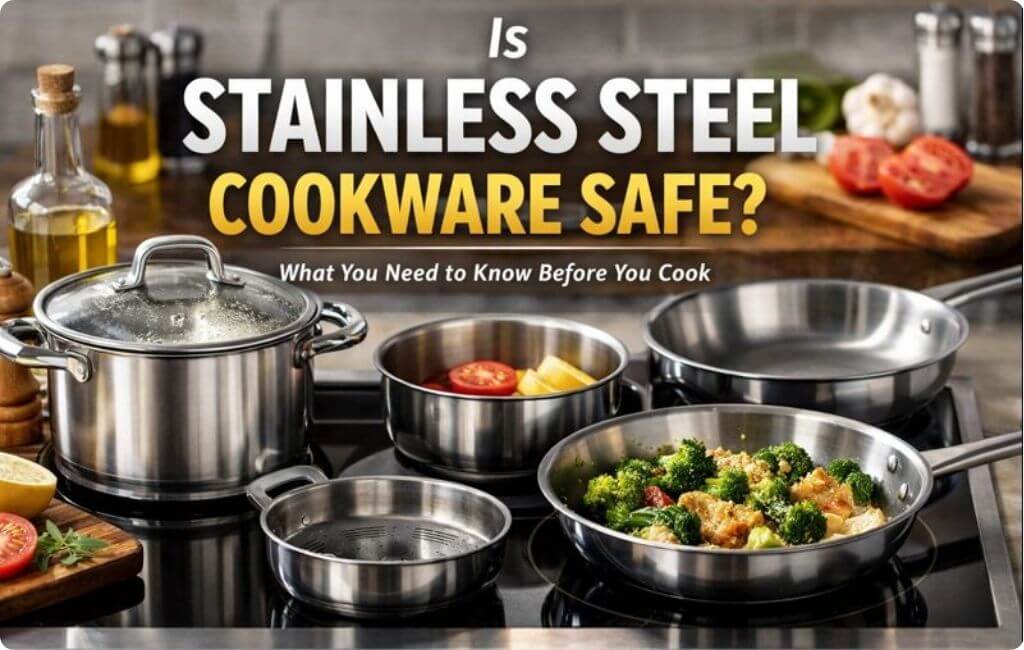
Is Stainless Steel Cookware Safe? A Complete, Evidence-Based Guide
Yes — stainless steel cookware is considered safe for most people when used the way it’s meant to be used. It doesn’t have a chemical coating to peel off, and studies and food-safety groups generally find that any tiny amounts of metals (like nickel or chromium) that can transfer to food are very small in normal cooking.
Still, people worry about metal leaching, nickel allergies, and how stainless steel compares with non-stick or cast iron. This article answers those concerns plainly: when and why small amounts of metal can appear in food, who should be cautious, and how stainless steel stacks up against other common pans.
You’ll find clear, practical guidance here — how stainless steel is made, when leaching can happen, safe cooking and cleaning tips, what to look for when buying, and alternatives for people with sensitivities. This guide is for everyday cooks who want safe, reliable cookware and for anyone deciding whether to switch from non-stick or other materials.
What Is Stainless Steel Cookware Made Of?
Below is a simple, easy-to-read explanation you can drop straight into your blog. No confusing terms — just clear facts and practical tips.
Understanding the material
Stainless steel is a metal used to make pots and pans. It’s called stainless because it resists rust and stains better than plain steel. That resistance comes from other metals mixed into the steel, which help it hold up to heat, water, and food.
Key components — the three main ingredients
- Iron — the main metal. Think of it as the building block or the base.
- Chromium — a small but important add-in that forms a thin protective layer on the metal. This layer stops the base metal from rusting and keeps food from reacting with the metal.
- Nickel — added to make the pan stronger, shinier, and easier to clean. Not all stainless steel contains nickel.
What “food-grade” stainless steel means
When a product says “food-grade,” it simply means the metal is safe to cook with and won’t easily react with food. Food-grade stainless steel is made so it doesn’t rust, flake, or release large amounts of metal into what you cook. It’s the kind manufacturers use for kitchenware and restaurant equipment.
Common stainless steel grades explained (18/10, 18/8, 18/0)
You’ll often see numbers like 18/10 on cookware packages. Those numbers tell you roughly how much chromium and nickel are in the steel:
- 18/10 — 18% chromium, 10% nickel.
- A common, high-quality choice for cookware. Durable, shiny, and resists corrosion well.
- A common, high-quality choice for cookware. Durable, shiny, and resists corrosion well.
- 18/8 — 18% chromium, 8% nickel.
- Very similar to 18/10. Also a good, reliable option.
- Very similar to 18/10. Also a good, reliable option.
- 18/0 — 18% chromium, 0% nickel.
- Nickel-free and magnetic. Often cheaper and good if you have a nickel sensitivity, but it can be less shiny and slightly less durable than nickel-containing grades.
Why these numbers matter for safety and durability
- Chromium helps prevent rust and keeps the surface from reacting with food. More chromium = better corrosion resistance.
- Nickel makes the pan stronger and shinier and helps it resist stains. But because some people are sensitive to nickel, a nickel-free option (18/0) can be helpful for them.
- In everyday cooking, 18/10 and 18/8 are both safe and long-lasting for most people.
Which grades are most commonly used in cookware
- Most mid- to high-quality cookware is 18/10 or 18/8.
- Budget or nickel-free options are often 18/0.
- If you want a long life and easy cleaning, look for 18/10 or 18/8. If you have a nickel allergy, choose 18/0 or cookware labeled “nickel-free.”
Quick tip for shoppers
Look at the product label or description for the numbers (18/10, 18/8, 18/0). If it’s not listed, check the brand’s website or product details before you buy.
How Stainless Steel Protects Your Food
The Chromium Oxide Layer (What That Really Means)
Stainless steel protects your food because of a thin, invisible shield on its surface. This shield forms naturally thanks to a metal called chromium.
When stainless steel comes into contact with air or water, the chromium reacts and creates a protective layer. You can’t see or feel it, but it plays an important role.
This protective layer helps because it:
- Prevents rust from forming
- Keeps food from sticking to the metal itself
- Reduces the chance of metal getting into your food
This is why stainless steel holds up well in kitchens, even with daily use.
Why Stainless Steel Doesn’t Rust or React Easily With Food
Rust happens when metal breaks down after contact with air and moisture. In stainless steel, the protective layer blocks this process. As long as the surface stays intact, the metal underneath stays protected.
Stainless steel also doesn’t react much with food. That means:
- It won’t change the taste of your meals
- It won’t discolor sauces or acidic foods
- It stays stable when exposed to heat
This makes it a reliable choice for everyday cooking.
What Happens If the Pan Gets Scratched or Cleaned?
Light scratches or normal cleaning do not ruin stainless steel.
The protective layer can repair itself. When the surface is exposed to air again, the chromium reacts and rebuilds the protective layer on its own. This is why stainless steel remains safe even after years of use.
Reactivity Compared to Other Cookware Materials
Stainless Steel vs. Aluminum
Aluminum is a softer metal that can react with acidic foods like tomatoes or vinegar. This can sometimes affect the taste of food and cause discoloration.
Stainless steel, on the other hand:
- Is more stable
- Reacts far less with food
- Is often layered over aluminum to combine safety with good heat control
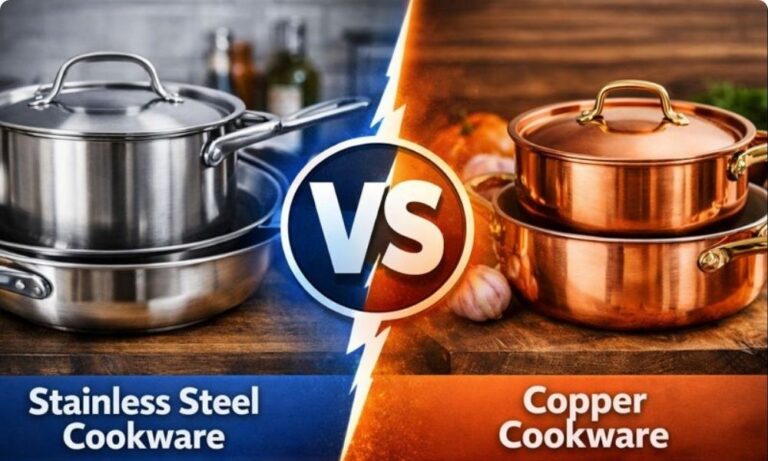
Stainless Steel vs. Copper
Copper heats very quickly but reacts easily with food. Because of this, copper cookware is usually lined with another metal to keep food from touching the copper directly.
Stainless steel does not need this extra lining because it is already safe and stable for cooking.
Why Stainless Steel Is Called “Non-Reactive”
When cookware is described as non-reactive, it means it doesn’t easily interact with food. Stainless steel earns this label because:
- It doesn’t break down easily
- It doesn’t transfer flavors
- It stays stable when cooking acidic or salty foods
For most people, this means safer cooking and fewer worries about what ends up in their meals.
Does Stainless Steel Leach Metals Into Food?
What the science says (in simple terms)
Researchers who study cookware and food contact materials have tested stainless steel and found that small amounts of metals like nickel and chromium can come off into food under some conditions.
But the key point is this: most studies find those amounts are very low — usually far below levels that health agencies say are unsafe for the average person.
Typical metals you might find
- Nickel — often used to make stainless steel stronger and shinier.
- Chromium — part of what makes stainless steel “stainless.”
Both can show up in tiny amounts in food cooked or stored in stainless steel, especially in certain situations (see below).
When leaching is more likely
Metal transfer from the pan to food is not constant — it depends on how you cook:
- High heat — very hot cooking can increase metal release.
- Long cooking times — the longer food sits against the metal, the more chance for tiny amounts to move.
- Acidic foods — tomatoes, vinegar, citrus, wine and other acidic ingredients can encourage slightly more metal to leach out.
In normal everyday cooking — quick frying, boiling, or simmering for typical times — leaching is usually minimal.
Is this amount dangerous?
For most people, no. Here’s why:
- The tiny amounts of nickel or chromium that sometimes end up in food are generally much smaller than what people get from regular foods every day (many common foods naturally contain these metals).
- Health and food-safety authorities set safe limits for metal intake. Tests on stainless steel cookware usually find levels well below those limits for the average user.
- Exceptions: People with a diagnosed nickel allergy or those told by a doctor to limit metal intake should be more cautious.
Practical ways to reduce any risk (quick and actionable)
- Don’t cook acidic foods for long periods in older, heavily scratched pans.
- Avoid extremely high heat when not needed — moderate heat is fine for most cooking.
- If you have a nickel allergy, choose nickel-free (18/0) stainless steel or other cookware like glass or enameled cast iron.
- Don’t store acidic leftovers in stainless steel — use glass or ceramic instead.
Who Should Be Cautious When Using Stainless Steel Cookware?
Stainless steel cookware is safe for most people. However, a small group of people may need to be more careful.
Nickel Sensitivity or Allergy
Some people are sensitive or allergic to nickel, a metal that is often used in stainless steel cookware.
Common symptoms of nickel sensitivity
Nickel sensitivity usually shows up as a skin reaction, but some people may notice other symptoms too. These can include:
- Skin rashes or itching
- Redness or dry patches, especially after contact with metal
- Digestive discomfort in rare cases when nickel intake is high
If you already know you react to jewelry, watchbands, or coins, you may also be sensitive to nickel in cookware.
Why stainless steel may affect sensitive individuals
Many stainless steel pans contain nickel because it helps make them strong and shiny. In certain situations—like cooking acidic foods or cooking for a long time—very small amounts of nickel can move into food.
For most people, this is not a problem. But for someone with a nickel allergy or sensitivity, even small amounts can sometimes trigger symptoms.
How common is this issue?
Nickel sensitivity is not very common. Most people can use stainless steel cookware every day without any problems. Only those with a diagnosed allergy or strong sensitivity usually need to take extra precautions.
Safer Alternatives for Sensitive Users
If you know you are sensitive to nickel, there are good cookware options that avoid it completely.
Nickel-free (18/0) stainless steel
- Contains chromium but no nickel
- Safer choice for people with nickel sensitivity
- Often labeled as “nickel-free” or “18/0”
- Slightly less shiny, but still durable and safe
Glass cookware
- Completely non-reactive
- No metal contact with food
- Ideal for baking, roasting, and food storage
- Easy to clean and safe for sensitive users
Enameled cast iron
- Cast iron coated with a smooth enamel layer
- No direct contact between food and metal
- Good for slow cooking, soups, and stews
- Long-lasting and very stable
Is Stainless Steel Safer Than Non-Stick Cookware?
Many people switch to stainless steel because they’re worried about non-stick coatings. Here’s how these cookware types compare in simple terms.
Stainless Steel vs. Non-Stick Cookware
Chemical coatings vs. metal surfaces
Non-stick pans have a special coating that helps food slide off easily. This coating sits on top of the pan. Stainless steel pans do not have a coating. They are made from solid metal.
Because stainless steel has no coating:
- There is nothing to peel or flake into food
- The surface stays stable over time
- Scratches don’t expose a chemical layer underneath
What happens when non-stick coatings wear out
Over time, non-stick coatings can scratch, chip, or wear away—especially if used at high heat or cleaned with rough tools.
When this happens:
- The pan becomes less effective
- The coating may start to break down
- Many people choose to replace the pan at this point
Stainless steel doesn’t have this issue because there is no coating to wear off.
Long-term safety considerations
Stainless steel is designed to last for many years. As long as it’s used and cleaned properly, it stays safe and stable.
Non-stick pans often need to be replaced more often. While many modern non-stick pans are considered safe when used correctly, some people prefer stainless steel because it avoids chemical coatings altogether.
Stainless Steel vs. Aluminum & Cast Iron
Aluminum cookware concerns
Aluminum is lightweight and heats quickly, but it is a softer metal.
- It can react with acidic foods
- It may change the taste or color of food
- Many aluminum pans are coated or layered to prevent direct contact
Stainless steel is often placed over aluminum cores to combine good heat control with better food safety.
Cast iron and iron leaching
Cast iron can release iron into food, especially when cooking acidic dishes.
Pros:
- Can help people with low iron levels
- Very durable and long-lasting
Cons:
- Not ideal for people who need to limit iron intake
- Can change food flavor if not seasoned well
Stainless steel does not add iron to food, making it a more neutral option.
Overall Safety Comparison (Simple Overview)
| Cookware Type | Safety Notes | Best For |
| Stainless Steel | Stable, no coating, long-lasting | Everyday cooking |
| Non-Stick | Easy to use, but coating wears over time | Low-fat cooking, eggs |
| Aluminum | Lightweight, may react with food | Budget cookware |
| Cast Iron | Adds iron, very durable | Slow cooking, searing |
How to Use Stainless Steel Cookware Safely
Here’s a simple, practical guide you can drop into your post. Short sentences. No jargon. Actionable tips.
Best cooking practices
Preheat the pan properly
- Start on medium heat. Let the empty pan warm for about 1–2 minutes.
- To check: sprinkle a few drops of water — they should sizzle and dance (not evaporate instantly).
- Add oil after the pan is warm. Swirl it so the bottom is coated. This helps prevent food from sticking.
Use the right oil and amount
- Use an oil that matches the heat level (e.g., olive oil for medium, avocado or vegetable oil for higher heat).
- Use enough oil to lightly coat the pan for frying or sautéing. For non-frying tasks, a small splash is fine.
- Don’t let oil smoke — smoking oil is a sign the pan is too hot.
Avoid excessive high heat
- Most everyday cooking works well on low to medium heat.
- Use medium-high only for quick searing (and don’t leave it unattended).
- Very high heat can make food stick, wear the pan faster, and increase the tiny amount of metal that can move into food.
Cooking acidic foods safely
When it’s fine to cook tomatoes, vinegar, or citrus
- Short cooking times are usually fine. Quick sautés, pan sauces, or simmering for less than an hour rarely cause issues.
- For everyday tomato sauce or a quick pan sauce with lemon or vinegar, stainless steel is perfectly fine.
When to limit long simmering
- If you plan to cook acidic foods for many hours (long, slow simmering) or store acidic food in the pan, consider a different pot (see alternatives below).
- Long contact between acidic food and metal increases the chance of tiny amounts of metal getting into the food.
Practical tips to reduce any leaching
- Cook acidic dishes on low heat and avoid very long simmering in the same stainless pan.
- Don’t store acidic leftovers (tomato, lemon-based sauces) in stainless steel — transfer them to glass or ceramic instead.
- If a pan is old and heavily scratched, avoid long-cooking acidic meals in it. Consider replacing or using enamel/glass for those recipes.
- Rinse or wash the pan soon after cooking acidic food instead of letting the food sit inside the pan for hours.
Cleaning, Scratches, and Wear: Do They Affect Safety?
Stainless steel cookware is made to handle daily use. Scratches and signs of wear can look worrying, but most of the time, they are not a safety problem. Here’s what you need to know.
Are Scratches a Health Concern?
Cosmetic scratches vs. real damage
- Cosmetic scratches are light marks on the surface from normal cooking and cleaning. These are very common and mostly affect how the pan looks.
- Structural damage means deep cracks, warping, or peeling layers (in multi-layer pans). This type of damage is rare but can affect performance.
Most scratches you see in stainless steel pans are cosmetic only and do not make the pan unsafe.
Why scratches don’t mean your pan is toxic
- Stainless steel has a protective surface that naturally repairs itself when exposed to air.
- Light scratches do not remove this protection for good.
- There is no coating underneath that gets exposed, unlike non-stick pans.
In simple terms: a scratched stainless steel pan is usually still safe to cook with.
Safe Cleaning Methods
What to avoid
- Avoid using steel wool or very rough scouring pads every time you clean. Occasional use is okay, but frequent scrubbing can dull the surface.
- Don’t mix bleach with other cleaners. Bleach can damage the surface if used incorrectly.
- Avoid leaving salty or acidic food stuck to the pan for long periods.
Best practices to keep your pan in good shape
- Wash with warm water, mild dish soap, and a soft sponge.
- For stuck-on food, soak the pan in warm water before cleaning.
- Use baking soda or a stainless-steel-safe cleaner for tough stains.
- Dry the pan after washing to prevent water spots.
These habits help maintain the protective surface and keep the pan looking good.
Is the dishwasher safe?
- Most stainless steel cookware is dishwasher safe, but hand washing is gentler and helps it last longer.
- Dishwashers can cause water spots or dullness over time, but this is a cosmetic issue, not a safety one.
- If you use the dishwasher, remove the pan promptly and dry it.
When to replace a stainless steel pan
Consider replacing your pan if:
- It is badly warped and no longer sits flat
- The layers are separating (in multi-layer cookware)
- There are deep cracks or severe damage
Normal scratches alone are not a reason to throw a pan away.
How to Choose Safe, High-Quality Stainless Steel Cookware
Here’s a simple, practical section you can drop into your blog. No jargon — just clear advice readers can use while shopping.
What to look for when buying
1. Look for clear material labels (18/10, 18/8, 18/0 or grade 304/316).
These numbers tell you how the steel was made. 18/10 or 18/8 (also known as grade 304) are common, durable, and corrosion-resistant. 18/0 (often labeled “nickel-free”) is good if someone needs to avoid nickel.
2. Prefer multi-ply / fully-clad construction for even heating.
“Tri-ply” or “5-ply” means the pan has layers (usually stainless plus an aluminum or copper core). That gives faster, more even heat and reduces hot spots compared with single-layer pans. For most home cooks, a fully-clad pan heats more reliably.
3. Heavier (thicker) steel usually performs better.
Thicker steel or a heavier pan holds heat more steadily and resists warping. Gauge numbers work backward (higher gauge = thinner metal), so look for a lower gauge or product specs that show millimeter thickness or terms like “heavy-gauge.”
4. Check for food-safety testing or certifications (if provided).
Brands that list testing to food-equipment standards (for example, NSF food equipment standards) are showing extra care about materials and construction. This is more common with commercial or higher-end consumer cookware.
Red flags to avoid
- Extremely cheap, unbranded cookware. If a deal seems too good to be true, the metal quality and construction may be poor.
- Vague or missing material info. Avoid products that don’t state alloy numbers (18/10, 18/8, 18/0 or stainless grade) or don’t explain construction (tri-ply, clad, encapsulated base).
- No manufacturer transparency. If the maker won’t explain what’s inside the pan or where it’s made, that’s a warning sign.
(These problems often mean you’ll get poorer heating, more warping, or unknown metal mixes.)
Environmental & Long-Term Health Considerations
Here’s a short, simple section you can add to your post. Plain language, few words per sentence, and clear actions readers can use.
Durability and lifespan of stainless steel
- Stainless steel is built to last. Good pans can work well for years or even decades.
- Because they last a long time, you buy less often. That reduces waste and saves money over time.
- Tip: Look after your pans (don’t overheat, clean gently). Small care steps make them last much longer.
Sustainability compared to disposable non-stick pans
- Many non-stick pans need replacing more often because the coating wears out. That means more waste over time.
- A sturdy stainless steel pan that stays usable for many years has a smaller environmental footprint than replacing cheap non-stick pans every few years.
- Tip: Buy the best-quality pan you can afford and use it long-term. Secondhand or refurbished stainless pans are a good, eco-friendly option too.
Reduced exposure to chemical coatings over time
- Non-stick pans use a surface coating to stop food sticking. Over time that coating can break down and need replacing.
- Stainless steel has no chemical coating, so there’s nothing that can peel or wear into your food. That means less chance of exposure to coating chemicals over the long run.
- Tip: If you want to avoid coatings entirely, choose stainless steel, glass, or enameled cookware.
Frequently Asked Questions
Are stainless steel pans safe to cook with?
Yes. For most people stainless steel is safe and non-reactive. It won’t peel or release chemicals like coated pans can. Tiny amounts of nickel or chromium can show up in food in certain situations, but for typical cooking the amounts are very small.
Are stainless steel pots and pans dishwashers safe?
Usually yes, but hand washing is gentler. Dishwashers can cause water spots, dull the finish, or speed wear over many cycles. If you use the dishwasher, dry items quickly and follow the maker’s instructions.
Are stainless steel pots and pans oven safe?
Most are oven safe, but it depends on the handles and lid materials. Metal handles and lids are fine at high temperatures; plastic or wooden parts are not. Check the manufacturer’s maximum oven temperature before using.
Is stainless steel cookware with an aluminum core safe?
Yes. In bonded or “clad” pans the aluminum core is sealed between stainless layers, so it never touches food. This construction just helps the pan heat evenly and respond faster.
Is tri-ply (multi-ply) stainless steel cookware safe?
Yes. Tri-ply or multi-ply means several metal layers (usually stainless + aluminum) bonded together. It’s safe and gives more even heating than single-layer pans.
Is Mainstays stainless steel cookware safe?
Brand safety depends on the specific set and its materials. Mainstays pans can be safe if they clearly state food-grade materials (like 18/8/18/10 or “tri-ply”) and come from a reliable seller. Check the product label, reviews, and return policy before buying.
Is Cuisinart stainless steel cookware safe?
Cuisinart makes many stainless steel lines that are commonly used and considered safe. As with any brand, confirm the exact model’s materials and construction (grade and ply) and follow care instructions for best results.
Final Verdict: Is Stainless Steel Cookware Safe?
Yes — for most people, stainless steel cookware is safe. Small amounts of nickel or chromium can leach into food in specific situations (very high heat, long cooking times, or with acidic foods), but typical cooking produces only tiny amounts that health authorities and most studies consider negligible.
Stainless steel is a great choice for everyday cooks because it’s durable, non-reactive (it won’t change food taste), and has no chemical coating to worry about. It’s especially useful if you want long-lasting pans and reliable performance for searing, boiling, and sautéing.
A few people should be cautious: anyone with a diagnosed nickel allergy may react to nickel-containing grades (look for 18/0 or “nickel-free”), and very old or badly damaged cookware is worth replacing. If you have medical concerns, check with your doctor.
Bottom line: choose good-quality stainless steel, use moderate heat, avoid long storage of acidic foods in metal, and replace pans that are warped or falling apart. Those simple steps give you safe, reliable cookware for most cooking needs.