
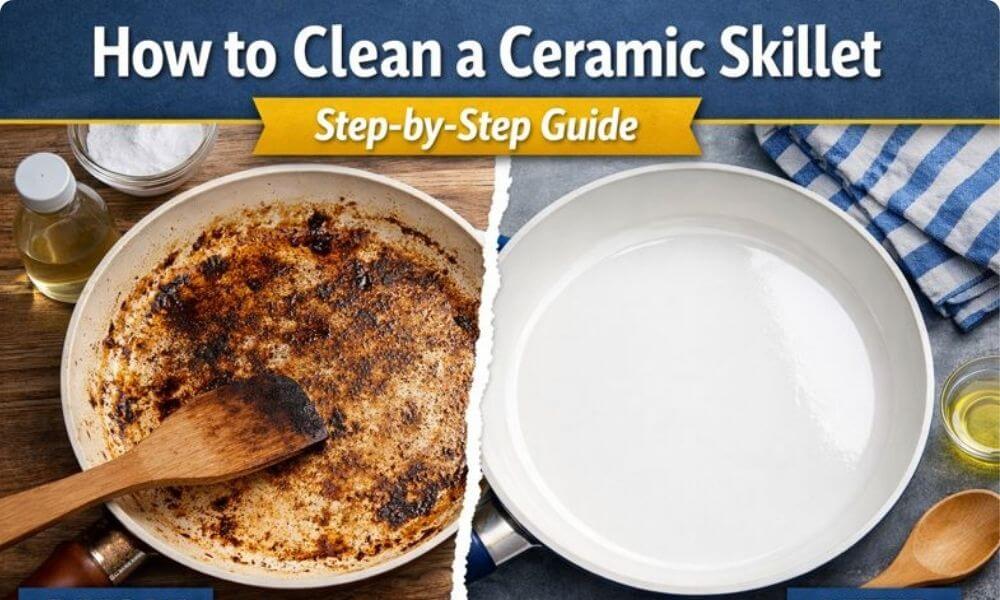
How to Clean a Ceramic Skillet
Ceramic skillets are loved because they cook with less oil and feel easier to clean than traditional pans. But after a few months, many people notice the same problem: food starts sticking, stains appear, and the pan no longer looks or works like it did when it was new.
If that sounds familiar, don’t worry. In most cases, the skillet isn’t ruined. It just needs the right kind of cleaning. This guide will show you how to clean a ceramic skillet safely, remove stubborn stains, and restore its non-stick performance without damaging the coating.
Why ceramic skillets lose their non-stick surface
Ceramic coatings are silica-based, hard surfaces that are naturally slick — but they aren’t invincible. Two things commonly reduce performance:
- Polymerized/burned oil and residue. When oil or food is heated past its smoke point, it can polymerize into a sticky, hard film that sits on the ceramic surface and prevents food from sliding. That film is the most common culprit.
- Mechanical or chemical damage. Abrasive scouring pads, steel wool, harsh powders, or very high heat can wear or scratch the coating. Over time, misuse speeds up loss of nonstick performance. Manufacturer care advice consistently warns against abrasives and overheating.
Understanding the difference matters because buildup is usually reversible; true physical damage (deep scratches, flaking) often means replacement.
Signs your ceramic skillet needs deep cleaning
You’ll want to do a deeper clean if you notice any of these changes after normal washing:
- Food sticks when it used to slide off.
- Brown or gray staining that doesn’t rinse away.
- The pan still feels greasy even after soap and water.
- Smoke or strong burnt smell when heating with oil.
If you see flaking, chipping, or large scratches through the coating, that’s a sign the surface is compromised and may be time to replace the pan.
What you should never use on a ceramic skillet
To protect the coating, avoid:
- Steel wool, metal scouring pads, or wire brushes.
- Abrasive powders you have to scrub hard to remove.
- High heat — do not let oil smoke repeatedly.
- Harsh chemical cleaners and oven cleaners.
- Aerosol cooking sprays (they leave sticky residues over time).
Manufacturers and care guides recommend gentle sponges, soft cloths, and moderate heat. Using abrasive tools or overheating is the fastest way to shorten a ceramic pan’s life.
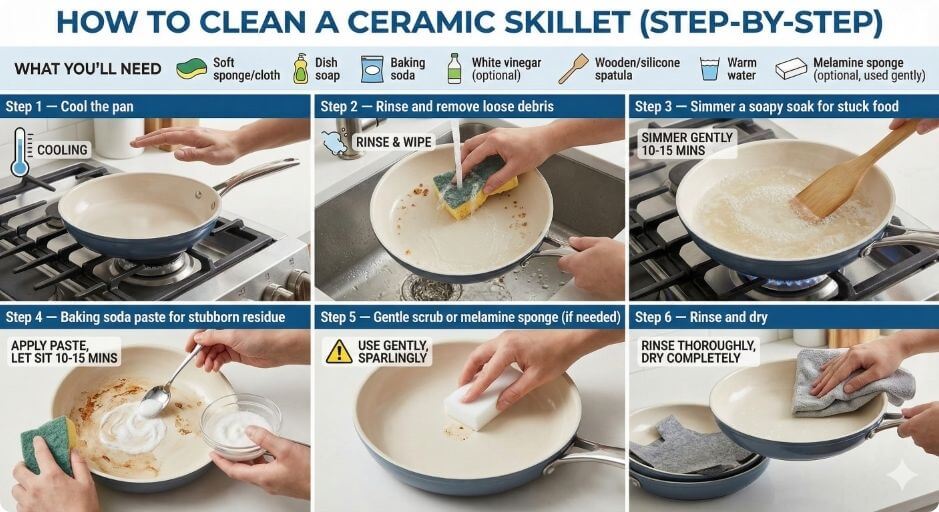
How to Clean a Ceramic Skillet (Step-by-Step)
Below is a safe, effective method I use (and recommend) for most typical sticky or stained ceramic pans. It balances gentle chemistry with a little mechanical help — never forceful abrasion.
What you’ll need
A soft sponge or cloth, dish soap, baking soda, white vinegar (optional; see note), a wooden or silicone spatula, and warm water. Optionally, a melamine (magic) sponge used very gently can help with tougher marks, but use it sparingly.
Step 1 — Cool the pan
Always let a hot pan cool to near room temperature before you run water over it. Thermal shock (cold water on hot cookware) can warp or stress some pans.
Step 2 — Rinse and remove loose debris
Rinse with warm water and use a soft sponge to remove crumbs and loose food. If nothing comes off, proceed to the next step.
Step 3 — Simmer a soapy soak for stuck food
Fill the pan with enough warm water to cover the stuck bits, add a squirt of dish soap, and simmer gently for 10–15 minutes. This loosens food and softens burned grease so it wipes away easily. Pour out the water and wipe with the sponge. This trick works well for burnt-on bits without scrubbing.
Step 4 — Baking soda paste for stubborn residue
If staining or grease remains, make a paste of baking soda and a little water. Spread a thin layer on the stained areas and let it sit for 10–15 minutes, then rub gently with a soft sponge. Baking soda is mildly abrasive and excellent at cutting through carbonized oil without scratching when used gently. Rinse thoroughly.
Note about vinegar + baking soda: people often mix them for a fizzing reaction. That fizz is mostly cosmetic — chemically it neutralizes both agents and reduces their cleaning power. It’s better to use baking soda and water as a paste first, and, if you want, rinse with diluted vinegar afterwards to dissolve mineral spots or to create a light bubbling rinse — but don’t expect magical extra cleaning from mixing them into one paste.
Step 5 — Gentle scrub or melamine sponge (if needed)
If residue still remains, a few gentle passes with a soft scrub sponge or a slightly dampened melamine foam (magic eraser) rubbed carefully can help. Don’t use heavy pressure and avoid going back over the same spot repeatedly. If the mark won’t come off, that’s likely permanent discoloration, not a dirty pan.
Step 6 — Rinse and dry
Rinse thoroughly with warm water and dry with a soft cloth. Store the pan in a dry place. Avoid stacking without protection to prevent scratches.
How to Remove Stubborn Brown or Black Stains
Some marks are just cosmetic and don’t affect performance; others are baked-on carbonized food. For those stubborn stains try this deeper approach:
Start with a warm water soak for 30 minutes to loosen food. If stains remain, pour a small amount of white vinegar into the pan and add equal parts water, then bring to a gentle simmer for a few minutes — vinegar helps dissolve mineral deposits and loosens grime. Let cool, then use a baking soda paste and a nylon scrubber to work the stain. Rinse and repeat if necessary.
If a stain is purely surface discoloration (no sticking), it’s safe to leave it as cosmetic. Scrubbing harder will risk wearing the coating.
How to restore non-stick performance
Manufacturers generally don’t recommend traditional “seasoning” (as with cast iron) for ceramic pans, because the ceramic coating is not the same as polymerized oil seasoning and high heat can harm it. That said, a gentle surface conditioning can help performance after a deep clean:
- After cleaning, wipe a tiny amount of a high-smoke-point oil (like grapeseed or refined avocado) across the pan and heat on low for a minute, then wipe off excess. This creates a thin conditioning layer — it’s not the same as long-term seasoning, but can reduce initial sticking. Use this sparingly; repeated heavy oiling or high heat is not recommended.
Think of this as “surface conditioning” rather than seasoning. If a brand explicitly says “skip the seasoning,” follow their guidance first — manufacturer instructions take priority for preserving warranty and lifespan.
How often should you clean a ceramic skillet?
Do a quick gentle wash after every use — warm water, dish soap, soft sponge. For normal daily cooking this keeps the surface clear. Do a deeper cleaning (baking soda paste or simmer method) every few weeks if you notice gradual buildup or after a few heavy, greasy cooks. Regular care prevents the heavy burnt-on films that are the hardest to remove.
Common ceramic skillet mistakes that ruin the coating
Some everyday habits shorten a ceramic pan’s life:
- Running it under cold water right after high-heat cooking (thermal shock).
- Using metal utensils and hard scrapers.
- Letting oil smoke repeatedly; cooking on max heat by default.
- Relying on the dishwasher for frequent cleaning when the brand warns hand washing maximizes life.
- Using aerosol cooking sprays that leave insoluble residues over time.
Avoiding these will save you the need for deep restores and replacement.
When a ceramic skillet is truly worn out
Be realistic and honest. Replace the pan if you see:
- Coating flaking or chipping away.
- Deep scratches that expose base metal.
- Persistent structural warping or cracking.
At that point, cleaning won’t restore performance and replacement is safer. Most manufacturer care guides note visible flaking or peeling as the sign to retire cookware.
FAQ
Can ceramic pans go in the dishwasher?
Some manufacturers list certain lines as dishwasher safe, but many recommend hand washing to extend life. When in doubt, hand wash. Dishwashing may speed coating wear in the long run.
Is it safe to use vinegar on ceramic?
Yes — diluted vinegar is fine for occasional rinses to remove mineral deposits. Don’t mix vinegar and baking soda into one paste expecting extra cleaning power; they largely cancel each other chemically.
Can I “season” my ceramic pan like cast iron?
Manufacturers generally say no — ceramic is inherently nonstick and doesn’t need traditional seasoning. A light surface conditioning with a small amount of oil after cleaning may help initially, but avoid heavy oiling and high heat. Follow the brand’s instructions.
Conclusion
Most sticky or stained ceramic skillets can be restored with patient, gentle cleaning: cool the pan, loosen residue with a simmering soapy soak, use a baking soda paste for stubborn spots, and avoid abrasive tools.
Follow manufacturer care tips (they’re the authority for your specific pan) and adjust your cooking habits — lower heat, avoid aerosol sprays, and use wooden or silicone tools — and your ceramic skillet will reward you with longer life and enjoyable, low-stress cooking. If the coating is flaking or badly scratched, replacement is the safest choice.