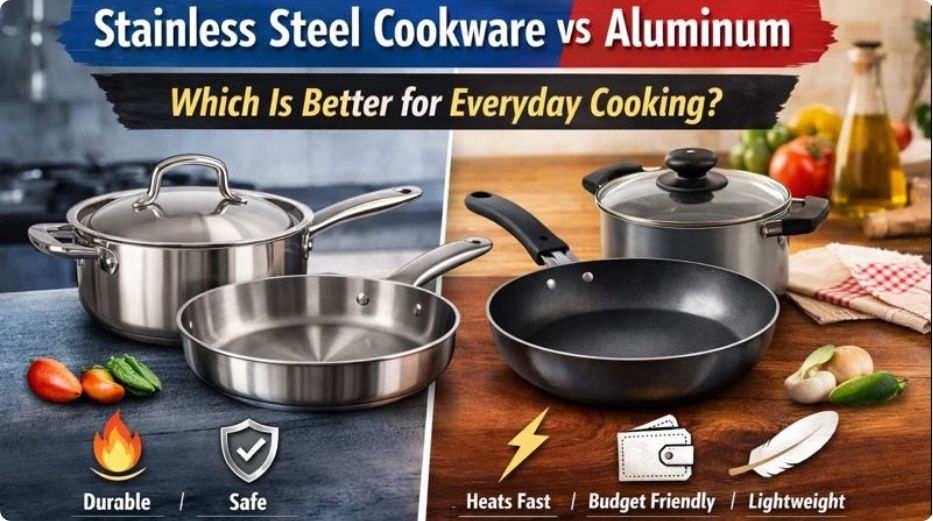
Stainless Steel Cookware vs Aluminum: Which Is Better for Everyday Cooking?
Choosing the right cookware can feel overwhelming, especially when deciding between stainless steel cookware vs aluminum. Both materials are widely used, affordable at different levels, and praised for different reasons—but they perform very differently in real kitchens.
If you’re wondering which option is safer, more durable, easier to cook with, or worth your money long-term, this guide will help you make a confident decision.
Quick answer:
- Stainless steel cookware is best for durability, food safety, and long-term value.
- Aluminum cookware is ideal for fast heating, lightweight handling, and budget-friendly cooking.
Let’s break it down in detail.
Quick Comparison Table (At-a-Glance Overview)
| Feature | Stainless steel | Aluminum |
| Heat conductivity | Moderate alone; excellent when clad with aluminum/copper | Excellent — heats fast and evenly |
| Durability | Very high — lasts decades | Varies: anodized = durable, bare/non-stick = shorter life |
| Safety & food reaction | Non-reactive — safe with acidic foods | Anodized = safe; bare can react with acids |
| Weight | Heavier | Lightweight |
| Maintenance | Moderate — may need preheating to avoid sticking; dishwasher-friendly | Easy daily care; avoid metal on non-stick; handwash preferred for longevity |
| Price range | Higher upfront | Lower upfront |
| Induction compatibility | Often yes (if magnetic base) | Usually no unless magnetic base added |
| Best cooking uses | Searing, sauces, acidic dishes, oven use | Boiling, quick sautéing, frying, non-stick tasks |
Quick takeaway: pick stainless steel for longevity and acidic or high-heat cooking; pick aluminum for fast, lightweight, budget-friendly everyday use.

What Is Stainless Steel Cookware?
If you’ve ever cooked at a friend’s house or watched a cooking show, you’ve probably seen shiny silver pots and pans that look sturdy and professional. That’s stainless steel cookware. It’s one of the most common choices in home kitchens—and for good reason.
Let’s break it down in a way that actually makes sense.
Material Composition: What Stainless Steel Is Made Of
Despite the name, stainless steel isn’t just one metal.
Think of it like a recipe made from three main ingredients:
- Iron – This gives the cookware its strength and shape
- Chromium – This protects the surface from rust and stains
- Nickel – This adds shine and helps resist corrosion
Together, these metals create a strong, smooth surface that doesn’t react with food.
You’ll often see numbers like 18/10 or 18/8 when shopping for stainless steel cookware. These numbers simply tell you how much chromium and nickel are inside.
- 18/10 stainless steel means:
- 18% chromium
- 10% nickel
This is considered the highest quality and is very common in premium cookware.
- 18% chromium
- 18/8 stainless steel has slightly less nickel but still performs very well for everyday cooking.
If you don’t want to remember the numbers, here’s the simple rule:
More nickel = more shine and better resistance to rust.
How Stainless Steel Cookware Works
Here’s something most people don’t realize at first.
Stainless steel is very strong, but it’s not great at spreading heat evenly on its own. If it were used alone, hot spots could form, and food might cook unevenly.
So how do good stainless steel pans solve this?
They use a smart design.
Most quality stainless steel cookware has a core made of aluminum or copper hidden inside the base or sides. This is called clad cookware.
Here’s how it works in real life:
- Aluminum or copper heats up quickly and spreads heat evenly
- Stainless steel holds that heat steady and provides a safe cooking surface
Think of it like this:
Aluminum does the heating.
Stainless steel does the protecting.
This combination gives you:
- Better control over cooking temperature
- Even cooking without burning one spot
- Strong, long-lasting cookware
Pros and Cons of Stainless Steel Cookware
Like any cookware, stainless steel has strengths and weaknesses. Here’s the honest breakdown.
Pros
- Safe for all foods, including acidic dishes like tomato curry
- Does not react with food or change flavor
- Very durable—can last for decades
- Works on all stovetops, including induction
- Oven-safe and often dishwasher-safe
- No coating to peel or wear off
Cons
- Costs more upfront than aluminum
- Food can stick if the pan isn’t preheated properly
- Slight learning curve for beginners
- Heavier than aluminum cookware
What Is Aluminum Cookware?
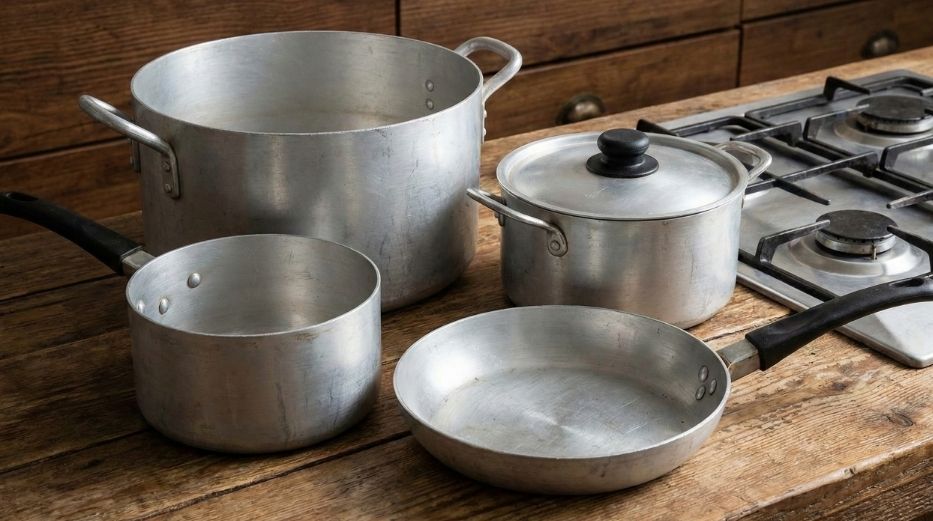
Imagine you’re in a busy kitchen. You reach for the pan that heats up fast and gets your dinner on the table before anyone’s hungry. That’s often aluminum cookware — it’s quick, light, and gets things done.
Aluminum comes in a few different forms. Each one behaves a little differently in the kitchen. Below I’ll tell you a short, friendly story about each type so you know which one to pick.
Types of Aluminum Cookware
Bare aluminum
Think of bare aluminum as the original. It’s just the metal — no coating, no extra treatment. It heats up fast and spreads heat evenly. That makes it great for boiling, blanching, and quick sautés. But it can react with strong acidic foods (like tomatoes or vinegar), which may change the look or taste of the food and leave a dull patch on the pan.
Anodized aluminum
One day, someone found a way to make aluminum tougher. That’s anodized aluminum. The metal goes through a process that makes the surface harder and less likely to react with food.
It keeps the fast-heating benefits but is more durable and less likely to discolor or react with acidic ingredients. It’s a popular middle ground — fast heat, more durable.
Non-stick aluminum cookware
This is aluminum with a slick coating on top. The coating prevents food from sticking, so eggs and pancakes slide right off. It’s perfect for low- to medium-heat cooking and for anyone who wants easy cleanup.
The trade-off: the coating can wear away over time, especially if you use metal utensils or cook at very high heat.
How Aluminum Cookware Performs
Aluminum is like the sprinter of cookware — it heats up quickly and gets up to temperature fast. That makes it great when you need a hot pan in a hurry.
Fast and even heat distribution
Aluminum spreads heat more evenly than plain stainless steel. That means fewer hot spots and less chance of burning a small area while the rest of the pan is cool. For things like stir-fries or quick sautés, that even heat is a big win.
Lightweight and easy to handle
If you’ve ever lifted a heavy cast-iron skillet, you know why weight matters. Aluminum pans are light. They’re easy to lift, flip, and store. That makes them friendlier for everyday cooking, for people with smaller kitchens, and for anyone who dislikes wrestling with heavy pots.
Pros and Cons of Aluminum Cookware
Pros
- Heats up quickly — saves time and energy.
- Distributes heat evenly — fewer burned spots.
- Lightweight — easy to lift and maneuver.
- Usually cheaper than stainless steel.
- Great for quick cooking like frying, sautéing, and boiling.
Cons
- Bare aluminum reacts with acidic foods, which can affect taste or color.
- Can warp under high, uneven heat if it’s thin.
- Non-stick coatings wear out over time and must be replaced.
- Not always induction-compatible — check before you buy.
- Lower long-term durability compared to good stainless steel (unless it’s high-quality anodized).
Cooking Performance Comparison
When you’re standing at the stove, what matters most is how the pan behaves when heat hits it. Does it heat evenly? Can you control the temperature? Does it burn food or cook it just right?
Let’s look at how stainless steel and aluminum perform in real, everyday cooking—not in a lab, but in a home kitchen.
Heat Distribution & Temperature Control
Picture turning on your stove to cook dinner after a long day. You want the pan to heat evenly and respond when you lower or raise the flame.
Aluminum cookware heats up fast. Almost right away, the whole pan gets hot. This makes it great when you’re in a hurry. The heat spreads evenly, so you don’t usually get one burning spot in the middle.
Stainless steel cookware, on the other hand, heats more slowly. On its own, stainless steel doesn’t spread heat as well as aluminum. That’s why good stainless steel pans don’t rely on stainless steel alone.
Why stainless steel uses aluminum cores
Most quality stainless steel cookware has a layer of aluminum hidden inside the base or sides. This aluminum core helps spread heat evenly, while the stainless steel surface gives strength and safety.
Think of it like teamwork:
- Aluminum moves heat quickly
- Stainless steel holds the heat steady
This combination gives you better control. When you lower the flame, the pan doesn’t overreact. When you raise it, the heat builds smoothly.
Best Foods for Each Material
Different foods behave differently in the pan. Choosing the right cookware can make cooking easier and less stressful.
Stainless steel is best for:
- Curries and sauces, especially tomato-based ones
- Acidic foods that might react with other metals
- Searing meat, where you want a hot, steady surface
- Browning onions or spices without scorching
Because stainless steel doesn’t react with food, flavors stay clean and natural.
Aluminum is best for:
- Boiling water for rice, pasta, or vegetables
- Quick sautéing when time is short
- Light frying at medium heat
- Everyday meals that don’t need long cooking times
Aluminum’s fast heating makes it perfect for simple, quick dishes.
High-Heat Cooking & Browning
High heat is where cookware really shows its strength—or its weakness.
Stainless steel handles high heat better.
It can take strong flames without losing shape. This makes it ideal for searing meat, frying spices, or cooking dishes that need intense heat. When heated properly, stainless steel creates a nice brown crust without burning the food.
Aluminum needs more care at high heat.
Thin aluminum pans can warp if the heat is too high or uneven. Non-stick aluminum cookware is especially sensitive—high heat can damage the coating and shorten the pan’s life.
Risk of warping or damage
- Stainless steel: Low risk when used correctly
- Aluminum: Higher risk, especially with thin or low-quality pans
Safety & Health Considerations
Safety is one of those things people worry about quietly — especially when cooking for kids or for friends. Let me walk you through this like a short kitchen story so the facts feel usable, not scary.
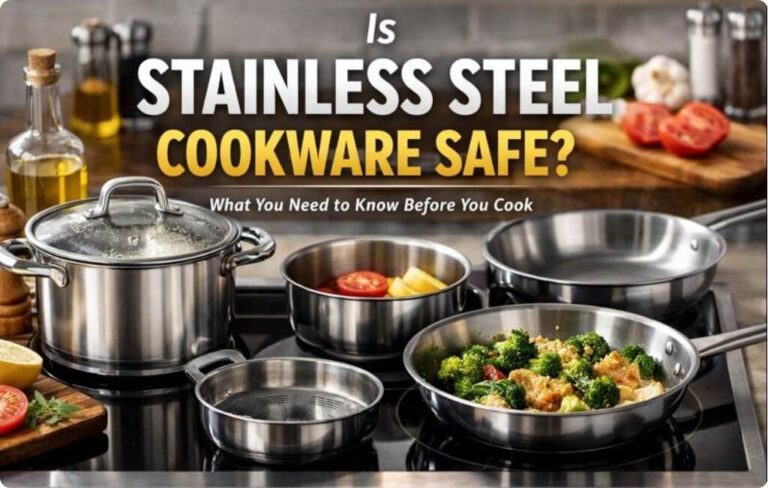
Is Stainless Steel Cookware Safe?
Imagine your grandmother’s old pot — heavy, shiny, and still going strong. That’s stainless steel: tough and unreactive.
Metal-leaching myths
There’s a common worry that metals from stainless steel “leach” into food and make it unsafe. In everyday cooking, this is very rare. Stainless steel has a stable surface, so it doesn’t dissolve into your food the way bare metal might.
Tiny amounts of metal can transfer in unusual situations (very long storage of acidic food in the pan, for example), but for normal cooking this isn’t something to lose sleep over.
Nickel sensitivity
Some stainless steel contains nickel (that’s the shiny part of 18/10 and 18/8). A small number of people have a nickel allergy and can get skin reactions from contact. Eating food cooked in nickel-containing steel is much less likely to cause trouble, but if someone in your household is highly sensitive, consider cookware labeled 18/0 (which has little or no nickel) or use a different material for daily cooking.
Backed by health sources
Health agencies and food-safety groups generally treat stainless steel as a safe choice for home cooking. If you want to be extra careful, choose high-quality, well-made stainless steel (clad bases, good brand reputation) and avoid storing acidic food in stainless pots for long periods.
Is Aluminum Cookware Safe?
Picture the lightweight pan you grab when you need dinner fast. That’s aluminum — friendly, fast, and practical.
Aluminum exposure concerns
People sometimes worry that aluminum can get into food and cause health problems. Most experts say normal use of aluminum cookware gives only tiny amounts of aluminum to food — much less than what we get from everyday food and water. For most healthy people, this is not a health risk.
What health authorities say (in plain terms)
Public health groups consider everyday aluminum exposure from cookware to be low and generally safe for most people. The small amounts that might transfer during cooking are usually not enough to cause harm.
Bare vs. anodized aluminum
- Bare aluminum can react with acidic foods (like tomato sauces), which may change the pan’s surface and leave a metallic taste or discoloration. That reaction is why some people avoid bare aluminum for long-simmering acidic dishes.
- Anodized aluminum has been treated to make the surface harder and non-reactive. It behaves more like stainless steel for safety and does a much better job with acidic foods.
If you’re choosing aluminum, anodized is the safer, longer-lasting option. Avoid using damaged non-stick coatings and don’t cook at very high heat with coated pans.
Which Is Safer for Daily Use?
Here’s the simple, evidence-based takeaway from the kitchen: both stainless steel and properly treated aluminum are safe for everyday cooking for most people. The risks that get headlines are usually from misuse, very old cookware, or extreme situations — not regular home cooking.
Which to pick, based on safety and peace of mind
- Choose stainless steel if you want a low-maintenance, non-reactive surface that’s unlikely to affect food flavor. It’s a great all-round safe choice.
- Choose anodized aluminum if you want fast, even heating but also want protection against reactions with acidic foods.
- Avoid bare aluminum for long, acidic simmering.
- Avoid using scratched or flaking non-stick coatings — when the coating shows wear, it’s time to replace the pan.
Best practices for safe cooking
- Don’t store acidic foods (tomato sauce, lemon-based marinades) in metal pans for long periods. Transfer to glass or ceramic instead.
- Replace pans when coatings flake or bases warp.
- Use wooden or silicone utensils on coated surfaces to avoid scratching.
- If you or someone in your home has a known nickel allergy, consider nickel-free stainless steel (18/0) or other materials.
- When in doubt, pick higher-quality pans — they’re less likely to have manufacturing issues that cause problems.
Durability, Maintenance & Lifespan
When you buy cookware, you’re not just buying something for tonight’s dinner. You’re buying something you’ll wash, heat, and use again and again. Some pans age gracefully. Others wear out faster. Let’s talk honestly about what happens over time.
How Long Stainless Steel Cookware Lasts
Stainless steel cookware is built for the long run.
With normal home use, a good stainless steel pot or pan can last 20 years or more. Many people use the same set for decades. It doesn’t chip, peel, or lose its surface because there’s no coating to wear away.
Why it lasts so long
- The surface is hard and tough
- It resists rust and corrosion
- Scratches don’t affect how it cooks
Even if the pan looks a little dull after years of use, it still works just fine. Scratches are mostly cosmetic — they don’t make the pan unsafe or useless.
Stainless steel is forgiving. You can cook at high heat, use metal utensils, and clean it thoroughly without worrying about damaging it.
How Long Aluminum Cookware Lasts
Aluminum cookware doesn’t all age the same way. How long it lasts depends on the type you buy and how you use it.
Bare aluminum cookware
- Can last many years if thick and well-made
- May discolor or pit over time
- Not ideal for acidic foods
Anodized aluminum cookware
- Stronger and more durable than bare aluminum
- Less likely to react with food
- Often lasts longer with fewer surface issues
Non-stick aluminum cookware
- Has the shortest lifespan
- The coating slowly wears down
- Most non-stick pans last 2–5 years with regular use
Another thing to watch for is warping. Thin aluminum pans can bend if exposed to very high or uneven heat. Once warped, they don’t sit flat on the stove and heat unevenly.
Cleaning & Maintenance Comparison
Cleaning is where cookware either fits your lifestyle — or becomes a chore.
Dishwasher safety
- Stainless steel: Usually dishwasher safe, though hand washing keeps it shiny longer
- Aluminum:
- Bare aluminum can discolor in the dishwasher
- Anodized aluminum may be dishwasher safe (check the label)
- Non-stick aluminum is best washed by hand
- Bare aluminum can discolor in the dishwasher
Stains and discoloration
- Stainless steel can develop heat stains or rainbow marks, but these are easy to remove with gentle cleaners or vinegar.
- Aluminum may darken or lose its shine over time, especially bare aluminum.
Ease of upkeep
- Stainless steel: Low worry, high tolerance. It handles scrubbing, high heat, and daily use well.
- Aluminum: Needs a little more care, especially non-stick versions. Gentle utensils and medium heat help extend its life.
Cost & Long-Term Value
When choosing cookware, price tags can be confusing. A pan might look cheap today but cost more later when you have to replace it. Let’s talk about money the same way you’d talk to a friend — honestly and simply.
Upfront Cost Comparison
Picture yourself standing in a store, holding two pans.
One is aluminum. It’s light, easy to lift, and the price feels friendly.
The other is stainless steel. It’s heavier, looks solid, and costs more.
That first price difference is real.
Aluminum cookware
- Usually the cheaper option
- Good aluminum pans often cost much less than stainless steel
- Non-stick aluminum sets are especially affordable
- Costs more at the beginning
- High-quality sets can feel expensive
- Often seen as a long-term purchase rather than a quick buy
Simple truth:
Aluminum is easier on your wallet today.
Stainless steel asks you to invest more upfront.
Cost Over Time
Now imagine yourself a few years later.
Your aluminum non-stick pan no longer works like it used to. Food sticks. The coating looks worn. You start thinking about buying another one.
This is where long-term cost matters.
Aluminum cookware over time
- Non-stick coatings wear out and need replacing
- Thin aluminum can warp under high heat
- You may replace these pans every few years
Stainless steel cookware over time
- No coating to wear away
- Resistant to scratches and rust
- Can last 10, 20, or even 30 years with basic care
Over many years, replacing aluminum pans again and again can quietly add up.
Which Offers Better ROI? (Return on Investment)
Think of ROI like this:
How much use do you get for the money you spend?
For budget buyers
- Aluminum is a smart choice
- Lower starting cost
- Good for students, renters, or temporary kitchens
- Works well if you plan to upgrade later
For long-term or premium buyers
- Stainless steel usually offers better value
- Fewer replacements
- Strong, reliable performance year after year
- Often cheaper in the long run, even with a higher starting price
Quick decision guide:
- Need cookware now and want to spend less → Aluminum
- Want cookware that lasts and grows with your kitchen → Stainless steel
Compatibility with Different Cooktops
Think of cooktops like roads and cookware like cars: some cars run well on any road, others need special tires. Here’s how stainless steel and aluminum behave on the most common cooktops — explained simply, with quick tips you can use right away.
Gas stoves
Gas is the most forgiving. Flames touch the pan directly, so most pots and pans work fine.
Story: I learned this the day I moved into a small apartment with a gas stove — every pan I owned heated up and did the job.
What works best
- Both stainless steel and aluminum work well.
- Choose pans with a thicker base for more even heat and fewer hot spots.
- Aluminum heats quickly on gas — great for fast cooking. Stainless steel is better for steady, high-heat searing.
Quick tip: If your pan has a very thin base it may warp after heavy use on high flame. Turn the flame down a bit under thin pans.
Electric cooktops (coil and smooth-top glass)
Electric cooktops need good contact with the pan. Smooth glass tops look nice but need flat, smooth-bottomed pans.
Story: A friend once complained that food cooked unevenly on her smooth-top because the pan wasn’t flat. After switching to flat-bottom pans, everything improved.
What works best
- Flat-bottom stainless steel and aluminum both do fine.
- Thicker, flat bottoms heat more evenly.
- On smooth glass, avoid warped or rough-bottom pans that can scratch the surface.
Quick tip: If you have a glass cooktop, lift pans rather than slide them to avoid scratches.
Induction compatibility
Induction is picky — it only heats cookware that is magnetic. It’s fast and very efficient, but not all pans will work.
Story: I tested a magnet on a pan in a shop — when the magnet stuck, the pan worked on induction. Saved me a return trip!
How to check
- Look for “induction compatible” on the label.
- Or do the magnet test: if a magnet sticks to the bottom firmly, it will usually work on induction.
What works best
- Stainless steel: many stainless sets are induction-ready, but not all. If the bottom has a magnetic layer (or the magnet test passes), you’re good.
- Aluminum: plain aluminum is not induction-compatible unless the manufacturer has added a magnetic base layer.
Quick tip: If a decent stainless set is too costly and you love induction, look specifically for cookware labeled for induction or with a magnetic base.
Outdoor cooking considerations
Outdoors you need rugged, simple pans that handle open flames and rough use.
Story: Camping taught me that lightweight pans are easy to carry — but they can warp on a camp stove. Heavy-duty pans survive longer.
What works best
- Aluminum is lightweight and great for camping, but thin aluminum can warp over strong outdoor flames.
- Stainless steel (especially thicker or forged bases) is tougher and better for heavy-duty outdoor use.
- Avoid delicate non-stick coatings on open flames — they wear quickly.
Quick tip: For open-flame grilling or large campfires, use sturdy stainless steel or cast iron. For backpacking, choose lightweight anodized aluminum but treat it gently.
Environmental Impact & Sustainability
When we think about cookware, we usually focus on cooking results. But every pot and pan also has a story that begins long before it reaches your kitchen — and continues after you stop using it. Let’s look at stainless steel and aluminum from an environmental point of view, in a simple and practical way.
Recyclability of Stainless Steel
Stainless steel is one of the most recyclable materials used in kitchens.
Think of it like this: when a stainless steel pan reaches the end of its life, it doesn’t become trash forever. It can be melted down and turned into something new — again and again.
- Stainless steel is highly recyclable
- It can be reused many times without losing quality
- Old cookware is often accepted by metal recyclers
Another big plus is how long it lasts. A stainless steel pot can stay in one kitchen for decades. The longer you use something, the less often it needs to be replaced — and that alone reduces waste.
Simple takeaway:
Fewer replacements + easy recycling = less waste over time.
Aluminum Production and Energy Use
Aluminum has a different story.
Making new aluminum from raw materials uses a lot of energy. That means more electricity and more environmental impact at the production stage.
However, aluminum also has a bright side.
- Aluminum is very recyclable
- Recycling aluminum uses much less energy than making new aluminum
- Lightweight aluminum cookware reduces fuel use during transport
The challenge is lifespan. Many aluminum pans — especially non-stick ones — are replaced more often. More replacements mean more production and more waste.
Simple takeaway:
Aluminum is recyclable, but frequent replacement increases its environmental cost.
Which Is More Eco-Friendly in the Long Term?
Now let’s put the full picture together.
Stainless steel:
- Lasts a long time
- Needs fewer replacements
- Highly recyclable
- Lower waste over many years
Aluminum:
- Uses more energy to produce
- Very recyclable, especially when recycled
- Often replaced more frequently
- Lightweight and efficient to transport
So which is better for the planet?
If you’re choosing cookware you plan to keep for many years, stainless steel is usually the more eco-friendly long-term choice. Its durability means less waste and fewer new products being made.
Aluminum can still be a responsible choice if:
- You choose high-quality anodized aluminum
- You use it for many years
- You recycle it properly at the end of its life
Which Should You Choose? (Decision Guide)
If you’ve read this far, you probably don’t want more details — you want a clear answer. Think of this section like a friend standing in your kitchen, looking at how you cook, and giving you honest advice.
Let’s make the choice simple.
Choose Stainless Steel If…
Picture yourself cooking most days of the week. You make curries, sauces, or dishes with tomatoes, lemon, or vinegar. You want cookware that doesn’t react with food and doesn’t need replacing anytime soon.
Stainless steel is likely the better fit if:
- You cook acidic foods often
Tomato-based dishes, curries, and sauces are safe in stainless steel. The pan won’t change the taste or color of your food. - You want cookware that lasts for years
Stainless steel doesn’t have a coating to peel. With basic care, it can stay in your kitchen for decades. - You use an induction cooktop
Many stainless steel pans work on induction (just check the label or magnet test). - You care about food safety and peace of mind
Stainless steel is stable, non-reactive, and trusted for everyday cooking.
Choose Aluminum If…
Now picture a different kitchen. You cook quick meals. You want something light, easy to handle, and affordable. You don’t mind replacing a pan after a few years.
Aluminum may be right for you if:
- You’re on a tight budget
Aluminum cookware costs less upfront and is easier to buy when money is limited. - You like lightweight pans
Aluminum is easy to lift, move, and store — great for everyday cooking. - You cook simple, fast meals
Stir-fries, boiling, frying eggs, or reheating food are all easy with aluminum. - You don’t mind replacing cookware sooner
Especially with non-stick aluminum, replacement every few years is normal.
FAQs
Is stainless steel better than aluminum for health?
For most people, yes. Stainless steel is non-reactive and doesn’t affect food taste, making it a safe choice for daily cooking. Aluminum is also generally safe, but stainless steel offers more peace of mind, especially for acidic foods.
Does aluminum cookware cause health problems?
For normal home cooking, aluminum cookware is considered safe by health authorities. Small amounts may transfer to food, but this is usually not harmful. Using anodized aluminum reduces this concern even more.
Can stainless steel cookware stick?
Yes, food can stick if the pan isn’t preheated properly or if there’s not enough oil. Preheating the pan and using a bit of fat helps prevent sticking.
Which cookware is best for beginners?
Aluminum cookware is often easier for beginners because it heats quickly and is lightweight. Stainless steel is also beginner-friendly once you learn basic heat control.
Is anodized aluminum safer than regular aluminum?
Yes. Anodized aluminum has a hardened surface that doesn’t react with food, making it safer and more durable than bare aluminum.
Read More: Carbon Steel vs Stainless Steel Pan
Final Verdict: Stainless Steel Cookware vs Aluminum
When comparing stainless steel cookware vs aluminum, the key differences come down to durability, safety, heat performance, and long-term value. Stainless steel stands out for its strength, non-reactive surface, and ability to last for decades, while aluminum offers faster heating, lighter weight, and a more budget-friendly entry point.
There’s no one-size-fits-all answer. The better choice depends on how you cook, what you cook, and how much maintenance you’re comfortable with. If you prioritize food safety, longevity, and versatility—especially for acidic dishes and induction cooking—stainless steel is the smarter investment. If affordability, quick heating, and lightweight handling matter more, aluminum cookware can still be a practical option.
Ultimately, making an informed decision based on your cooking habits, budget, and health considerations will ensure you choose cookware that truly fits your kitchen and lifestyle.