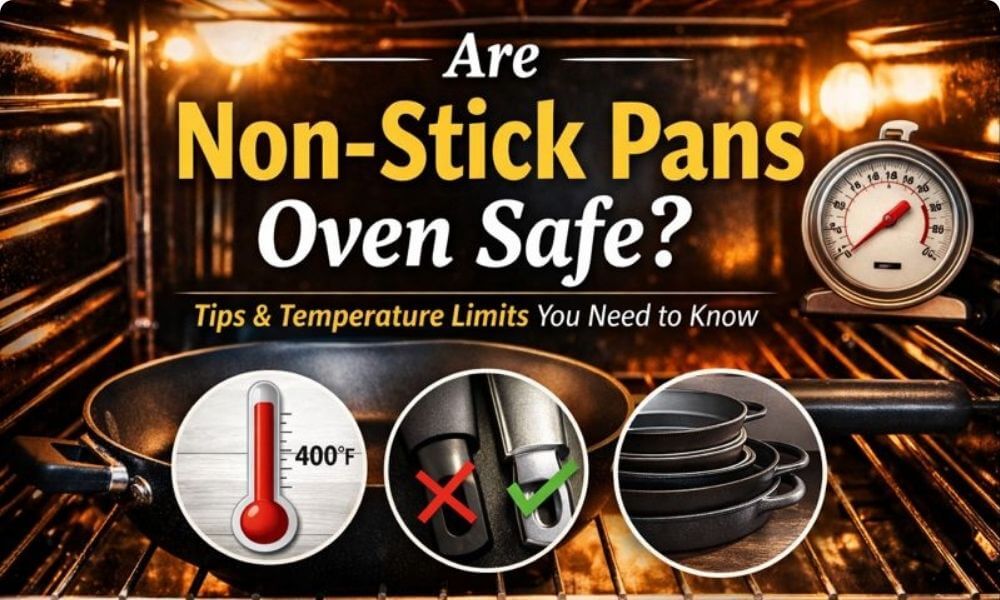
Are Non-Stick Pans Oven Safe?
If you’ve ever started cooking on the stove and then wondered whether you can finish the dish in the oven, you’re not alone. A very common question home cooks ask is: are non-stick pans oven safe?
The honest answer is sometimes—but not always. Some non-stick pans can safely go into the oven, while others can be damaged or even become unsafe if you try. The difference depends on the pan’s coating, handle material, and temperature limit.
This guide will help you understand exactly when it’s safe, when it’s not, and how to check your own pan, so you can cook confidently without ruining your cookware or risking safety.
Why Oven Safety Varies Between Non-Stick Pans
“Non-stick” describes how a pan behaves, not what it’s made of. Different manufacturers use different coatings (PTFE/Teflon-style, ceramic, etc.), and pan construction varies. That’s why the oven-safety advice you find online isn’t always consistent.
Three things change a pan’s oven safety:
- Coating material: Some coatings tolerate heat better than others.
- Handle and lid materials: Plastic or rubber parts often can’t take oven heat even if the pan body can.
- Overall construction and rivets: How the pan is assembled affects how heat spreads and whether parts will warp.
Because these factors differ between brands and models, two pans that look similar might have very different oven limits. That’s why checking the manufacturer’s guidance is the safest step.
Common Types of Non-Stick Pans and Their Oven Limits
Here’s a simple breakdown of the most common non-stick types and what to expect. These are general guidelines — always check your pan’s manual.
PTFE (Teflon-style) non-stick pans
PTFE coatings are very slippery and common. Many PTFE pans are labeled oven safe up to a moderate temperature, but the safe temperature depends heavily on the handle and any plastic parts. If a PTFE pan is oven-safe, typical manufacturer limits are often in the neighborhood of 350–500°F (about 175–260°C). Exceeding the limit can break down the coating and create fumes.
Ceramic non-stick pans
Ceramic coatings are marketed as more heat-tolerant. Many ceramic-coated pans handle higher oven temperatures than basic PTFE pans, but again, the handle material is often the limiting factor. Ceramic pans can often go in the oven safely at medium temperatures for finishing or baking.
Hard-anodized non-stick pans
These have a harder aluminum core treated to be more durable. They’re often more oven-friendly and may handle higher temperatures—especially if they have metal handles. Still, confirm the specific model’s limit.
Real-world note: A pan with a metal handle is much more likely to be oven-safe than one with a plastic or silicone handle. Lids with glass or plastic knobs often have lower temperature ratings than the pan body.
The Biggest Reason Non-Stick Pans Are NOT Oven Safe (Most People Miss This)
Many people assume the non-stick coating is the weak point, but in reality, the handle is usually the biggest problem.
Plastic handles are the most common reason a non-stick pan is not oven safe. Plastic can soften, warp, or melt when exposed to oven heat. Even if the pan itself could handle the temperature, the handle might not.
Silicone-wrapped handles are slightly better, but they still have limits. Silicone can tolerate moderate heat, but it may degrade or loosen over time in the oven.
Metal handles are usually the safest option for oven use. Pans with fully metal handles are far more likely to be oven safe, as long as the manufacturer allows it.
Lids also matter. A pan may be oven safe, but the glass lid might not be. This is something many cooks overlook until it’s too late.
How to Check If Your Non-Stick Pan Is Oven Safe
Use this quick, people-friendly checklist to decide:
- Look for markings: Check the bottom of the pan for an oven-safe symbol or a temperature number.
- Find the manual or product page: Search the brand and model online for oven guidelines.
- Inspect the handle and lid: If the handle is plastic or the knob looks glued on, assume it’s not oven safe.
- Check age and wear: Old pans with flaking or scratched coatings are a bad idea for oven use.
- When in doubt, test safely: If you must test, use a low oven temperature and short time only — but the best choice is to avoid the oven unless you confirm safety.
These steps let a reader make a confident, low-risk decision without guessing.
What Happens If You Put a Non-Stick Pan in the Oven When It’s Not Safe
Using a non-oven-safe pan in the oven can cause several problems.
The handle may soften, crack, or melt, making the pan unsafe to use afterward. The pan itself can warp, especially if exposed to sudden high heat. Over time, the non-stick coating may break down faster, reducing its performance and lifespan.
In extreme cases, overheating certain non-stick coatings can release unpleasant fumes. While this usually happens at very high temperatures, it’s another reason to respect the manufacturer’s limits.
These issues don’t always happen immediately, which is why people sometimes think it’s “fine”—until the damage builds up.
Safe Temperature Guidelines to Follow
Because every pan is different, there’s no universal safe temperature. Still, these are useful rules of thumb:
- When the manufacturer gives a number, follow it. That number is the single most reliable guide.
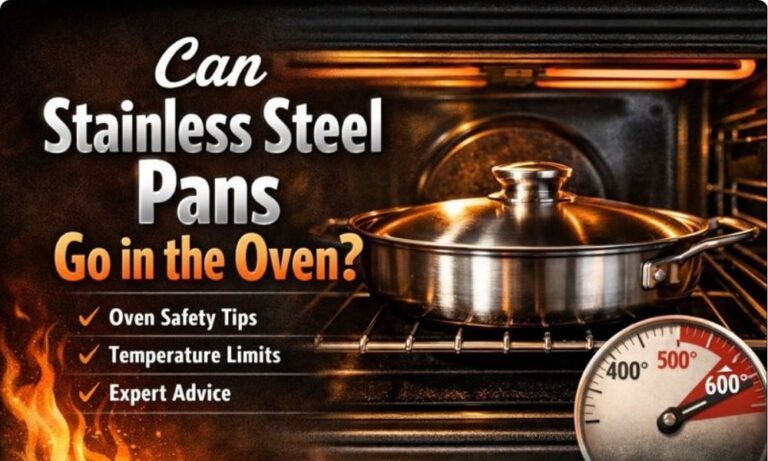
- Common safe ranges: Many non-stick pans list safe use up to about 350–500°F (175–260°C) depending on model and handle. If your pan’s documentation is missing, treat 350–400°F (175–205°C) as a conservative working range.
- Avoid the broiler: The broiler exposes cookware to very high direct heat and is a frequent cause of coating failure and handle damage.
- Short bursts vs long cook: Brief oven use at the top end of a pan’s range is less harmful than long exposure at the same temperature, but repeated exposure still shortens pan life.
Helpful tip: If you plan to finish dishes in the oven often, choose pans that explicitly list higher oven-safe temperatures and have metal handles.
When It’s Better to Avoid the Oven Altogether
There are situations where it’s smarter not to use a non-stick pan in the oven at all.
High-heat roasting, broiling, or long baking times are better handled by other cookware. If a recipe requires sustained high heat or direct top heat, non-stick pans are usually not the best tool.
In these cases, switching pans before finishing the dish can prevent damage and improve cooking results.
Oven-Safe Alternatives to Non-Stick Pans
If you often need to move food from the stove to the oven, it may help to keep other cookware options on hand.
Stainless steel pans are excellent for oven use and can handle high heat. Cast iron is extremely oven safe and perfect for searing and baking. Carbon steel offers similar benefits with a lighter feel. Oven-safe ceramic or glass dishes work well for baking and casseroles.
Using the right pan for the job makes cooking easier and safer.
Common Mistakes People Make With Non-Stick Pans in the Oven
Here are mistakes readers can avoid right away:
- Assuming “non-stick” equals oven-safe. It doesn’t.
- Ignoring handle or lid materials. These often fail before the pan body.
- Using the broiler with a non-stick. That’s a fast way to ruin a coating.
- Putting very old or scratched pans in the oven. Damaged coatings can shed and perform poorly.
- Trusting verbal advice without checking the manual. Manufacturer guidance wins.
Knowing these prevents damage and keeps cooking safer.
Final Takeaway: How to Use Non-Stick Pans Safely
So, are non-stick pans safe? Some are—but many are not. The safest approach is to check your specific pan, respect temperature limits, and pay close attention to the handle and lid.
Non-stick pans are great tools for everyday cooking, but they’re not designed for every situation. Knowing their limits helps you cook better, protect your cookware, and avoid unnecessary risks.
When in doubt, choose oven-safe cookware built for high heat—and save your non-stick pans for what they do best.
Frequently Asked Questions
Are all ceramic non-stick pans oven safe?
Not all. Many ceramic-coated pans tolerate oven heat better than low-end PTFE pans, but you still need to check the handle, lid, and manufacturer’s limit.
Can I put a non-stick pan in the oven at 400°F?
Sometimes. Some pans are rated for 400°F and higher, but some are limited to 350°F or less. Check your pan’s documentation first.
Are non-stick pans safe for baking?
They can be for low- to medium-temperature baking (like finishing a frittata). For high-heat baking or broiling, choose oven-specific cookware.
What happens if the handle melts in the oven?
Turn off the oven, carefully ventilate the area, and remove the pan once cool. If the handle is damaged or the pan’s coating is affected, discard the pan—do not eat food from a pan with melted plastic residue.
Can I use non-stick pans in an air fryer oven?
Often yes, if the pan fits and is rated for oven use at the temperatures the air fryer reaches. But confirm the pan’s oven-safe limit before using it in any appliance that exposes it to sustained high heat.