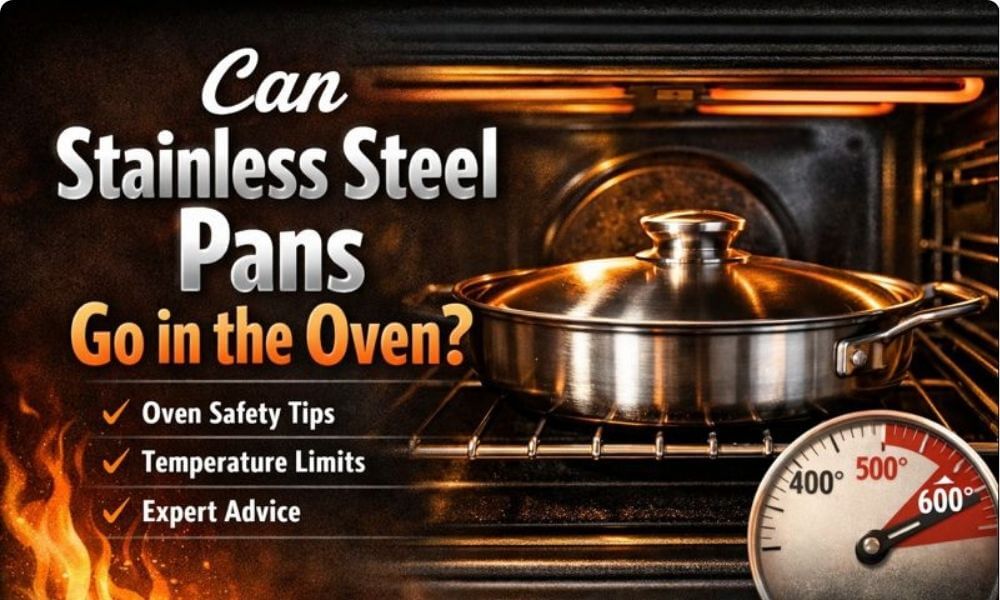
Can Stainless Steel Pans Go in the Oven?
Can stainless steel pans go in the oven?
The short answer is yes—most stainless steel pans are oven-safe, but there are important details you need to know before sliding one into the oven.
Many home cooks ask this question when following stovetop-to-oven recipes, searing meat before baking, or trying to avoid damaging an expensive pan. The confusion usually comes from handles, lids, and temperature limits, not the stainless steel itself. One wrong assumption can lead to melted handles, cracked lids, or warped cookware.
In this guide, you’ll learn exactly when stainless steel pans can go in the oven, when they shouldn’t, and how to check if your pan is safe. We’ll cover temperature limits, common mistakes, and practical tips so you can cook with confidence—without guessing or risking your cookware.
Whether you’re a beginner or a regular home cook, this article will help you use your stainless steel pans safely, correctly, and stress-free in the oven.
Quick Answer (For Busy Readers)
Yes—most stainless steel pans can go in the oven, but a few simple checks are important before you do.
Most oven-safe stainless steel pans are made to handle high heat, making them great for stovetop-to-oven cooking. However, the handle and lid material matter just as much as the pan itself. Plastic, silicone, or glass parts can make a pan unsafe for oven use.
Temperature limits vary by brand, so one pan may be safe at 400°F while another can handle 500°F or more. Always check the manufacturer’s instructions to be sure.
At-a-Glance Oven Safety Checklist
- The pan body is made of stainless steel
- The handle is metal, not plastic or silicone
- The lid is metal or clearly labeled oven-safe
- The pan has a listed oven-safe temperature
- The pan is in good condition with no loose parts
If all these points check out, your stainless steel pan is likely safe to use in the oven.
Why Stainless Steel Pans Can Go in the Oven
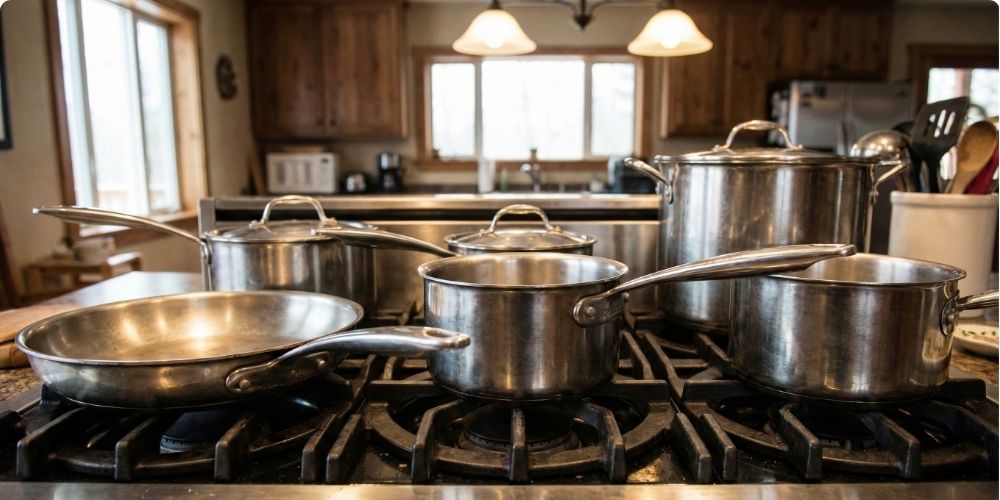
Stainless steel pans are made to handle high heat. That’s why many of them can safely go from the stovetop straight into the oven.
How stainless steel handles high heat
Stainless steel is a strong metal that does not melt, burn, or weaken at normal cooking temperatures. When you put a stainless steel pan in the oven, the metal stays stable and keeps its shape. This makes it much safer than materials like plastic or silicone, which can melt in the oven.
Because of this heat resistance, stainless steel pans are often used for cooking methods that need steady, even heat.
Why stainless steel is used for stovetop-to-oven cooking
Many recipes start on the stovetop and finish in the oven. For example, you might sear a piece of meat on the stove and then move the pan into the oven to cook it all the way through.
Stainless steel pans are popular for this type of cooking because:
- They can handle direct heat from the stove
- They can continue cooking safely in the oven
- They don’t react with food or change flavors
This flexibility makes stainless steel a go-to choice for home cooks and professional kitchens alike.
What Can Make a Stainless Steel Pan NOT Oven-Safe
Many people assume that if a pan is made of stainless steel, it is automatically safe to use in the oven. This is where most confusion happens. In many cases, the pan itself is fine—but one small part can make it unsafe.
Plastic or Silicone Handles
Some stainless steel pans come with plastic or silicone handles to make them more comfortable to hold. These materials are not designed for high oven heat. When placed in the oven, they can melt, soften, or release unpleasant smells. Even if the pan body is stainless steel, a plastic or silicone handle can be damaged quickly in the oven. If your pan has this type of handle, it should stay on the stovetop only.
Glass Lids
Glass lids are another common problem. Many stainless steel pans are sold with glass lids that are safe for low heat but not for the oven. In high temperatures, glass can crack or shatter without warning. This can ruin your food and create a safety risk. Always check whether the lid is oven-safe, and when unsure, remove the lid before placing the pan in the oven.
Non-Metal Knobs
Some lids have knobs made from plastic, rubber, or other soft materials. Even if the lid itself is metal or glass, the knob may not be able to handle oven heat. These knobs can melt or loosen during cooking. A single non-metal knob is enough to make the entire lid unsafe for oven use.
Unknown or Low-Quality Construction
Not all stainless steel pans are made the same. Low-quality or unbranded pans may use thin metal, weak rivets, or heat-sensitive parts. These pans may warp, loosen, or become unsafe at high temperatures. If you cannot find clear oven-safe information from the manufacturer, it is safer to assume the pan is not designed for oven use.
Oven Temperature Limits You Should Know
Even when a stainless steel pan is oven-safe, it still has a temperature limit. Going above that limit can damage the pan or its parts. Knowing these limits helps you cook safely and protect your cookware.
Typical Oven-Safe Temperature Ranges
Most stainless steel pans are safe to use in the oven at 400°F to 500°F. Higher-quality pans made entirely of metal can sometimes handle temperatures up to 600°F. However, this depends on the brand and the materials used for the handle and lid. Always check the manufacturer’s instructions before using high heat.
If you are unsure about your pan’s limit, it is safest to stay at 400°F or lower.
Why Higher Temperatures Increase Risk
As oven temperature increases, the risk of damage also increases. Very high heat can loosen handles, weaken rivets, or cause the pan to warp. If the pan has a lid or handle made from a different material, that part may fail first.
High heat also makes metal extremely hot to touch, increasing the chance of burns if proper care is not taken.
Baking vs. Broiling: What’s the Difference?
Baking uses steady, even heat and is usually safe for oven-safe stainless steel pans. This is the best option when you are unsure about temperature limits.
Broiling uses very intense heat from the top of the oven. This heat is much stronger than normal baking temperatures and can damage pans that are not clearly marked as broiler-safe. If your pan does not specifically say it can be used under the broiler, it is better to avoid this setting.
Simple Temperature Comparison
| Cooking Method | Heat Level | Risk Level | Best Practice |
| Baking | Moderate, steady heat | Low | Safe for most oven-safe stainless steel pans |
| Roasting | Medium to high heat | Medium | Check temperature limits first |
| Broiling | Very high, direct heat | High | Use only if pan is clearly labeled broiler-safe |
How to Check If Your Stainless Steel Pan Is Oven-Safe
Before putting a stainless steel pan in the oven, take a few minutes to check if it is safe. These simple steps can help you avoid damaging your pan or creating a safety risk.
Step 1: Check the Manufacturer’s Website
The easiest and most reliable way is to look up the pan on the manufacturer’s website. Search for the pan model or product name and read the care or safety instructions. Most brands clearly state whether the pan is oven-safe and list the maximum temperature it can handle.
If you still have the box or instruction booklet, check that first—it often includes this information.
Step 2: Look at the Handle and Lid Materials
Take a close look at the handle and lid. If the handle is made of metal, it is usually safe for oven use. If it is made of plastic, rubber, or silicone, it may not be able to handle oven heat.
Check the lid as well. Metal lids are generally oven-safe, while glass lids may not be. If you are unsure about the lid, remove it before putting the pan in the oven.
Step 3: Read Any Symbols or Instructions on the Pan
Some pans have small symbols or engraved instructions on the bottom. These may show an oven symbol or list a temperature limit. While not all pans include this information, it is worth checking.
Also look for warnings such as “not oven-safe” or “stovetop only.”
Step 4: When in Doubt, Use Lower Heat
If you cannot find clear information, it is safer to use a lower oven temperature or avoid the oven altogether. Staying at 400°F or below reduces the risk of damage. You can also transfer your food to a baking dish if higher heat is needed.
Can You Move a Stainless Steel Pan from Stovetop to Oven?
Yes, you can move a stainless steel pan from the stovetop to the oven—but only when the pan is made to handle oven heat. This method is common in home and professional kitchens, but it needs to be done carefully.
When It’s Safe to Do So
It is safe to move a stainless steel pan from the stove to the oven if the pan is oven-safe and all its parts are made of metal. The handle and lid should not have plastic, rubber, or silicone parts. The oven temperature should also stay within the limit recommended by the manufacturer.
If you are unsure whether your pan is oven-safe, it is better to transfer the food to a baking dish instead of taking the risk.
Why Chefs Use This Method
Chefs often start cooking on the stovetop and finish in the oven because it gives better control over cooking. For example, they may brown meat on the stove to add flavor, then place the pan in the oven to cook it evenly all the way through.
This method saves time, uses fewer dishes, and helps food cook more evenly without burning.
Best Practices to Avoid Warping or Burns
Before moving the pan to the oven, avoid sudden temperature changes. Do not put a very cold pan into a hot oven or place a hot pan on a cold surface. Always use oven mitts, even for metal handles, because stainless steel becomes extremely hot.
When removing the pan from the oven, remember that the handle will be just as hot as the pan itself. Keep a towel or oven mitt on the handle as a reminder to avoid accidental burns.
Common Mistakes to Avoid When Using Stainless Steel Pans in the Oven
Many problems happen not because stainless steel pans are unsafe, but because small details are overlooked. Avoiding these common mistakes can help protect your cookware and keep your cooking safe.
Assuming All Stainless Steel Pans Are the Same
Not all stainless steel pans are made the same way. Some are built for high oven heat, while others are designed mainly for stovetop cooking. Differences in handle materials, lid design, and overall quality matter. Just because one stainless steel pan is oven-safe does not mean all of them are.
Always check the specific pan you are using instead of making assumptions.
Forgetting the Lid Isn’t Oven-Safe
A very common mistake is putting the pan in the oven with the lid on. Even if the pan itself is oven-safe, the lid may not be. Glass lids or lids with plastic knobs can crack, shatter, or melt in the oven.
If you are not sure the lid is oven-safe, remove it before placing the pan in the oven.
Exceeding Temperature Limits
Every oven-safe pan has a maximum temperature it can handle. Going above that limit can damage the pan, loosen the handle, or cause warping. High heat also increases the risk of burns.
When in doubt, stay at lower temperatures and follow the manufacturer’s guidelines.
Using the Broiler Without Checking Ratings
Broilers use very intense heat from the top of the oven. This heat is much stronger than normal baking. Some stainless steel pans can handle broiler heat, but many cannot.
If your pan is not clearly labeled as broiler-safe, avoid using it under the broiler. This simple check can prevent permanent damage.
When You Should NOT Put a Stainless Steel Pan in the Oven
Even if a pan is made of stainless steel, there are times when it should not go in the oven. Paying attention to these warning signs can help you avoid accidents and damage.
Pans with Damaged Handles
If a handle is cracked, loose, or feels unstable, do not put the pan in the oven. Oven heat can make the problem worse and cause the handle to fail while cooking. A broken handle can lead to spills, burns, or dropped food. If the handle does not feel solid, keep the pan on the stovetop only.
Loose Rivets
Rivets are the small metal pieces that hold the handle to the pan. If they are loose or wobbly, the pan is not safe for oven use. High heat can weaken these connections even more. If you notice movement where the handle meets the pan, it is best not to use it in the oven.
Mixed-Material Construction
Some stainless steel pans are made with different materials, such as plastic grips, silicone inserts, or glass lids. These materials may not handle oven heat well. Even one unsafe part can make the entire pan unsuitable for oven use. Always check that every part of the pan is made of oven-safe material.
Cheap or Unbranded Cookware
Low-cost or unbranded pans often do not list clear oven-safe information. They may use thinner metal or weaker parts that cannot handle high heat. Without clear guidance from the manufacturer, it is safer to assume the pan is not oven-safe and avoid using it in the oven.
Frequently Asked Questions
Can stainless steel pans go under the broiler?
Sometimes, but not always. Broilers use very intense heat from the top of the oven. Some stainless steel pans are made to handle this, but many are not. If your pan is not clearly labeled as broiler-safe, it is better not to use it under the broiler. High broiler heat can damage handles, loosen rivets, or warp the pan.
When in doubt, avoid the broiler or transfer your food to a broiler-safe dish.
Are induction stainless steel pans oven-safe?
Yes, most induction stainless steel pans are oven-safe. Induction compatibility means the pan works on induction cooktops, but it does not automatically guarantee oven safety. You still need to check the handle, lid, and temperature limits.
If the pan is fully made of metal and the manufacturer lists an oven-safe temperature, it can usually go from the induction cooktop straight into the oven.
Can stainless steel pans go in the oven at 500°F?
Many stainless steel pans can handle 500°F, but not all of them. Higher-quality pans with all-metal construction often allow this temperature. However, some pans are only rated for 400°F or lower, especially if they have non-metal parts.
Always check the manufacturer’s instructions before using high heat. If you are unsure, stay at a lower temperature to be safe.
Is stainless steel safer than nonstick in the oven?
Yes, in most cases, stainless steel is safer than nonstick in the oven. Stainless steel can handle higher heat and does not have a coating that can break down at high temperatures. Many nonstick pans have lower oven-safe limits and should not be used at very high heat.
For oven cooking, stainless steel is often the better choice—especially for high temperatures or long cooking times.
Conclusion: Safe, Simple, and Confident Cooking
Stainless steel pans can be a safe and reliable choice for oven cooking when used the right way. In most cases, the pan itself can handle oven heat—but small details like the handle, lid, and temperature limits make all the difference.
Before putting a stainless steel pan in the oven, take a moment to check that it is fully made of metal, in good condition, and rated for the temperature you plan to use. Avoid high heat and broiler settings unless the pan clearly allows it. When something is unclear, choosing lower heat or a different pan is always the safer option.
With these simple checks, you can move from stovetop to oven with confidence, protect your cookware, and focus on what really matters—cooking great food safely and stress-free.