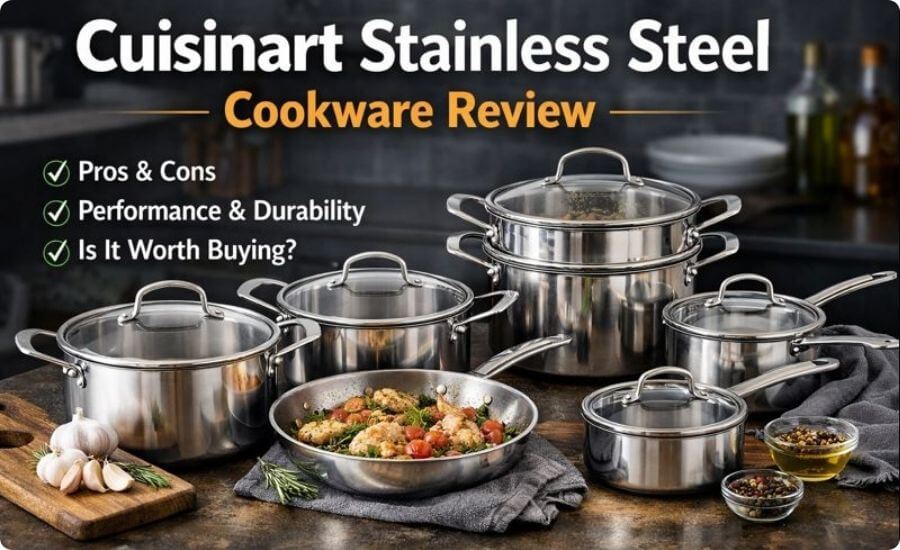
Cuisinart Stainless Steel Cookware Review
If you’re searching for an honest Cuisinart stainless steel cookware review, you’re probably trying to decide whether it’s worth your money. Stainless steel cookware is known for durability and safety, but many home cooks worry about food sticking, learning curves, and whether the brand truly delivers good value.
Cuisinart is a well-known kitchen brand, and its stainless steel cookware is often recommended as a more affordable alternative to premium options. But does it actually perform well in real kitchens, or is it just popular because of the brand name?
In this review, we’ll take a close, practical look at Cuisinart stainless steel cookware. You’ll learn how it performs during everyday cooking, how durable it is over time, whether it’s safe and easy to use, and who it’s best suited for. By the end, you’ll have a clear answer on whether this cookware fits your cooking style, budget, and long-term needs.
Quick Verdict
Cuisinart stainless steel cookware is a reliable, well-built option for everyday home cooking. It offers even heating, long-lasting durability, and good value for the price. While it takes a little practice to use and feels heavier than non-stick pans, it rewards you with better cooking results and years of use.
Best features
- Even heat for consistent cooking
- Strong, long-lasting build
- Safe for high-heat cooking and daily use
- More affordable than premium brands
Main drawbacks
- Small learning curve for beginners
- Heavier than non-stick cookware
- Food can stick if used incorrectly
Overall rating
- Performance: ⭐⭐⭐⭐☆
- Durability: ⭐⭐⭐⭐⭐
- Ease of use: ⭐⭐⭐⭐☆
Buy if… you want durable, safe cookware that performs well and lasts many years.
Avoid if… you want cookware that is very lightweight or completely non-stick with no learning required.
Best Cuisinart Stainless Steel Cookware
|
No. |
Cookware Name |
Buy Now |
|
1 |
Cuisinart 12-Piece MultiClad Pro Triple Ply Stainless Steel Cookware Set (MCPS-12N) |
|
|
2 |
Cuisinart 17-Piece Chef’s Classic Stainless Steel Cookware Set (77-17N) |
|
|
3 |
Cuisinart 7-Piece Chef’s Classic Stainless Steel Cookware Set (77-7P1) |
|
|
4 |
Cuisinart 10-Piece Chef’s Classic Stainless Steel Cookware Set (77-10P1) |
|
|
5 |
Cuisinart Contour Stainless Steel 13-Piece Cookware Set |
|
|
6 |
Cuisinart 12-Quart Chef’s Classic Stainless Steel Pasta/Steamer Set (77-412P1) |
|
|
7 |
Cuisinart 11-Piece Chef’s Classic Stainless Steel Cookware Set (77-11G) |
|
|
8 |
Cuisinart 1.5-Quart Saucepan with Cover – Chef’s Classic (719-16) |
|
|
9 |
Cuisinart 5.5-Quart Sauté Pan with Cover & Helper Handle – Chef’s Classic (733-30H) |
|
|
10 |
Cuisinart 10-Inch Open Skillet – Chef’s Classic Stainless Steel (722-24) |
|
|
11 |
Cuisinart 8-Inch Open Skillet – Chef’s Classic Stainless Steel (722-20) |
|
|
12 |
Cuisinart 3-Quart Saucepan with Cover – Chef’s Classic (7193-20) |
|
|
13 |
Cuisinart 12-Inch Skillet with Glass Cover – Chef’s Classic (722-30G) |
|
|
14 |
Cuisinart 6-Quart Chef’s Classic Stainless Steel Stockpot with Cover (744-24) |
|
|
15 |
Cuisinart 1-Quart Saucepan with Cover – Chef’s Classic (719-14) |
What Is Cuisinart Stainless Steel Cookware?
Cuisinart stainless steel cookware is a line of pots and pans made for everyday home cooking. It is designed to be strong, long-lasting, and safe for regular use. Many people choose Cuisinart because it offers reliable quality at a more affordable price than high-end professional brands.
Cuisinart is a well-known kitchen brand that has been around for decades. It is trusted by home cooks for making practical kitchen tools that focus on performance, safety, and value rather than luxury pricing.
Cuisinart Stainless Steel Cookware Lines
Cuisinart offers several stainless steel options to fit different needs:
- MultiClad Pro
Made for even heating and consistent results. A good choice for serious home cooks. - Chef’s Classic
More affordable and lighter. Ideal for beginners or casual cooking. - Professional Series
Designed for durability and higher heat cooking. Built to last.
What Does “Stainless Steel” Mean?
Stainless steel is a strong metal that doesn’t rust, stain, or react with food. It’s safe for daily cooking and works well for browning, boiling, and making sauces. Unlike non-stick pans, it doesn’t have a coating that can wear off.
Why Cuisinart Uses Tri-Ply or Multi-Ply Design
Cuisinart layers stainless steel with aluminum inside the pan. This helps heat spread evenly and prevents hot spots.
In simple terms:
- Tri-ply = three layers
- Multi-ply = more than three layers
More layers mean better heat control and more reliable cooking results.
This design makes Cuisinart stainless steel cookware durable, dependable, and well-suited for everyday use.
Materials & Construction Quality
This section explains what Cuisinart stainless steel cookware is made of, how it’s built, and why that matters for everyday cooking. Read this to understand what to look for when buying, and how construction affects performance and long-term value.
Type of stainless steel used
Most Cuisinart stainless cookware uses food-grade stainless steel, which doesn’t rust easily and won’t react with your food. You’ll often see labels like 18/10 or 18/8 — these numbers tell you the amount of chromium and nickel in the steel:
- Chromium helps resist rust and adds shine.
- Nickel improves corrosion resistance and gives a smoother finish.
Actionable tip: If you have a nickel allergy, look for products that list lower nickel or say “nickel-free.” Otherwise, 18/10 is a common, safe choice for most people.
Core materials (why aluminum is used inside)
Stainless steel by itself does not spread heat evenly. To fix that, cookware usually has a core layer made of aluminum or sometimes copper inside the steel layers. Aluminum is used because it heats up quickly and spreads heat across the pan.
Actionable tip: Look for descriptions that say “aluminum core,” “aluminum-clad,” or “encapsulated aluminum base.”
Ply construction explained simply
“Ply” means the number of metal layers that make up the pot or pan.
- Tri-ply (3-ply): stainless steel + aluminum core + stainless steel
- 5-ply (or multi-ply): alternating layers (stainless, aluminum, stainless, etc.)
Actionable tip: Tri-ply is great for most home cooks. If you want extra even heating and a heavier, more professional feel, consider 5-ply or multi-ply.
Thickness and weight — what to expect
- Thicker/heavier pans hold heat longer and resist warping. They’re excellent for searing and steady heat.
- Thinner/lighter pans heat up faster and are easier to handle, but may develop hot spots and warp more easily under high heat.
Actionable tip: Think about how you cook. If you sear steaks or use high heat often, a heavier pan is worth it. If you prefer quick, light cooking or have limited wrist strength, a lighter set might be better.
How construction impacts cooking performance
- Even heating: An aluminum core + multiple layers = more even heating → better browning and fewer burnt spots.
- Heat responsiveness: Thinner cores respond faster when you change temperature; thicker cores hold heat longer.
- Stability: Good construction reduces warping and keeps lids fitting properly over time.
- Handle strength: Solidly riveted handles and sturdy lids mean safer, long-lasting cookware.
Actionable tip: When choosing a set, prioritize even heating and secure handles. These affect daily cooking far more than small design differences.
Durability expectations over long-term use
Well-made multi-ply stainless steel cookware can last many years — often a decade or more — if cared for properly.
Things that improve durability:
- Avoid overheating empty pans.
- Use wooden or silicone utensils to reduce surface scratches.
- Clean gently and remove stuck food using the right methods (soak, simmer water + baking soda, or use a non-abrasive scrub).
Things that shorten lifespan:
- Repeated thermal shock (very hot pan → cold water)
- Pounding or bending rims and handles
- Using very high heat for long periods on thin cookware
Actionable tip: Read the warranty and product care notes before buying. A better warranty usually signals confidence from the maker.
Cooking Performance (Real-World Use)
When people ask if Cuisinart stainless steel cookware is “good,” what they really want to know is simple:
How does it cook food in real life?
Here’s what you can expect when you actually put these pots and pans on your stove.
Heat Distribution & Responsiveness
How evenly it heats
Imagine making pancakes on a pan that cooks one side fast and leaves the other side pale. That’s uneven heating—and it can ruin a meal.
With Cuisinart stainless steel cookware, heat spreads more evenly across the pan. This means your food cooks at a similar speed across the surface instead of burning in one spot and staying undercooked in another.
For everyday cooking like frying eggs, sautéing onions, or boiling pasta, this even heat makes cooking feel calmer and more predictable.
Hot spot performance
Hot spots are areas of a pan that get much hotter than the rest. Cheap cookware often has them, and they cause food to burn in patches.
Cuisinart’s layered construction helps reduce hot spots. You may still notice small differences on very high heat, but for normal home cooking, the pan stays consistent enough that you don’t need to constantly move food around to avoid burning.
In real life: You can focus on cooking instead of fighting the pan.
Performance on different stovetops
Cuisinart stainless steel cookware works well on:
- Gas stoves
- Electric stoves
- Glass-top stoves
- Induction cooktops
On gas, the pan responds quickly to flame changes.
On electric or glass-top stoves, it holds heat steadily.
On induction, it heats fast and stays controlled.
This makes it a good choice if you ever change stoves or move homes.
Searing, Browning & Cooking Results
Meat searing quality
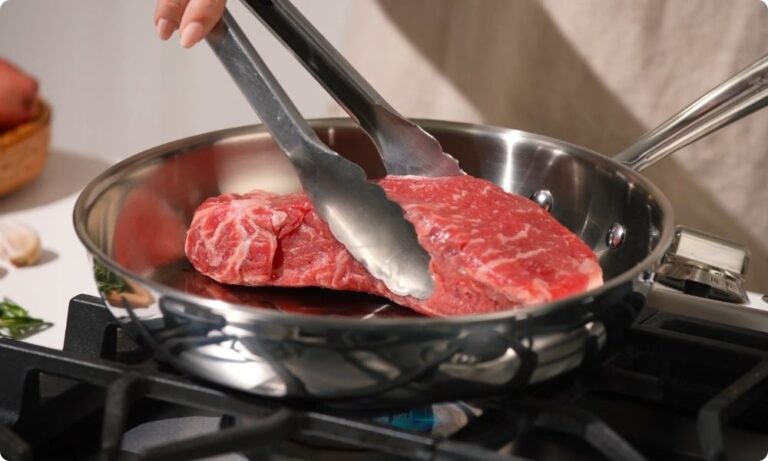
If you enjoy cooking chicken, steak, or fish, stainless steel shines here.
When the pan is heated properly, meat forms a nice brown crust. This crust adds flavor and helps lock in juices. You don’t get that deep browning as easily with non-stick pans.
Real-world result: Chicken gets golden instead of pale. Steak develops a restaurant-style sear.
Vegetable sautéing
Vegetables like onions, peppers, and mushrooms cook evenly and develop better flavor. They soften nicely and brown instead of turning watery.
Because the pan holds heat well, vegetables cook steadily without sudden temperature drops when you add food.
Tip: Let the pan heat before adding oil—this improves results.
Sauce making and deglazing
One big advantage of stainless steel is what happens after cooking.
When you sear meat, small brown bits stick to the pan. Instead of being a problem, these bits become the base of delicious sauces. Add water, broth, or wine, gently scrape the pan, and you have instant flavor.
This is something non-stick pans can’t do well.
Food Sticking: What to Expect
Why food sticks to stainless steel
Food sticking is the biggest fear people have—and yes, it can happen.
Stainless steel does not have a non-stick coating. If the pan is not hot enough, or if food is added too early, food will stick.
But sticking is not a flaw—it’s a sign of technique.
How to reduce sticking
Here’s a simple method that works for beginners:
- Heat the empty pan for 1–2 minutes on medium heat
- Add oil and let it warm slightly
- Add food and don’t move it right away
Once food forms a crust, it naturally releases from the pan.
Think of it like this: Let the food finish its first job before flipping it.
Beginner mistakes to avoid
- Adding food to a cold pan
- Using too little oil
- Flipping food too early
- Cooking on very high heat all the time
- Rinsing a hot pan with cold water
Avoiding these mistakes makes stainless steel much easier to use.
Ease of Use & Learning Curve
If you’ve only used non-stick cookware before, stainless steel can feel a little intimidating at first. The good news is that Cuisinart stainless steel cookware is easier to learn than most people expect. Once you understand a few basic habits, it becomes very comfortable to use.
Is It Beginner-Friendly?
Yes—with a small learning period.
Cuisinart stainless steel cookware does not work the same way as non-stick pans, where food rarely sticks no matter what you do. Instead, it asks you to slow down just a bit and follow a simple routine.
Most beginners feel confident after a few cooking sessions. Once the basics become a habit, cooking feels natural and even more controlled than before.
Preheating and Oil Technique (Made Simple)
This is the most important thing to learn—and it’s easier than it sounds.
A simple step-by-step routine:
- Place the pan on the stove and turn the heat to medium
- Let the empty pan heat for about 1–2 minutes
- Add oil and let it warm for a few seconds
- Add your food
That’s it.
When the pan is properly heated, food is much less likely to stick. This small habit makes the biggest difference in your experience.
Weight and Handling Comfort
Cuisinart stainless steel cookware feels solid but not overly heavy. It’s heavier than non-stick pans, which helps it stay steady on the stove and heat more evenly.
- Pots feel balanced when lifting
- Pans don’t feel flimsy or thin
- Most people can handle them comfortably with one hand
If you prefer very lightweight cookware, it may feel different at first. But many users grow to like the sturdy feel because it feels more stable and durable.
Lid Fit and Steam Control
The lids fit snugly on the pots and pans. This helps:
- Trap heat for faster cooking
- Hold moisture when simmering
- Prevent excessive splashing
Most lids are made of glass, so you can see your food without lifting the lid. This helps beginners avoid overcooking or boiling over.
Some steam escapes naturally, which is normal and helps prevent pressure buildup.
Handle Comfort and Heat Safety
The handles are designed to be:
- Comfortable to grip
- Securely attached
- Positioned to stay cooler than the pan body
During normal cooking, handles stay cool enough to hold. However, when cooking for a long time or using high heat, handles can become warm.
What Beginners Usually Learn First
Most new users learn these three things quickly:
- Heat the pan before adding oil
- Don’t rush flipping food
- Let the pan do the work
Once these become habits, cooking feels smoother and more enjoyable.
Cleaning & Maintenance
Cleaning stainless steel cookware is one of the biggest concerns for new buyers. The good news is that Cuisinart stainless steel cookware is easy to care for once you know what to do. It does not need special tools or harsh chemicals, just a few simple habits.
Is It Dishwasher Safe?
Yes, most Cuisinart stainless steel cookware is labeled dishwasher safe. However, washing by hand is the better choice if you want it to stay shiny and look new for longer.
Dishwashers can cause water spots and dull the surface over time. They won’t damage the cookware, but frequent dishwasher use may affect its appearance.
If you are short on time, the dishwasher is fine once in a while. For regular cleaning, hand washing gives better long-term results.
Best Way to Clean After Cooking
After cooking, let the pan cool down before cleaning. Rinsing a hot pan with cold water can cause warping over time.
Use warm water, mild dish soap, and a soft sponge. Most food residue comes off easily if the pan was preheated correctly during cooking.
If food is stuck lightly, filling the pan with warm water and letting it sit for a few minutes usually loosens it enough to clean without scrubbing.
Handling Burnt-On Food
Burnt-on food can happen, especially when learning to cook with stainless steel. This does not mean the pan is ruined.
Add water to the pan and bring it to a gentle boil for a few minutes. This helps lift the burnt bits from the surface. After that, let the pan cool slightly and clean it with a soft sponge.
For tougher stains, a paste made from baking soda and water works well. Rub gently and rinse thoroughly. Avoid using steel wool or very rough scrubbers, as they can scratch the surface.
Dealing With Discoloration or Water Spots
Over time, stainless steel may develop rainbow colors, white spots, or cloudy marks. These are normal and do not affect cooking performance.
Discoloration often comes from high heat or minerals in water. Water spots usually appear when the pan air-dries.
To remove them, wipe the pan with a little vinegar or lemon juice, then rinse and dry immediately. Drying with a towel after washing helps prevent new spots from forming.
Long-Term Care Tips to Keep It Looking New
To keep your cookware in good condition, avoid extreme temperature changes, such as putting a hot pan under cold water. Use medium heat for most cooking, as very high heat is rarely needed.
Store pans carefully so they don’t rub against each other. If stacking, placing a soft cloth or paper towel between pans helps prevent scratches.
With simple care and gentle cleaning, Cuisinart stainless steel cookware can stay functional and attractive for many years.
Safety & Health Considerations
When choosing cookware, safety matters just as much as performance. Many people want to know if stainless steel is healthy for daily cooking and whether it releases anything harmful. This section explains those concerns in a clear and honest way.
Is Stainless Steel Safe for Daily Cooking?
Yes, stainless steel cookware is considered safe for everyday use by most people.
Stainless steel does not have a coating that can wear off over time. It is stable at high heat and does not release harmful fumes when used properly. This makes it a popular choice for home kitchens and professional cooking environments.
For normal cooking tasks like boiling, frying, sautéing, and simmering, stainless steel is a reliable and safe option.
Nickel and Chromium Concerns Explained
Stainless steel contains small amounts of metals called nickel and chromium. These metals help prevent rust and keep the cookware strong and shiny.
During cooking, especially with very acidic foods like tomato sauce or lemon juice, tiny amounts of these metals may transfer into food. For most people, this amount is extremely small and not considered harmful.
However, people with a known nickel sensitivity may want to be cautious. While the risk is low, long cooking times with acidic foods could cause minor metal transfer.
If you are concerned, using lower heat and avoiding very long cooking times with acidic foods can further reduce exposure.
Stainless Steel vs Non-Stick Cookware Safety
Stainless steel and non-stick cookware have different safety profiles.
Stainless steel does not contain chemical coatings and is safe at high temperatures. It does not release fumes, even when heated strongly. This makes it a good choice for searing and high-heat cooking.
Non-stick cookware is convenient and easy to use, but the coating can wear down over time. If overheated, some non-stick pans may release fumes that are not recommended for indoor use.
For people focused on long-term safety and durability, stainless steel is often seen as the safer option.
Who Should Avoid Stainless Steel Cookware?
Most people can use stainless steel cookware without any health concerns. However, individuals with strong nickel allergies may want to avoid it or choose cookware labeled as nickel-free.
If you are unsure whether nickel affects you, pay attention to how your body reacts. In some cases, switching to ceramic-coated or cast iron cookware may feel more comfortable.
If you have a medical condition or severe metal sensitivity, it’s always a good idea to talk with a healthcare professional before making changes.
Compatibility With Different Cooktops
Before buying cookware, it’s important to know if it will work on your stove and in your oven. Cuisinart stainless steel cookware is designed to be flexible, which makes it a safe choice for most kitchens.
Gas Stove Performance
Cuisinart stainless steel cookware works very well on gas stoves.
Gas flames heat the bottom of the pan quickly, and the cookware spreads that heat evenly. This helps prevent burning in one spot while food cooks slowly in another.
The sturdy build also sits firmly on the grate, so the pan feels stable while cooking.
Electric Stove Performance
On electric stoves, heat takes a little longer to build, but Cuisinart stainless steel cookware holds that heat well once it’s hot.
Food cooks evenly, and temperature stays steady, which is helpful for simmering sauces or cooking rice. Flat-bottomed pans also make good contact with the heating surface, which improves performance.
This makes it a reliable option for electric stovetops.
Induction Compatibility
Most Cuisinart stainless steel cookware is compatible with induction cooktops.
Induction stoves require cookware with a magnetic base. Cuisinart designs many of its stainless steel lines to meet this requirement.
If you want to be sure, a simple test works. Place a magnet on the bottom of the pan. If it sticks, the cookware will work on induction.
Oven-Safe Temperature Limits
Cuisinart stainless steel cookware is generally safe to use in the oven.
Most pieces can handle high oven temperatures, which makes them useful for recipes that start on the stove and finish in the oven. Glass lids usually have lower heat limits than the pans themselves, so it’s important to check the product details before baking with lids on.
Always allow the cookware to cool slightly before moving it from the oven to prevent damage.
Broiler Safety
Cuisinart stainless steel cookware is usually safe for broiler use, but caution is important.
Broilers use very high heat from above, which can make handles and lids extremely hot. If you plan to use the broiler, remove any glass lids and keep a close eye on the cookware.
Using oven mitts and avoiding long broiler times helps prevent damage and keeps cooking safe.
Durability & Long-Term Value
When buying cookware, the price matters—but how long it lasts matters even more. Cuisinart stainless steel cookware is designed to be used for many years, not just a few seasons. This section explains what you can expect over time and whether the cost makes sense in the long run.
Expected Lifespan With Normal Use
With normal home cooking, Cuisinart stainless steel cookware can last 10 years or more. Many users keep the same set for decades when it’s cared for properly.
Unlike non-stick cookware, there is no coating to peel or wear off. As long as the cookware is not abused, it remains fully usable even if it shows some cosmetic marks over time.
This makes it a good option for people who prefer to buy once and use their cookware for years.
Resistance to Warping
Warping happens when cookware bends and no longer sits flat on the stove. This often occurs with thin or low-quality pans.
Cuisinart stainless steel cookware is made with layered construction, which helps it stay flat even after repeated heating. Under normal use, warping is rare.
To avoid warping, it’s important not to rinse a hot pan with cold water and to avoid extreme heat when it’s not necessary.
Handle and Rivet Durability
The handles on Cuisinart stainless steel cookware are firmly attached with rivets. These rivets help keep the handles stable over time.
With regular use, handles stay solid and do not loosen easily. Even after years of cooking, they usually remain secure if the cookware is handled normally.
This adds to safety and confidence, especially when lifting heavier pots.
Warranty Overview
Most Cuisinart stainless steel cookware comes with a limited lifetime warranty. This shows that the brand expects the cookware to last a long time.
The warranty typically covers manufacturing defects, not damage from misuse. While you may never need to use it, having a warranty adds peace of mind.
Before buying, it’s always a good idea to check the specific warranty details for the set you choose.
Cost-Per-Year Value Breakdown
At first glance, stainless steel cookware may seem more expensive than non-stick options. But when you look at how long it lasts, the cost becomes more reasonable.
For example, if a cookware set costs more upfront but lasts 10–15 years, the cost per year is much lower than replacing cheaper cookware every few years.
This long-term value makes Cuisinart stainless steel cookware a smart investment for people who cook regularly and want reliable tools.
Cuisinart Stainless Steel Cookware — Pros & Cons
Pros
- Even heat distribution — Multi-ply construction helps food cook more evenly, so you get fewer hot spots.
- Solid build quality — Pots and pans feel sturdy and hold up well with normal use.
- Trusted brand — Cuisinart is a well-known name with reliable customer support and warranties.
- Better price vs premium brands — Offers many features of high-end sets at a lower cost, giving good value.
Cons
- Small learning curve — You need to learn basic techniques (preheating, oiling) to avoid sticking.
- Heavier than non-stick — The pans feel weighty, which some people prefer but others may find tiring to lift.
- Not non-stick — Food can stick if you don’t use the right heat and oil technique, so it’s not ideal for “no-fuss” cooking.
Comparison With Similar Brands
When buying cookware, it helps to see how Cuisinart stacks up against other popular options. Here we compare it to two well-known brands: All-Clad and Calphalon. This comparison focuses on real differences that matter to everyday home cooks.
Cuisinart vs All-Clad
Performance Differences
Both Cuisinart and All-Clad make stainless steel cookware that heats evenly and cooks well. All-Clad is often seen as slightly better at spreading heat perfectly across the pan, especially at higher cooking levels. This can matter most for serious cooks who want very precise results.
Cuisinart also cooks evenly and gives reliable results for everyday dishes like sautéing, boiling, and frying. For most home cooking, the difference in performance is noticeable but not dramatic.
Price Comparison
One of the biggest differences is price. All-Clad cookware is usually much more expensive than Cuisinart. This higher cost reflects its professional-level build and performance.
Cuisinart gives many of the same benefits at a lower price, making it a more budget-friendly choice without sacrificing core cooking performance.
Who Each Brand Is Best For
All-Clad is best for people who cook very often, want professional-grade tools, and don’t mind paying more. Serious home cooks and people who want “top-shelf” cookware may prefer it.
Cuisinart is best for most families, beginner cooks, and anyone who wants reliable cookware that performs well without a high price tag.
Cuisinart vs Calphalon Stainless Steel
Durability
Both brands make durable stainless steel cookware that should last many years. Calphalon pieces often feel a bit heavier and may resist warping slightly better in heavy-use kitchens. Cuisinart is still very durable, especially with proper care, and does not lose performance quickly.
For everyday home use, both brands hold up well.
Design
Calphalon cookware sometimes has a more modern look and slightly different handle shape. Some people find Calphalon handles more comfortable for long cooking sessions, while others prefer Cuisinart’s classic design.
In practical terms, both designs work fine. It mostly comes down to personal feel and kitchen style.
Value for Money
Cuisinart generally offers better value for most home cooks. You get strong performance, long life, and a trusted name at a lower price.
Calphalon is a good choice if you want something a bit heavier and are willing to spend more. But if price and overall reliability are your top priorities, Cuisinart is often the better value.
Who Should Buy Cuisinart Stainless Steel Cookware?
Cuisinart stainless steel cookware is a good choice for many home cooks, but it is not for everyone. This section helps you decide if it matches your cooking style, habits, and expectations.
Home Cooks Who Cook Regularly
If you cook meals at home several times a week, this cookware makes sense. It is built to handle daily use and does not wear out quickly. You won’t need to replace it every few years like cheaper cookware.
This makes it a practical choice for families and anyone who relies on their kitchen often.
People Who Want Long-Lasting Cookware
Cuisinart stainless steel cookware is designed to last many years. There is no coating to peel or fade, and the pans stay usable even after heavy use.
If you prefer buying something once and using it for a long time, this cookware fits that goal.
Health-Conscious Buyers
If you are concerned about chemicals or coatings in cookware, stainless steel is a safe option. It does not release fumes and handles high heat well.
This makes it a good choice for people who want simple, safe cooking tools without extra layers or treatments.
Beginners Willing to Learn Basic Cooking Habits
You don’t need to be an expert cook, but you do need to be willing to learn a few simple steps, like preheating the pan and using oil properly.
If you are open to learning these basics, stainless steel quickly becomes easy and enjoyable to use.
Buyers Who Want Good Value Without Premium Prices
Cuisinart offers strong performance at a lower price than many high-end brands. You get reliable results and solid build quality without paying for a luxury name.
This makes it a good choice for shoppers who want quality but also care about their budget.
Who May Want to Skip It
This cookware may not be the best fit if you want food to never stick, prefer very lightweight pans, or don’t want to adjust how you cook at all.
If you rely heavily on non-stick cookware and don’t want to change habits, stainless steel may feel frustrating at first.
FAQs: Cuisinart Stainless Steel Cookware Review
Is Cuisinart stainless steel cookware good quality?
Yes. Cuisinart stainless steel cookware is known for solid build quality and reliable cooking performance. The pans and pots are made to last many years with normal home use, and the brand has a strong reputation for everyday kitchen tools. Many home cooks find that it delivers even heating, sturdy handles, and durable construction without a very high price.
Does food always stick to Cuisinart stainless steel cookware?
No, food doesn’t always stick, but it can if the pan isn’t heated properly. Stainless steel doesn’t have a coating like non-stick pans, so it needs a bit of heat and oil before adding food. When you preheat the pan and warm the oil first, food releases more easily and sticking happens less often. With a little practice, most people find sticking becomes less of an issue.
Is Cuisinart stainless steel cookware safe for induction cooktops?
Yes, most Cuisinart stainless steel cookware works on induction cooktops. To be sure, you can check if a magnet sticks to the bottom of the pan—if it does, the cookware will work with induction. Cuisinart designs many of its stainless steel lines to be compatible with all stovetops, including induction.
Is stainless steel better than non-stick cookware?
It depends on what you need. Stainless steel and non-stick both have advantages. Stainless steel is great for high-heat cooking, browning meat, making sauces, and long-lasting use. It doesn’t have a coating that can wear off. Non-stick pans are easier to clean and better for very sticky foods, like eggs or pancakes, especially if you want minimal oil. Many cooks keep both types in their kitchen because each works better for different tasks.
How long does Cuisinart stainless steel cookware last?
With regular home use, Cuisinart stainless steel cookware can last 10 years or more. It does not have a thin coating that wears off, so it stays fully functional even with frequent use. How long it lasts also depends on how you care for it—gentle cleaning, avoiding extreme temperature changes, and proper storage can help keep it in good condition for years.
Final Verdict: Should You Buy It?
Cuisinart stainless steel cookware is a solid choice if you want durable, safe, and reliable cookware for everyday cooking. It heats evenly, handles many cooking tasks well, and lasts much longer than most non-stick options. The main trade-offs are a small learning curve and slightly heavier weight, but these are manageable for most home cooks.
This cookware is best for people who cook regularly, care about long-term value, and are willing to learn a few simple habits like preheating the pan. If you want cookware that performs well, avoids chemical coatings, and offers good quality at a reasonable price, Cuisinart stainless steel cookware is worth buying.