Are Stainless Steel Pans Dishwasher Safe?
I remember the day I bought my first nice stainless steel pan — shiny, heavy, and promising better browning than the old nonstick I’d been using. After the first messy week of cooking and dishes, the idea of tossing it in the dishwasher felt like a small miracle. But then I worried: would the dishwasher ruin it?
If you’ve ever felt the same—wanting easy cleanup but afraid of damaging a new pan—this article is for you. I’ll give a short, honest answer up front, then walk you through what actually happens in a dishwasher, when it’s safe to use one, when it isn’t, how to fix common problems, and the best way to keep your pan looking and cooking great.
Quick answer (so you can decide fast)
Most stainless steel pans are technically dishwasher safe, but putting them in the dishwasher often will wear down the finish, cause stains or cloudiness, and can make food stick more over time. Hand washing is gentler and will help your pans last longer.
Why people worry about putting stainless steel in the dishwasher
Picture this: You open the dishwasher after a cycle and your once-mirror-finish pan looks dull, slightly spotted, or has a rainbow film. It stings. That shine was part of what made you buy the pan.
Those ugly changes are the main reasons people hesitate:
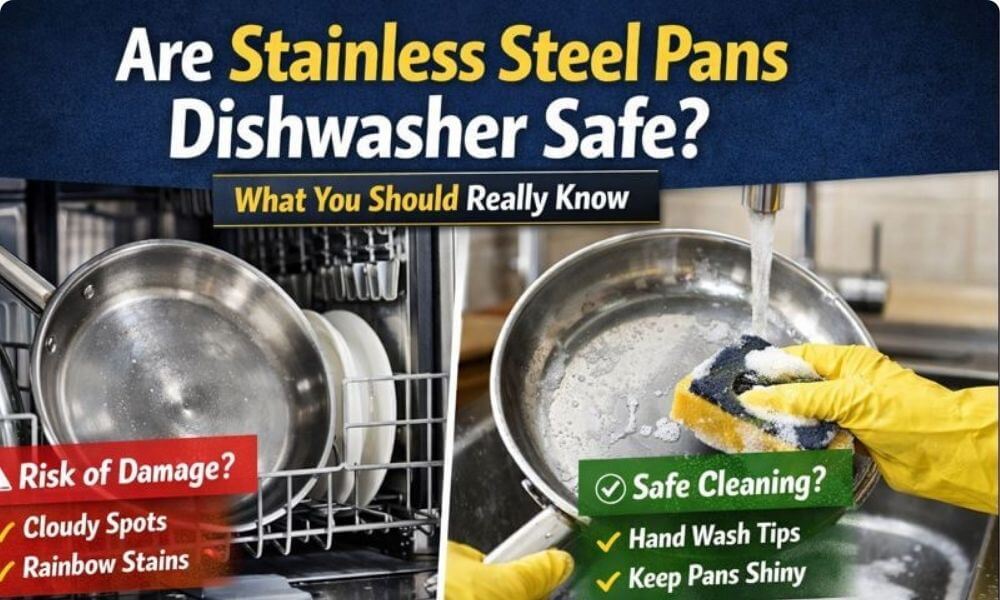
- A cloudy or matte film replaces the shine.
- Rainbow-colored stains appear.
- Small rough spots or pitting can show up on the surface.
- Edges or bottoms might discolor, especially if the pan has other metals inside (like aluminum).
Understanding why those things happen helps you make smarter choices.
Are stainless steel pans actually dishwasher safe?
Yes — in many cases, manufacturers label stainless steel pans as “dishwasher safe.” But “dishwasher safe” doesn’t always mean “dishwasher friendly.” Think of it this way: an item can survive a single rough treatment, but repeated rough treatments will wear it down.
So, while a dishwasher won’t instantly destroy most stainless steel pans, regular dishwasher use speeds up wear and tear: it dulls the finish, may cause staining, and can make the pan less pleasant to cook with over time.
What really happens to stainless steel in a dishwasher
A dishwasher is a harsh environment for cookware. Here’s what’s going on inside:
- High heat: The water and drying cycle get very hot. Heat can change finishes and make detergents act stronger.
- Strong detergents: Dishwasher soaps have powerful cleaning chemicals designed to break down grease and baked-on food. Those chemicals can be too aggressive for polished metal surfaces.
- Mineral deposits: Hard water leaves mineral films on metal that look cloudy or dull.
- Salt and chlorine: If your dishwasher detergent has chlorine-based ingredients, those can cause tiny corrosion spots over time, especially on edges or exposed seams.
All together, these factors remove the shiny protective layer on stainless steel. Once that layer is worn, the pan can stain or stick more easily.
When it’s okay to put stainless steel pans in the dishwasher
You can use the dishwasher sometimes, if you follow a few rules:
- The pan is fully stainless steel (no exposed aluminum or copper).
- It’s not heavily burnt or packed with stuck-on food; the dishwasher may not clean that well anyway.
- You only run it through the dishwasher occasionally, not every single day.
- You place it separately so it doesn’t bang against other dishes or cookware during the cycle.
If you meet those conditions, an occasional dishwasher cycle is unlikely to ruin the pan immediately.
When you should never use the dishwasher
Avoid the dishwasher in these cases:
- The pan has a polished or mirror finish you care about keeping shiny.
- It has an exposed aluminum or copper core (many “tri-ply” pans have aluminum inside that can be damaged at seams).
- The pan is expensive or part of your heirloom cookware — hand washing protects your investment.
- There’s stuck-on burnt food; soak and hand-scrub instead.
- The pan has wood or plastic handles that might warp or crack.
When in doubt, hand wash.
Why stainless steel pans get cloudy after dishwasher washing
That cloudy look usually comes from two things:
- Detergent residue — dishwasher soap can leave a thin film, especially on shiny finishes.
- Mineral buildup — hard water deposits leave a chalky layer that makes the pan look dull.
Good news: both of these are fixable with simple household items.
Quick fix: Fill the pan with a mix of equal parts water and white vinegar, bring to a simmer, let cool, pour out, rinse, and dry. The vinegar helps dissolve mineral films. For tougher cloudiness, sprinkle a little baking soda and scrub gently with a soft sponge.
Best way to clean stainless steel pans (safe & easy)
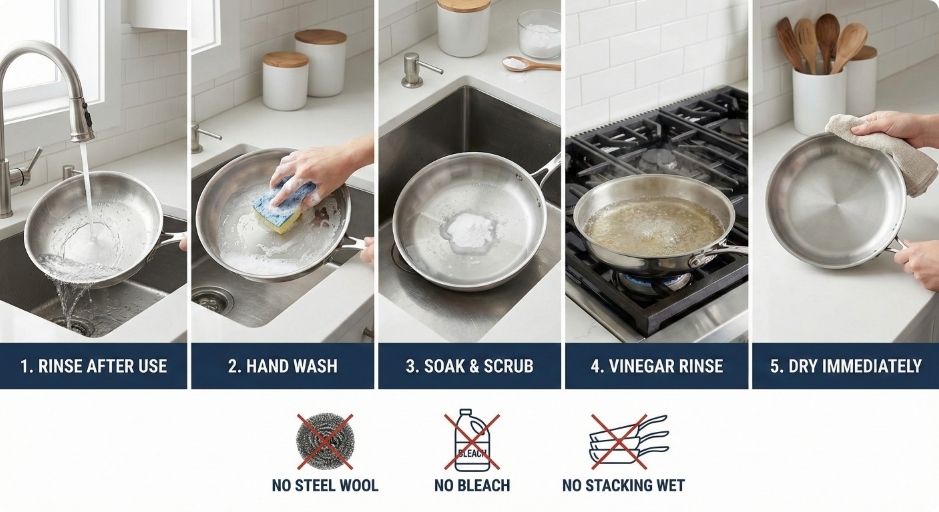
If you want them to look and perform their best, here’s a simple routine I use:
- Right after cooking: Let the pan cool slightly, then rinse with warm water. This prevents food from hardening.
- Hand wash: Use warm water, a small amount of mild dish soap, and a soft sponge. Circular motions work well.
- For stuck-on food: Fill the pan with hot water and a splash of soap. Let it soak for 15–30 minutes, then wipe gently. For stubborn spots, sprinkle baking soda and use a soft scrub pad.
- Vinegar rinse for cloudiness: Mix 1 part vinegar with 1 part water, simmer for a few minutes, then rinse and dry.
- Dry immediately: Leaving the pan to air-dry can leave water spots. Wipe it dry with a towel to keep the finish nice.
A few tips: avoid steel wool on polished surfaces (it can scratch); don’t use bleach; don’t stack pans wet.
Does dishwasher cleaning affect cooking performance?
Yes — over time. When the finished dulls or tiny pits form, food is more likely to stick. Browning may become uneven. So while your pan will still “work” after some dishwasher cycles, it may not give the same quick, even sear you bought it for. Hand washing helps preserve the smooth surface that browns food well.
What cookware brands actually recommend
Many popular cookware brands list their products as dishwasher safe, but they still recommend hand washing to preserve finish and performance. The reason is simple: the pan can survive the dishwasher, but hand washing keeps it looking better and working better for longer.
If you own a specific brand, check the manufacturer’s care instructions for that model — they often give the clearest guidance for that pan’s materials and construction.
Final verdict — should you use the dishwasher or not?
Short version: You can use the dishwasher occasionally, but hand washing is the safest choice if you want your stainless steel pans to stay shiny and perform at their best for years.
If you’re short on time, a single dishwasher run won’t ruin a pan. But if you care about long-term performance and appearance, hand washing is your habit.
FAQs
Can stainless steel rust in the dishwasher?
Pure stainless steel resists rust, but if the protective layer is damaged or if the pan has exposed seams or different metals, rust or dark spots can appear. Rinse and dry your pan after washing to reduce risk.
How often is it safe to use the dishwasher?
Occasionally — maybe once every few weeks for light cleaning. Daily dishwasher use is what speeds up wear.
Why do some pans survive the dishwasher while others get damaged?
Construction matters. Solid, fully stainless pans handle dishwasher cycles better than pans with exposed cores or delicate finishes. Water hardness, detergent strength, and how you place the pan in the dishwasher also affect outcomes.