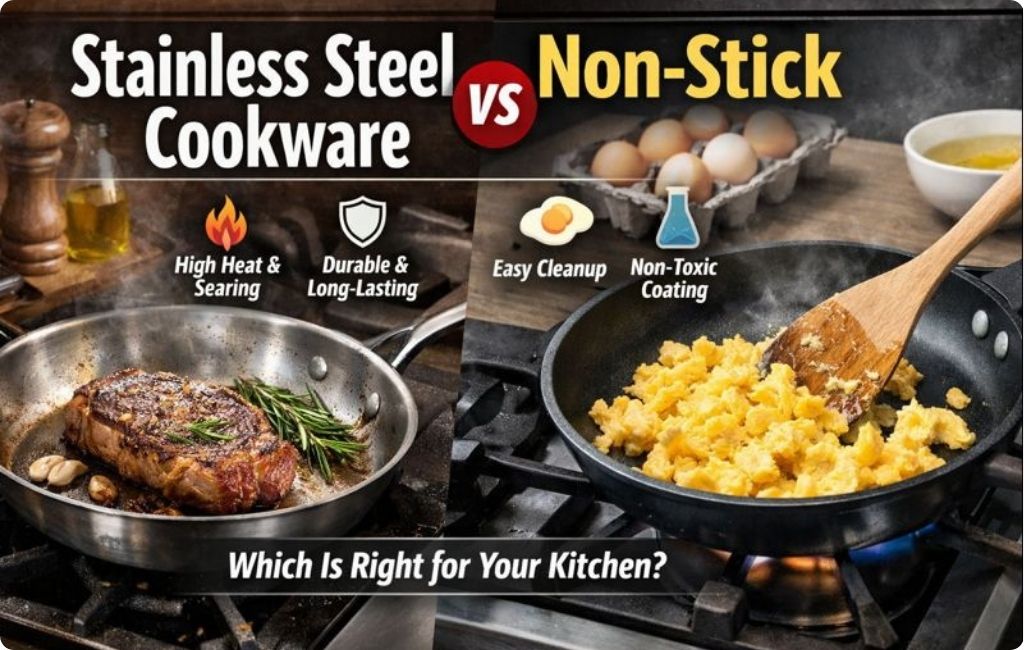
Stainless Steel Cookware vs Non-Stick
Choosing the right cookware can feel surprisingly complicated. Walk into any kitchen store and you’re immediately faced with a big decision: stainless steel cookware vs non-stick. Both are popular, both have loyal fans, and both claim to make cooking easier—but they serve very different purposes.
If you’ve ever wondered:
- Which cookware is healthier?
- Why food sticks to stainless steel but chefs still love it
- Whether non-stick pans are safe and worth replacing every few years
- Which option actually gives you better value over time
You’re not alone. This guide breaks everything down clearly so you can choose with confidence—based on how you cook, not marketing hype.
Stainless Steel Cookware vs Non-Stick: Comparison Table
| Feature | Stainless Steel Cookware | Non-Stick Cookware |
| Best For | Searing, browning, sauces, high-heat cooking | Eggs, pancakes, fish, low-fat cooking |
| Cooking Performance | Excellent heat retention and even browning | Easy food release, minimal sticking |
| Learning Curve | Moderate – requires proper preheating and oil control | Very low – beginner-friendly |
| Food Sticking | Possible if technique is poor | Rare when coating is intact |
| Heat Tolerance | High – safe for stovetop and oven | Low to medium – high heat can damage coating |
| Flavor Development | Creates fond for rich sauces | Limited browning and fond |
| Health & Safety | No chemical coating; very stable | Safe when used properly, coating degrades over time |
| Durability | Extremely durable; can last decades | Limited lifespan (2–5 years on average) |
| Maintenance | Dishwasher safe; may require soaking or scrubbing | Hand-wash recommended; gentle utensils required |
| Cleaning Ease | Moderate | Very easy |
| Metal Utensil Safe | Yes | No |
| Acidic Foods | Safe and stable | Generally safe, but repeated use may shorten coating life |
| Cost (Upfront) | Medium to high | Low to medium |
| Cost Over Time | Low (rare replacement) | Higher due to frequent replacement |
| Environmental Impact | Recyclable and long-lasting | Harder to recycle; shorter lifespan |
| Professional Chef Use | Very common | Limited, task-specific use |
| Ideal Kitchen Setup | Core cookware set | Supplementary pan for delicate foods |
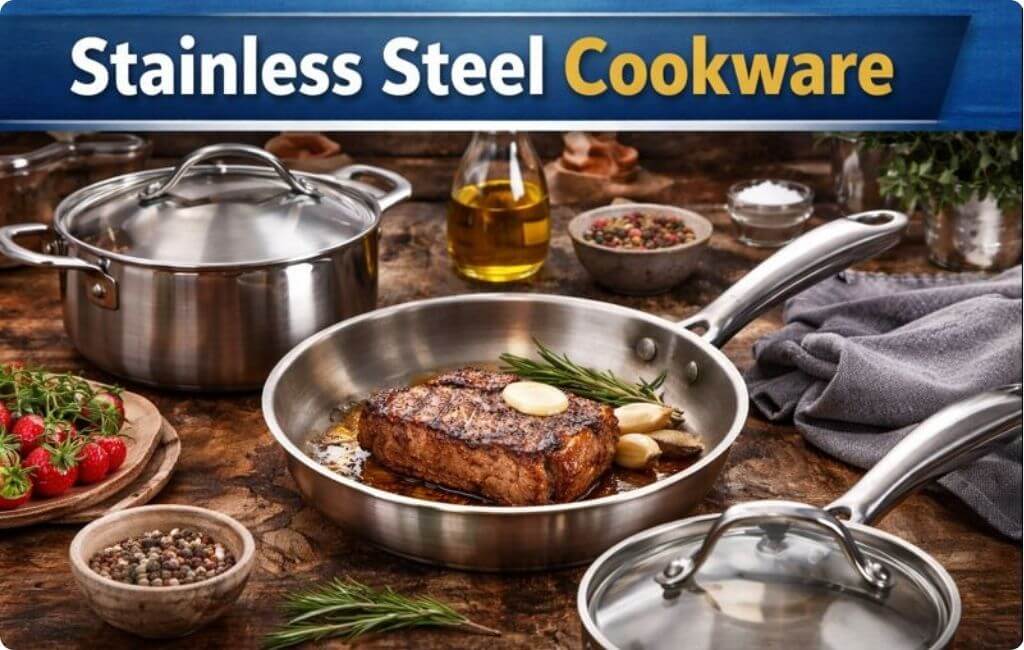
What Is Stainless Steel Cookware?
Here’s a simple, easy-to-follow explanation you can drop into your post. No jargon — just clear points a beginner can understand.
Material & Construction
What stainless steel is made of
Stainless steel is a metal made mainly from iron with added metals like chromium (which prevents rust) and sometimes nickel. The surface you cook on is stainless steel — smooth, shiny, and hard.
Importance of multi-ply (tri-ply, 5-ply) construction
Multi-ply means the pan is built like a sandwich: stainless steel on the outside and a layer (or several layers) of a different metal inside.
- Tri-ply usually has three layers: stainless / aluminum / stainless.
- 5-ply has more alternating layers for even better heat control.
Why it matters: stainless by itself doesn’t carry heat well. The inner aluminum or copper layers help the pan heat up evenly so food cooks the same across the whole surface.
Role of aluminum or copper cores
Aluminum and copper are excellent at moving heat. When they’re placed under the stainless layer, they spread heat quickly and evenly.
- Aluminum core = most common; balances performance and cost.
- Copper core = heats fastest and most evenly, often found in higher-end pans.
Practical result: fewer hot spots, better browning, and less chance of burning one side of your food.
How Stainless Steel Performs in Cooking
Heat retention and distribution
Stainless steel with an aluminum or copper core gets hot and stays hot. It spreads heat across the pan so food cooks evenly. That makes it great for tasks that need steady, high heat.
Browning, searing, and fond development
Stainless steel helps food brown well. When meat or vegetables brown, little brown bits (called fond) stick to the pan. That fond is flavor gold — you can add liquid (wine, stock, or water) and scrape it up to make a rich sauce. That’s one reason chefs love stainless steel.
How it reacts to acidic foods
Stainless steel is mostly non-reactive. That means it does not usually change the taste of acidic foods like tomatoes, lemon, or vinegar. You can cook tomato sauces or deglaze the pan without worry.
Pros of Stainless Steel Cookware
- Extremely durable — it can last for many years if cared for.
- No chemical coatings — there’s no non-stick layer that can wear off.
- Oven and dishwasher safe (usually) — many stainless pans go from stove to oven easily and can be cleaned in the dishwasher (check the maker’s instructions).
- Versatile across cooking techniques — great for searing, sautéing, boiling, simmering, and making pan sauces.
Cons of Stainless Steel Cookware
- Food can stick if misused — eggs and some delicate foods stick more easily than in non-stick pans.
- Requires technique and temperature control — you need to preheat the pan and time the oil correctly to prevent sticking. (Tip: heat the pan, add oil, wait a few seconds, then add food.)
- Higher upfront cost — good stainless sets can cost more at first, though they often last longer.
What Is Non-Stick Cookware?
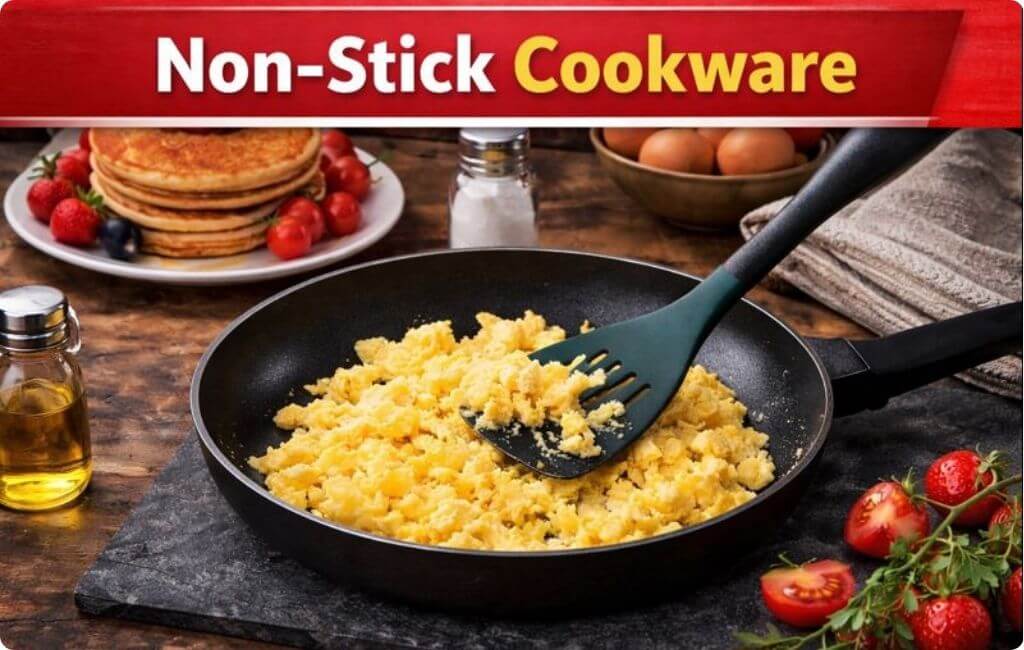
Non-stick cookware is designed so food doesn’t stick to the surface. It has a special coating that lets food slide off easily, making cooking and cleaning simpler—especially for beginners.
Types of Non-Stick Coatings
PTFE (often called Teflon)
This is the most common type of non-stick coating. It creates a very smooth surface that food barely sticks to. When used correctly (not overheated and not scratched), it works very well for everyday cooking.
Ceramic coatings
Ceramic non-stick pans use a coating made from natural minerals. They are often marketed as a more “natural” option. They work well at first, but the non-stick effect usually wears off faster than traditional coatings.
Key differences in lifespan and performance
- PTFE coatings usually last longer and stay slippery for more time.
- Ceramic coatings may lose their non-stick ability sooner, especially with frequent use.
- Both types need gentle care to work well.
How Non-Stick Cookware Performs in Cooking
Low-fat cooking
Non-stick pans need little or no oil. This makes them useful for people who want to cook lighter meals or reduce added fats.
Best for delicate foods
Non-stick cookware is ideal for foods that fall apart easily, such as:
- Eggs
- Pancakes
- Fish
- Crepes
These foods release easily without tearing or sticking.
Lower heat tolerance
Non-stick pans work best on low to medium heat. High heat can damage the coating over time, so they’re not meant for intense searing or broiling.
Pros of Non-Stick Cookware
- Extremely easy food release — food slides out smoothly.
- Beginner-friendly — little technique needed to get good results.
- Easier cleaning — often just a quick wipe or rinse.
- Usually more affordable upfront — lower starting cost than stainless steel.
Cons of Non-Stick Cookware
- Coatings wear out over time — the non-stick surface won’t last forever.
- Limited heat resistance — high heat can shorten the pan’s life.
- Requires careful utensil use — metal utensils can scratch the coating; wood or silicone is better.
- Shorter lifespan — most non-stick pans need replacing every few years.
Health & Safety Comparison: What You Need to Know
When people choose cookware, health is often the biggest concern. No one wants to cook dinner and worry about what might be getting into their food. Let’s walk through both options in a simple, honest way.
Stainless Steel Safety Profile
Imagine a pan that’s solid metal from top to bottom. That’s stainless steel.
No coating to wear off
Stainless steel doesn’t have a coating on the surface. There’s nothing to peel, chip, or break down over time. What you see is what you cook on, year after year. This is one reason many people feel comfortable using it for daily cooking.
Nickel considerations (for sensitive users)
Some stainless steel contains a small amount of nickel. For most people, this is not a problem at all. But if someone has a strong nickel allergy, a tiny amount can sometimes transfer into food, especially when cooking acidic dishes like tomato sauce.
If this matters to you, look for cookware labeled nickel-free or low-nickel.
What the FDA says
Food safety agencies like the FDA consider stainless steel safe for cooking. It’s widely used in professional kitchens, restaurants, and food processing for a reason—it’s stable, durable, and reliable.
Non-Stick Safety Concerns
Now picture a pan that makes eggs slide around like magic. That’s the appeal of non-stick cookware—but many people wonder how safe it really is.
What PFAS and PTFE mean
Most traditional non-stick pans use a coating called PTFE (often known by the brand name Teflon). PFAS is a larger group of chemicals that PTFE belongs to.
The important thing to know is this: the coating stays stable when the pan is used correctly.
Safety at normal cooking temperatures
Non-stick cookware is considered safe when used on low to medium heat. Problems can happen if the pan is left empty on high heat for too long. That’s when the coating can start to break down.
In everyday cooking—scrambling eggs, flipping pancakes, cooking fish—this usually isn’t an issue.
Off-gassing: myths vs facts
You may have heard scary stories about non-stick pans releasing toxic fumes. This only happens at very high temperatures that most home cooking never reaches. As long as you:
- Don’t overheat the pan
- Don’t leave it empty on a hot burner
- Replace it when the coating is damaged
You’re using it the way it was designed to be used.
Stainless Steel Cookware vs Non-Stick Which Is Healthier?
The honest answer is: both can be safe, depending on how you use them.
Stainless steel is often seen as the safer long-term option because it has no coating to wear out. It’s especially appealing to people who want something sturdy and worry-free.
Non-stick cookware can also be safe when used properly. It shines in everyday tasks like cooking eggs or fish with little oil, as long as you avoid high heat and replace the pan when the surface starts to wear.
The real key to health and safety isn’t the pan alone—it’s how you use it.
Using the right heat, the right tools, and replacing cookware when it’s worn out matters more than choosing one “perfect” option.
In the end, the healthiest cookware is the one you use correctly and feel confident cooking with.
Cooking Performance: Side-by-Side
Imagine it’s a regular evening and you’re standing at the stove, deciding which pan to grab. The choice you make changes how your food cooks—and how it tastes. Here’s how stainless steel and non-stick pans behave when the heat is on.
Best Foods for Stainless Steel
Think of stainless steel as the pan you reach for when you want bold flavor and strong heat.
Meat searing
When you place a steak or chicken breast in a hot stainless steel pan, it sticks at first—and that’s actually a good thing. After a short time, it releases on its own, leaving behind a deep brown crust. That crust adds a rich, savory flavor you can’t get with gentler pans.
Pan sauces
After cooking meat, you’ll notice small brown bits stuck to the pan. These bits are packed with flavor. Add a splash of broth, wine, or water and gently scrape them up. In just minutes, you have a simple sauce that tastes like it came from a restaurant.
High-heat cooking
Stainless steel handles high heat without a problem. This makes it great for stir-frying, sautéing vegetables, or cooking foods that need a strong, steady temperature.
Deglazing
Deglazing is just a fancy word for adding liquid to a hot pan to lift up those flavorful bits stuck to the bottom. Stainless steel is perfect for this because it holds heat well and doesn’t react badly to liquids.
Best Foods for Non-Stick
Now picture a calm morning, making breakfast with minimal effort. That’s where non-stick shines.
Eggs and omelets
Eggs slide easily across a non-stick pan. They don’t tear, stick, or leave a mess behind. This makes non-stick the go-to choice for scrambled eggs, fried eggs, and omelets.
Pancakes
Pancakes cook evenly and flip easily on a non-stick surface. You don’t need much oil, and cleanup takes seconds.
Fish
Delicate fish can fall apart in other pans. In a non-stick pan, fish stays whole and lifts out smoothly, which is especially helpful for beginners.
Low-oil cooking
If you like using very little oil or butter, non-stick makes that possible. Food releases easily without needing much added fat.
Flavor & Texture Differences
This is where the two pans feel very different.
Browning
Stainless steel creates deeper browning. This adds a stronger, richer flavor, especially for meat and vegetables. Non-stick browns food lightly but not as deeply.
Fond creation
Stainless steel creates those tasty brown bits that turn into sauces. Non-stick pans don’t build fond because food doesn’t stick in the first place.
Moisture retention
Non-stick pans are gentler. Foods like eggs and fish stay soft and moist. Stainless steel can cook foods more firmly, which is great for crisp edges and bold textures.
Ease of Use & Learning Curve
Every pan has a personality. Some are easygoing from the start. Others ask you to learn their rhythm. Stainless steel and non-stick fall into these two very different camps.
Stainless Steel Technique Tips
The first time someone cooks with stainless steel, food often sticks—and frustration follows. But once you learn a few simple habits, the pan becomes much easier to use.
Preheating correctly
Start by placing the empty pan on the stove and letting it warm up for a minute or two. A hot pan helps prevent sticking. If you rush this step, food is more likely to cling to the surface.
The water droplet test
Not sure if the pan is ready? Flick a few drops of water into it.
- If the water just sits there and slowly evaporates, the pan is too cool.
- If the water quickly forms little balls that move around, the pan is ready.
This simple test tells you when it’s time to move on.
Oil timing
Once the pan is hot, add your oil. Let it heat for a few seconds before adding food. Putting oil into a cold pan or adding food too early can cause sticking.
Deglazing made easy
After cooking, you might see brown bits stuck to the bottom of the pan. Don’t scrub them off right away. Add a little water or broth while the pan is still warm. As you scrape gently, those bits lift up and turn into flavor—and the pan becomes easier to clean.
With stainless steel, patience pays off. A little practice turns frustration into confidence.
Non-Stick Simplicity
Non-stick pans are like friendly helpers in the kitchen. They don’t ask much from you.
Minimal technique required
You don’t need to worry about timing, tests, or perfect heat. Add a small amount of oil, place your food in the pan, and cook. Food releases easily with very little effort.
Temperature limitations
Non-stick pans prefer gentle heat. Keep the burner on low or medium, and avoid leaving the pan empty on high heat. Treat it kindly, and it will work well for everyday meals.
Non-stick is ideal when you want quick results without thinking too much about technique.
Cleaning & Maintenance
Cleaning cookware doesn’t have to be stressful. How you care for your pan affects how long it lasts and how enjoyable it is to use. Let’s walk through what happens after the cooking is done.
Stainless Steel Care
Stainless steel pans often look tough—and they are—but they still appreciate a little care.
Handling stuck food
After cooking, you might see food stuck to the bottom of the pan. Don’t panic, and don’t start scraping right away.
Here’s an easy fix:
- While the pan is still warm, add some water.
- Let it soak for a few minutes.
- Use a wooden spoon or soft scrubber to loosen the food.
Most stuck food lifts off without much effort when given a little time.
Dishwasher safety
Many stainless steel pans are dishwasher safe. However, washing by hand helps keep the surface looking shiny and new for longer. If you use the dishwasher often, the pan may lose some shine but will still work just fine.
Long-term upkeep
Over time, stainless steel may develop water spots or rainbow-colored marks. These are harmless. A simple vinegar wipe or a baking soda paste brings the shine back. With basic care, a stainless steel pan can last for many years.
Non-Stick Care
Non-stick pans are easy to clean, but they need gentler treatment.
Hand-washing matters
Even if the label says “dishwasher safe,” hand-washing is best. A soft sponge, warm water, and mild soap are all you need. This helps protect the coating and keeps it working longer.
Avoiding metal utensils
Metal spatulas and forks can scratch the non-stick surface. Once the coating is damaged, food starts to stick. Use wooden, silicone, or plastic utensils to keep the surface smooth.
How to extend coating life
To make your non-stick pan last:
- Cook on low to medium heat
- Don’t stack pans without protection between them
- Let the pan cool before washing
- Replace the pan if the coating starts to peel or flake
A little care goes a long way with non-stick cookware.
Durability & Cost Over Time
When buying cookware, the price tag is often the first thing people notice. But the real cost shows up over the years, not on day one. Let’s look at how stainless steel and non-stick pans hold up with everyday use.
Lifespan Comparison
Stainless steel: built for the long run
A good stainless steel pan is like a sturdy pair of boots. It may cost more at first, but it’s made to last. With basic care, stainless steel cookware can stay in your kitchen for decades. It doesn’t have a coating to wear out, and small scratches don’t affect how it works.
Many people buy one stainless steel pan and keep using it year after year without needing a replacement.
Non-stick: helpful, but not forever
Non-stick pans are more like running shoes. They work great at first, but they wear down with use. Over time, the coating slowly loses its slick surface. Food starts sticking, even if you clean it carefully.
On average, most non-stick pans last about 2 to 5 years, depending on how often they’re used and how well they’re cared for.
Cost-Per-Year Breakdown
Upfront cost vs replacement cycles
At the store, non-stick pans usually look like the better deal because they cost less. Stainless steel pans often feel expensive by comparison.
But here’s where the story changes.
If you buy a non-stick pan and replace it every few years, you end up buying the same pan again and again. Over time, those smaller purchases add up.
A stainless steel pan may cost more at first, but because it lasts so long, you’re not paying to replace it.
Long-term value made simple
- Stainless steel = higher price once, lower cost over many years
- Non-stick = lower price upfront, higher cost over time
If you cook often and want something that stays with you for the long haul, stainless steel usually offers better value. If you prefer a lighter commitment and easy cooking, non-stick can still make sense—just expect to replace it eventually.
Environmental Impact
When choosing cookware, most people think about cooking and cleaning first. But what happens to a pan over its lifetime—and after it’s no longer usable—also matters. Let’s look at the bigger picture in simple terms.
Sustainability of Stainless Steel
Imagine buying one pan and using it for most of your life. That’s the strength of stainless steel.
Stainless steel cookware lasts a very long time. Because it doesn’t have a coating that wears out, it doesn’t need to be replaced often. Fewer replacements mean fewer pans being made, shipped, and thrown away.
Even when a stainless steel pan is finally worn out, it doesn’t have to end up in the trash. Stainless steel can be melted down and reused to make new products. This long life and ability to be reused make it a more sustainable choice over time.
Disposal Issues with Non-Stick Coatings
Non-stick pans tell a different story.
When the coating wears out or starts peeling, the pan is usually no longer useful. At that point, most people throw it away. Because the coating is bonded to the metal, non-stick pans are harder to recycle.
As a result, many worn-out non-stick pans end up in landfills. The more often a pan needs to be replaced, the more waste it creates.
Recyclability Considerations
Recycling cookware depends on what it’s made of.
Stainless steel is widely recyclable, and many recycling centers accept it. Even if you don’t recycle it yourself, scrap metal programs can often reuse it.
Non-stick pans are more complicated. Some recycling centers won’t accept them because of the coating. In some cases, special recycling programs can strip the coating, but these options aren’t always easy to find.
Which One Is Best for You? A Simple Decision Guide
By now, you’ve seen that stainless steel and non-stick each have strengths. The best choice isn’t about which one is “better.” It’s about which one fits your cooking habits. Let’s make that decision feel simple.
Choose Stainless Steel If You…
Picture yourself cooking dinner a few times a week, trying new recipes, and enjoying food with deep flavor.
Choose stainless steel if you:
- Cook frequently and want a pan that keeps up with regular use
- Want long-term value instead of replacing pans every few years
- Prefer high-heat cooking, like searing meat or sautéing vegetables
- Care about durability and versatility and want one pan that can do many jobs
Stainless steel rewards patience. Once you get used to it, it becomes a reliable, everyday tool that grows with your cooking skills.
Choose Non-Stick If You…
Now imagine a busy morning, making breakfast quickly with little cleanup.
Choose non-stick if you:
- Are a beginner or don’t want to think much about technique
- Cook eggs or delicate foods often and want easy results
- Want fast, simple cleanup with little scrubbing
- Prefer low-oil cooking or lighter meals
Non-stick takes the pressure off. It’s forgiving, easy, and perfect when convenience matters most.
The Hybrid Kitchen Approach
Here’s a secret many home cooks and chefs already know: you don’t have to choose just one.
Why owning both makes sense
Each pan shines in different moments. Stainless steel handles bold cooking and high heat. Non-stick steps in for eggs, fish, and quick meals. Together, they cover almost every cooking need.
A simple starter setup
If you want the best of both worlds:
- One stainless steel skillet for searing, sauces, and everyday cooking
- One non-stick pan for eggs, pancakes, and delicate foods
This setup keeps cooking simple while giving you flexibility.
Expert Insights & Credibility Signals
When choosing cookware, it helps to know what experts and real users say—especially people who cook for a living or test products for a living. Here’s what trusted voices agree on, explained in simple terms.
What Professional Chefs Say
Many professional chefs use stainless steel as their main cookware. The reason is simple: it’s reliable, durable, and handles high heat well. Chefs like being able to brown meat deeply and make sauces directly in the pan.
That said, even chefs often keep a non-stick pan nearby. They use it for tasks like cooking eggs or delicate fish, where easy food release matters more than browning.
What this means for you:
If people who cook all day rely on stainless steel—but still use non-stick for certain foods—it shows that each pan has a purpose.
What Consumer Reports Testing Shows
Consumer Reports tests cookware for things like:
- How evenly it heats
- How long it lasts
- How well it resists damage over time
Their testing consistently shows that stainless steel cookware lasts longer and holds up better to daily use. Non-stick pans perform very well at first but slowly lose their coating with regular use.
What this means for you:
Stainless steel is usually the better long-term investment, while non-stick is best seen as a helpful but temporary tool.
What the FDA Says About Cookware Safety
The U.S. Food and Drug Administration (FDA) considers both stainless steel and non-stick cookware safe when they are used as intended.
- Stainless steel is stable and widely used in professional food settings.
- Non-stick cookware is safe at normal cooking temperatures and for everyday meals.
Problems usually come from misuse—such as overheating non-stick pans or using damaged cookware.
What this means for you:
Safety depends less on the pan itself and more on how you use and care for it.
Personal Experience & Real-World Testing
After using both types of cookware in everyday cooking, a clear pattern appears:
- Stainless steel lasts longer and handles more cooking tasks.
- Non-stick makes cooking easier, especially for beginners and quick meals.
Over time, non-stick pans usually need replacing, while stainless steel pans keep going. Many home cooks end up using both, choosing the pan that fits the meal they’re making.
What this means for you:
Real kitchens—not just labs—show that a mix of both pans works best for most people.
XIV. Final Verdict: Stainless Steel vs Non-Stick
- No absolute winner—depends on needs
- Clear summary of trade-offs
- Encourage informed, confident decision
- Optional call-to-action (shop smart, learn techniques)
Frequently Asked Question
Is non-stick cookware toxic?
Not when used correctly. Modern non-stick (PTFE) is safe at normal cooking temperatures — avoid overheating an empty pan and replace it if the coating flakes or peels.
Can stainless steel replace non-stick completely?
Yes — technically — but stainless steel needs proper preheating and oil timing. For eggs, pancakes or very delicate foods, non-stick is easier.
Why does food stick to stainless steel?
Usually because the pan wasn’t hot enough or oil was added at the wrong time. Fix: preheat the pan, do the water-droplet test, add oil, then add food; don’t overcrowd the pan.
Is ceramic non-stick better than traditional?
Ceramic avoids PTFE but generally wears out faster and loses slipperiness sooner. It’s fine for light use, but traditional PTFE often performs and lasts better.
How often should non-stick pans be replaced?
Typically every 2–5 years, depending on use and care. Replace sooner if the coating is scratched, peeling, or food starts sticking.
Final Verdict: Stainless Steel Cookware vs Non-Stick
There’s no single winner in the stainless steel cookware vs non-stick debate. Each excels in different areas, and the best choice depends on how—and what—you cook.
If you want durability, performance, and long-term value, stainless steel is hard to beat. If you want simplicity and effortless cooking, non-stick earns its place. For most kitchens, a thoughtful combination of both delivers the best results.
The goal isn’t perfection—it’s cooking with confidence.