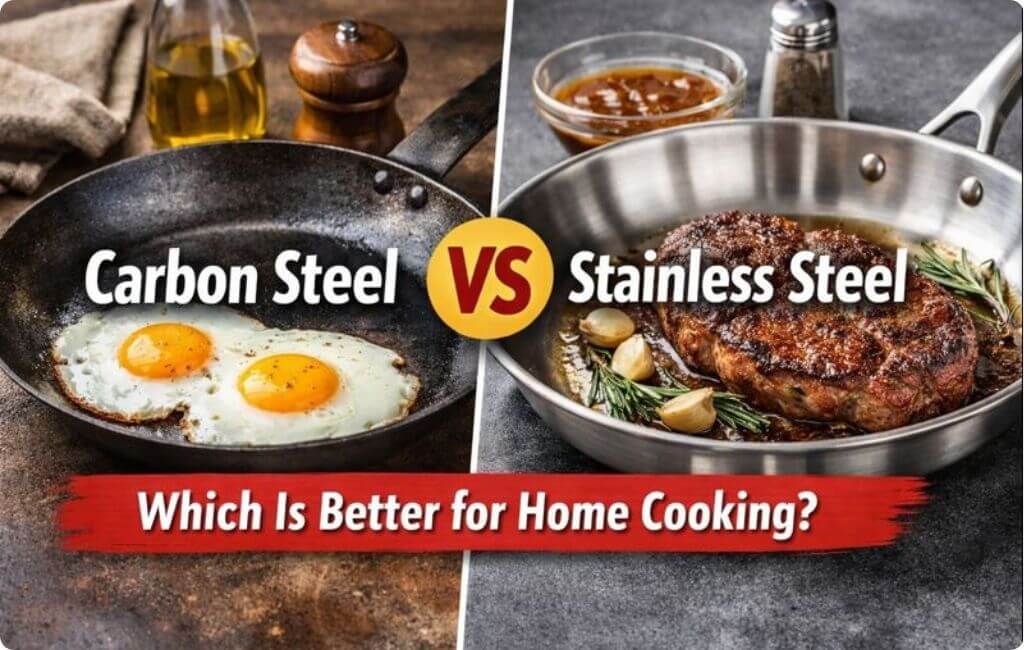
Carbon Steel vs Stainless Steel Pan: Which One Should You Choose?
Choosing between a carbon steel vs stainless steel pan is a common question for home cooks who want better results in the kitchen. Both pans are popular, both are long-lasting, and both are used by professionals—but they work very differently. Picking the wrong one can lead to food sticking, uneven cooking, or extra maintenance you didn’t expect.
Many people feel confused because online advice often says one pan is “best” without explaining for whom. The truth is, the better pan depends on how you cook, what you cook, and how much care you want to put into your cookware.
Here’s the quick takeaway:
- Carbon steel pans focus on performance. They heat fast, handle high temperatures, and become naturally non-stick over time—but they come with a learning curve and need regular care.
- Stainless steel pans are versatile and easy to use. They work for almost any recipe, need little maintenance, and are ideal for beginners and everyday cooking.
This guide is for home cooks, beginners, and anyone upgrading their cookware who wants a clear, honest comparison. We’ll break down how each pan works, their pros and cons, health and care tips, and help you decide which pan fits your cooking style—without hype or complicated terms.
Understanding Pan Materials (Foundation Knowledge)
Why Pan Material Matters More Than Brand
Imagine you’re standing in your kitchen, holding two pans. One is from a famous brand. The other is less known. You cook the same meal in both—but the results are different. One pan heats quickly and cooks evenly. The other burns food in spots or makes it stick.
That difference usually has nothing to do with the brand. It comes down to the material.
Pan material decides how your food cooks. It controls how fast the pan heats up, how evenly it spreads heat, and how it reacts with food. This affects everyday things like whether eggs stick, steak sears well, or sauces taste right.
Think of pan material like the foundation of a house. A fancy name on the outside doesn’t help if the foundation isn’t right for your needs. Some materials are better for high heat. Others are better for slow cooking or acidic foods. Some need care and attention, while others are easy and forgiving.
When you understand pan materials, you can:
- Choose the right pan for the food you cook most
- Avoid common cooking frustrations
- Spend money wisely instead of paying for a name
Once you know how different materials behave, choosing between carbon steel and stainless steel becomes much simpler—and more confident.
What Is a Carbon Steel Pan?
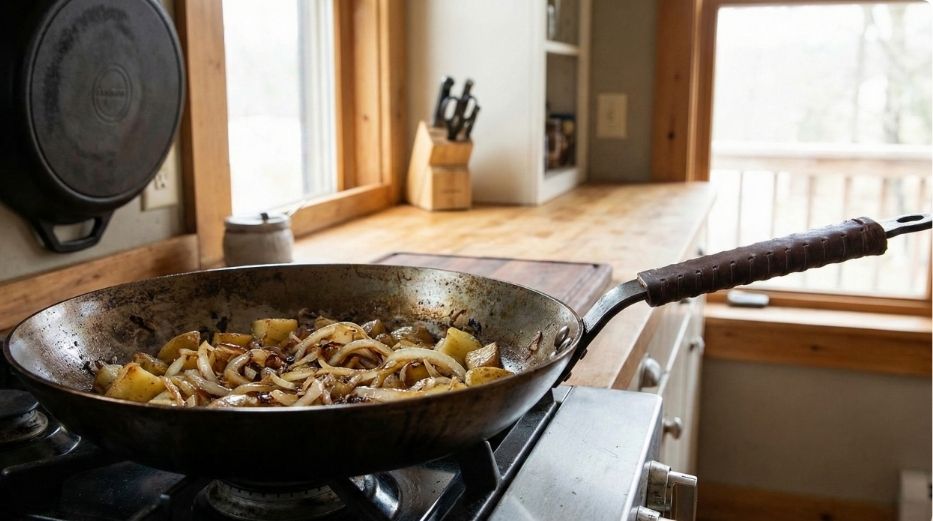
A carbon steel pan is a simple, no-frills cooking pan made mostly from iron with a small amount of carbon mixed in. It looks similar to cast iron but is thinner and much lighter, which makes it easier to handle in everyday cooking.
Because it is thin, a carbon steel pan heats up very fast. When you turn the heat up or down, the pan responds quickly. This gives you more control while cooking.
Carbon steel pans do not have a factory non-stick coating. Instead, they start out bare and improve over time as you use them.
How Carbon Steel Works in Real Cooking
When you cook with a carbon steel pan and add a little oil, the surface slowly builds a dark layer called seasoning. This layer makes the pan smoother and helps food stick less. The more you cook, the better the pan performs.
One of the biggest advantages of carbon steel is heat control. It reacts quickly when you adjust the heat, which is helpful when cooking foods that can burn easily.
Because of this control and durability, many professional chefs use carbon steel pans in restaurant kitchens. They are tough, reliable, and designed for high-heat cooking.
Pros and Cons of Carbon Steel Pans
Pros
- Heats up quickly
- Becomes naturally non-stick over time
- Lightweight compared to cast iron
- Very durable and long-lasting
Cons
- Needs regular care and seasoning
- Can rust if left wet
- Not ideal for cooking acidic foods
- Takes time to learn how to use well
Best Foods to Cook in a Carbon Steel Pan
Carbon steel works best for foods that need high heat and quick cooking, such as:
- Eggs (once the pan is well-seasoned)
- Steak and other meats
- Stir-fries and sautéed vegetables
- Pancakes and crepes
If you enjoy hands-on cooking and don’t mind a little maintenance, a carbon steel pan can become one of the most rewarding tools in your kitchen.
What Is a Stainless Steel Pan?
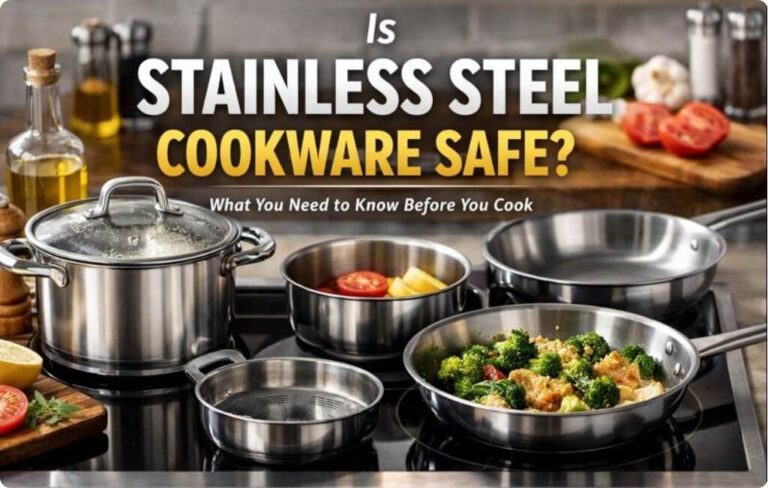
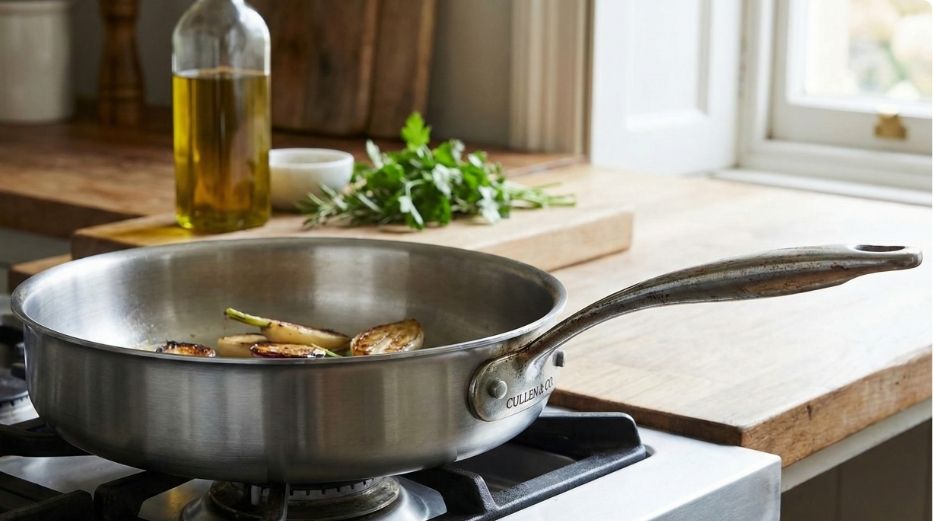
A stainless steel pan is one of the most common pans found in home kitchens. It is made from a mix of metals, mainly iron, with small amounts of chromium and nickel. These added metals help the pan resist rust and stains, which is why it keeps its shiny look for years.
Most good stainless steel pans are multi-ply, meaning they have layers. The inside layers are usually aluminum or copper, which help the pan heat more evenly. The cooking surface itself is smooth and does not react with food, so flavors stay clean and unchanged.
How Stainless Steel Performs in Daily Cooking
Stainless steel pans are known for being reliable and easy to use. In well-made pans, heat spreads evenly across the surface, helping food cook more consistently.
These pans are excellent for browning meat. When food sticks slightly and leaves brown bits on the pan, those bits can be loosened with liquid to make rich sauces. This is called deglazing and is one of stainless steel’s biggest strengths.
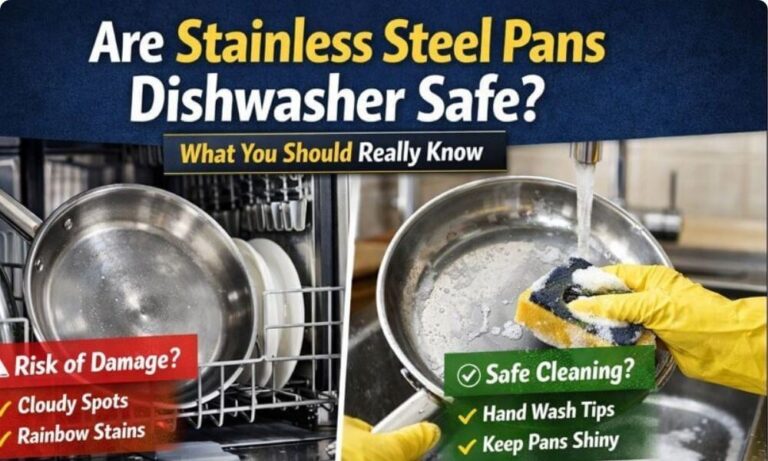
Stainless steel is also low maintenance. Most pans can go in the dishwasher, don’t need special care, and handle everyday cooking without problems.
Pros and Cons of Stainless Steel Pans
Pros
- Very versatile for many types of cooking
- Safe for acidic foods
- Easy to clean and maintain
- Dishwasher and oven safe
- Long-lasting and durable
Cons
- Food can stick if the pan is not heated properly
- Usually heavier than carbon steel
- Good-quality pans can be more expensive
Best Foods to Cook in a Stainless Steel Pan
Stainless steel is ideal for foods that need steady heat and sauce-making, such as:
- Sauces and reductions
- Acidic dishes with tomatoes or wine
- Meat that is seared and then deglazed
- One-pan meals with meat and vegetables
If you want a pan that works well for almost everything and requires little effort to maintain, stainless steel is a strong and dependable choice.
Carbon Steel vs Stainless Steel Pan: Quick Comparison
| Feature | Carbon Steel Pan | Stainless Steel Pan |
| Material | Iron with ~1% carbon | Steel alloy with chromium & nickel |
| Heat Response | Very fast | Moderate to fast (multi-ply) |
| Heat Retention | Moderate | Good |
| Weight | Lightweight | Medium to heavy |
| Non-Stick Ability | Natural (after seasoning) | None (technique-based) |
| Reactivity | Reactive with acidic foods | Non-reactive |
| Maintenance | High (seasoning required) | Low |
| Dishwasher Safe | ❌ No | ✅ Yes (most) |
| Learning Curve | Steep | Gentle |
| Durability | Extremely durable | Extremely durable |
| Best For | High-heat cooking, eggs, meat | Sauces, searing, everyday use |
Carbon Steel vs Stainless Steel Pan: Side-by-Side Comparison
Picture this: it’s Saturday morning and you’re deciding which pan to grab. The choice you make now shapes how the meal turns out — that’s what each feature below shows. Short stories first, then a clear takeaway you can act on.
Heat retention & responsiveness
You heat a pan, turn up the flame, and a steak sizzles. A carbon steel pan feels the change instantly — hotter the moment you ask. A good stainless steel holds heat longer once it’s hot, so it steadies temperature during a long simmer.
Tip: Want quick temperature changes for fast sears or stir-fries? Reach for carbon steel. Want steady heat for sauces or slow cooking? Pick stainless.
Non-stick performance
You try to flip an omelet. A well-seasoned carbon steel offers a smooth glide after a few uses. Stainless steel doesn’t become non-stick — it needs the right preheat and oil to stop food from sticking.
Tip: If you want effortless eggs after breaking in a pan, choose carbon steel and keep it seasoned. If you prefer low fuss and technique-based cooking, choose stainless and learn the preheat-oil trick.
Maintenance requirements
After dinner you wash the pan. Carbon steel asks for a quick hand wash, dry, and oil to avoid rust. Stainless steel usually tolerates soap — some pieces even survive the dishwasher.
Tip: If you like low-maintenance gear, stainless is the easier daily choice. If you don’t mind a bit of care for better performance, carbon steel rewards that attention.
Durability and lifespan
Think of a pan as a tool you pass along. Both will last decades if treated well, but carbon steel can rust if neglected, while stainless resists stains and corrosion. Carbon steel can be restored by re-seasoning; stainless is more forgiving long-term.
Tip: Want something nearly care-free for many years? Stainless wins. Want a pan that can be renewed and used heavily in a pro kitchen? Carbon steel holds up beautifully.
Cooking versatility
You want one pan to do everything for a week of meals. Stainless handles acidic sauces, deglazing, and mixed dishes without fuss. Carbon steel shines at high-heat tasks — searing, stir-fry, quick flips — but isn’t ideal for long tomato sauces.
Tip: For “one-pan-does-all,” stainless is more flexible. For high-heat specialty work, choose carbon steel.
Weight and handling
Grab and toss: you’re flipping food quickly. Carbon steel is lighter and easier to maneuver; stainless is often heavier, especially multi-ply models. Lighter pans feel friendlier for fast cooking and wrist work.
Tip: If you value quick flips and easier handling, carbon steel is more comfortable. If you prefer a solid, steady pan, stainless is fine — just expect more heft.
Price and value
You shop once and want the best return. Entry-level carbon steel is often cheaper than high-end stainless; top stainless (with thick cores) costs more but offers even heating and dishwasher convenience. Over years, both can be great value because they last.
Tip: On a budget or wanting a pro feel for less money — carbon steel is attractive. If you want a ready-to-use, low-care pan and don’t mind paying more, invest in quality stainless.
Carbon Steel vs Stainless Steel Pan: Cooking Performance Comparison
| Cooking Task | Carbon Steel Pan | Stainless Steel Pan |
| Eggs & Omelets | ⭐⭐⭐⭐⭐ (when seasoned) | ⭐⭐ (needs technique) |
| Steak & Meat | ⭐⭐⭐⭐⭐ | ⭐⭐⭐⭐ |
| Stir-Fry | ⭐⭐⭐⭐⭐ | ⭐⭐⭐ |
| Sauces & Deglazing | ⭐⭐ | ⭐⭐⭐⭐⭐ |
| Acidic Foods | ❌ Not ideal | ✅ Excellent |
| Even Browning | ⭐⭐⭐⭐ | ⭐⭐⭐⭐ |
| Temperature Control | ⭐⭐⭐⭐⭐ | ⭐⭐⭐ |
Cooking Experience: What It’s Like to Use Each Pan
Carbon Steel in Real Life
The first time you use a carbon steel pan, it feels a little bare. Before it becomes great, it needs a simple setup called seasoning. This just means heating the pan with a thin layer of oil. As the oil heats, it bonds to the surface and forms a dark coating. You don’t have to do this perfectly. Each time you cook, the pan gets better on its own.
Day to day, using carbon steel is hands-on but quick. After cooking, you rinse the pan with warm water, wipe it dry, and add a drop of oil before putting it away. It takes less than a minute, but skipping this step can lead to rust.
Beginners often make a few common mistakes. They cook acidic foods like tomatoes too early, soak the pan in water, or scrub off the seasoning by mistake. Once you know these pitfalls, carbon steel becomes easy and rewarding to use.
Stainless Steel in Real Life
Stainless steel feels familiar and ready right away. There is no setup. You can cook as soon as you take it out of the box.
To prevent sticking, the key is preheating. You heat the pan first, then add oil, then add food. When done in this order, food releases more easily and sticks far less than most people expect.
If food does burn or stick, cleaning is simple. You can soak the pan, scrub it, or use common kitchen cleaners without worry. Stainless steel is tough and doesn’t need special care.
Over time, stainless steel proves very reliable. It doesn’t rust, doesn’t wear out easily, and handles daily cooking without changes in performance. For many home cooks, it’s the pan they use most often because it works well with little effort.
Carbon Steel vs Stainless Steel Pan: Health & Safety Comparison
| Concern | Carbon Steel | Stainless Steel |
| Coatings | None | None |
| Chemical Safety | Very safe | Very safe |
| Metal Leaching | Trace iron (beneficial) | Trace nickel (usually safe) |
| Suitable for Sensitive Users | Yes | Nickel-sensitive users should check |
| Regulatory Safety | Food-safe | Food-safe |
Health & Safety Considerations
When choosing a pan, many people worry less about cooking performance and more about what touches their food. Let’s walk through the most common safety questions in a simple, honest way.
Are Carbon Steel Pans Safe?
Carbon steel pans are considered very safe for everyday cooking. They are made from iron with a small amount of carbon and contain no chemical coatings. What you see is what you cook on.
Over time, a carbon steel pan develops a dark surface from oil and heat. This is not paint or a coating—it’s a natural layer that forms during cooking. Many people like this because it avoids synthetic non-stick surfaces.
Metal Leaching: What It Really Means
Metal leaching sounds scary, but in real kitchens it’s usually minimal. Carbon steel can release tiny amounts of iron into food, especially when new. For most people, this is harmless and can even add a small amount of dietary iron.
Stainless steel may release very small amounts of nickel, mostly when cooking acidic foods for long periods. For most people, this is well within safe limits and not a concern.
Nickel Sensitivity and Stainless Steel
Some people are sensitive or allergic to nickel. If that’s you, stainless steel cookware may cause concern. In that case, choosing low-nickel or nickel-free stainless steel, or carbon steel, can be a safer option.
If you have no known sensitivity, stainless steel is widely used and considered safe for daily cooking.
No Coatings vs Non-Stick Concerns
Both carbon steel and stainless steel pans do not rely on chemical non-stick coatings. This means there’s no risk of the coating flaking off into food.
Carbon steel becomes naturally non-stick over time. Stainless steel uses cooking technique—proper heat and oil—to prevent sticking. Both approaches avoid the worries many people have about traditional non-stick pans.
What Research and Food Safety Authorities Say
Food safety authorities and kitchen testing organizations agree that both carbon steel and stainless steel cookware are safe when used as intended. They are commonly approved for home and professional kitchens around the world.
The key is normal use: avoid overheating empty pans, follow basic care instructions, and choose cookware from reputable manufacturers.
Carbon Steel vs Stainless Steel Pan: Longevity
Think of a pan as a long-term kitchen partner. Some pans last a few years. Others can last a lifetime. Carbon steel and stainless steel both fall into that second group—but they age in different ways.
How Carbon Steel Ages Over Time
A carbon steel pan changes as you use it. At first, it looks plain and shiny. After months of cooking, it turns darker and smoother. This isn’t damage—it’s improvement. The surface builds up layers from oil and heat, which help food stick less.
If carbon steel is cared for, it can last for decades. Even if it rusts or looks rough, it’s rarely ruined. You can scrub it down, re-season it, and keep using it. Many old carbon steel pans are still in use today for this reason.
The main risk to carbon steel is neglect. Leaving it wet or un-oiled can cause rust. But with simple care, it remains strong for a very long time.
How Stainless Steel Holds Up Over Time
Stainless steel pans are built to stay the same. They don’t rust easily, don’t change color much, and don’t need special upkeep. Years later, they often look and cook much like they did on day one.
They handle daily use, high heat, and regular washing without problems. Scratches may appear, but they don’t affect how the pan works. This makes stainless steel very dependable for long-term use.
Unlike carbon steel, stainless steel can’t be renewed through seasoning—but it also doesn’t need it.
Carbon Steel vs Stainless Steel Pan: Maintenance & Care Comparison
| Care Aspect | Carbon Steel | Stainless Steel |
| Initial Setup | Needs seasoning | Ready to use |
| Daily Cleaning | Wipe, light rinse | Soap & water |
| Rust Risk | Yes, if neglected | No |
| Dishwasher Use | ❌ Never | ✅ Usually safe |
| Long-Term Care | Re-season as needed | Minimal |
| Beginner Friendly | ❌ | ✅ |
Maintenance & Care Comparison
Taking care of your pan doesn’t need to be complicated. It’s more about building a few small habits. Here’s what everyday care looks like for each pan, told through real kitchen moments.
Carbon Steel Care
When a carbon steel pan is new, it needs seasoning. Think of this as giving the pan its first layer of protection. You heat the pan, rub on a very thin layer of oil, and let it heat until it darkens. That’s it. This layer helps food stick less and protects the pan from rust. Each time you cook, the pan slowly improves.
After cooking, cleaning is quick. Rinse the pan with warm water, wipe off food with a soft sponge, and dry it right away. Avoid soaking it in water or putting it in the dishwasher. Soap is okay once in a while, but not every day.
To prevent rust, always make sure the pan is fully dry before storing it. A small drop of oil wiped across the surface before putting it away goes a long way. If rust ever appears, it’s not ruined—you can scrub it off and re-season the pan.
Stainless Steel Care
Stainless steel is much easier and more forgiving. Before cooking, the most important step is proper preheating. Heat the pan first, add oil, then add food. This simple order helps reduce sticking.
Cleaning stainless steel is flexible. You can use soap, hot water, and regular scrubbers. For stuck-on food, soaking the pan or boiling a little water in it usually loosens everything.
Most stainless steel pans are dishwasher safe, which makes cleanup even easier. Over time, they don’t rust, don’t need oiling, and don’t change much in performance. They’re built to handle daily use with minimal attention.
Which Pan Is Better for You? (Decision Guide)
Choosing between carbon steel and stainless steel isn’t about which pan is “best.” It’s about which one fits how you cook. Imagine your normal day in the kitchen and see which story sounds more like you.
Choose a Carbon Steel Pan If…
You enjoy being involved in the cooking process. You don’t mind learning a few simple habits, like seasoning a pan and wiping it dry after washing. Cooking feels like a skill you enjoy improving.
You often cook at high heat. You like searing meat, stir-frying vegetables, or flipping food quickly. You want a pan that reacts fast when you turn the heat up or down.
You want a natural non-stick surface without chemical coatings. You’re okay with the pan changing color over time as it gets better with use.
You’re comfortable with a little maintenance if it means better performance in the pan.
Choose a Stainless Steel Pan If…
You want cooking to feel easy and flexible. You like using one pan for many different meals without thinking too much about rules.
You cook acidic foods like tomato sauces, wine-based dishes, or lemon-heavy meals. You want a pan that handles these foods without concern.
You prefer low maintenance. You want to wash the pan with soap, maybe put it in the dishwasher, and move on with your day.
You’re a beginner or a busy home cook who wants reliable results without extra steps.
Carbon Steel vs Stainless Steel for Common Use Cases
Most people don’t cook the same way every day. The “best” pan often depends on what’s on the menu and who’s doing the cooking. Let’s walk through common kitchen moments and see which pan fits best.
Best Pan for Eggs
It’s morning, and you want eggs that slide easily without sticking. A well-seasoned carbon steel pan works beautifully here. Once broken in, eggs release smoothly with very little oil.
Stainless steel can cook eggs, but it takes more care. If the pan isn’t heated properly, eggs may stick and tear.
Best choice: Carbon steel (after seasoning)
Best Pan for Steak
You place a steak in a hot pan and listen for that loud sizzle. Carbon steel heats fast and handles high heat very well, which helps create a deep, brown crust.
Stainless steel also sears steak nicely and has an advantage afterward—you can add liquid to loosen the browned bits and make a quick sauce.
Best choice: Carbon steel for fast searing, stainless steel if you want a sauce
Best Pan for Beginners
If you’re new to cooking or don’t want to think too much about pan care, stainless steel feels easier. There’s no seasoning, no oiling after washing, and no fear of rust.
Carbon steel takes time to learn and a bit of patience, which can feel frustrating at first.
Best choice: Stainless steel
Best Pan for Professional-Style Cooking
In a busy kitchen, speed and control matter. Carbon steel responds quickly when heat changes and is light enough to move fast. That’s why many chefs rely on it for high-heat tasks.
Stainless steel is also used in professional kitchens, especially for sauces and precise cooking.
Best choice: Carbon steel for high heat; stainless steel for sauces
Best Pan for Everyday Family Meals
For weeknight dinners, one-pan meals, and mixed ingredients, stainless steel is more flexible. It handles vegetables, meat, and sauces without special care.
Carbon steel is great for specific tasks but may feel limiting for meals with tomatoes or long cooking times.
Best choice: Stainless steel
Frequently Asked Questions (FAQs)
Is carbon steel better than stainless steel?
Neither pan is better for everyone. Carbon steel is great for high-heat cooking and becomes naturally non-stick over time, but it needs care. Stainless steel is more versatile, easier to maintain, and better for everyday meals. The better choice depends on how you cook.
Can carbon steel go in the dishwasher?
No. Dishwashers use strong soap and a lot of water, which can strip seasoning and cause rust. Carbon steel should be washed by hand, dried right away, and lightly oiled.
Does stainless steel contain nickel?
Most stainless steel pans contain a small amount of nickel. For most people, this is safe and not a problem. If you have a nickel sensitivity, look for low-nickel or nickel-free stainless steel options.
Which pan lasts longer?
Both can last a lifetime. Carbon steel lasts long if you care for it properly. Stainless steel lasts long even with minimal care. Longevity depends more on how the pan is used than the material itself.
Can beginners use carbon steel?
Yes, but it takes patience. Beginners can use carbon steel if they are willing to learn seasoning and basic care. If you want something easier right away, stainless steel is usually the better starting point.
Read More: Ceramic vs Stainless Steel Cookware
Final Verdict: Carbon Steel vs Stainless Steel Pan
At the end of the day, both pans can cook great food. The difference is how they fit into your kitchen life.
Carbon steel is fast, light, and powerful. It heats quickly, handles high temperatures well, and becomes naturally non-stick over time. But it asks for attention. You need to season it, dry it carefully, and avoid certain foods. It rewards people who enjoy being involved in the cooking process.
Stainless steel is steady and flexible. It works with almost any recipe, handles acidic foods without worry, and is easy to clean. It doesn’t change much over time and doesn’t ask for special care. It’s the kind of pan you can rely on every day.
So, which one is better? The honest answer is neither—until you think about how you cook.
- If you like hands-on cooking, high heat, and don’t mind maintenance, carbon steel can feel exciting and rewarding.
- If you want simplicity, versatility, and low effort, stainless steel is usually the smarter choice.
The best pan isn’t the one chefs praise the most or brands advertise the loudest. It’s the one that fits your habits, your meals, and your comfort level. Choose based on how you cook—not on hype—and you’ll be happy with the results.