3 Ply vs 5 Ply Cookware: Which One Should You Buy? (2026 Guide)
Choosing between 3 Ply vs 5 Ply Cookware can feel confusing. Marketing terms, price differences, and technical claims make it hard to know which set really fits your kitchen. Some pans cost twice as much simply because of extra layers, but that doesn’t always mean better performance for your cooking style.
In this guide, we cut through the hype and compare the real-world benefits of 3-ply and 5-ply cookware. We’ll cover heat, weight, durability, and value so you can make an informed choice. By the end of this guide, you’ll know exactly which cookware fits your cooking style, budget, and stove type.
Quick answer — which to pick
- Best for most home cooks: 3-ply.
It’s lighter, usually cheaper, and handles everyday cooking well. Drawback: it won’t hold heat as long as heavier pans when you need very high temperatures. - Best for high-heat cooking and searing: 5-ply.
Heavier construction gives more even heat and a better sear. Drawback: it’s heavier and usually costs more. - Best for induction stoves: check the magnetic layer.
Whether a pan works on induction depends on its base, not just ply count. Quick check: a magnet should stick to the bottom. - Best value: a good 3-ply set from a reliable brand.
You get solid performance for day-to-day use without paying premium prices. Drawback: if you often cook at very high heat, you might want to upgrade later.
If you want a single short rule: pick 3-ply for everyday cooking and 5-ply if you cook high-heat meals a lot and don’t mind the extra weight and cost.
What does “ply” mean in cookware?
“Ply” just means how many thin metal layers are stacked together to make the pan. Think of a pan like a sandwich: each layer has a job. The number (3-ply, 5-ply) tells you how many layers are in that sandwich.
Most multi-layer pans are built like this: a durable stainless steel surface on the outside and inside, with a metal core in the middle that moves heat quickly. The inner and outer stainless steel gives a non-reactive cooking surface and a finish that cleans up easily.
Common materials used in those layers:
- Stainless steel — strong, won’t react with food, and looks nice. Drawback: it doesn’t conduct heat well by itself.
- Aluminum — used as the core because it heats up fast and spreads heat evenly. Drawback: it’s softer and usually kept inside the stainless layers.
- Copper — excellent at conducting heat and giving fast temperature control. Drawback: it’s expensive and can react with acidic foods unless protected.
Why layers matter:
- Layers combine the strengths of different metals. The core (aluminum or copper) spreads heat quickly, while stainless steel makes the cooking surface durable and easy to clean.
- More layers can make heat distribution more even, so you get fewer hot spots and steadier cooking.
- A downside: more layers usually mean a heavier pan and a higher price.
Visual suggestion:
- Cross-section diagram of 3-ply vs 5-ply
3-Ply vs 5-Ply Cookware — Key Differences at a Glance
| Feature | 3-Ply Cookware | 5-Ply Cookware |
| Heat distribution | Good and even for daily cooking | Very even, fewer hot spots |
| Heat retention | Moderate, cools faster | High, stays hot longer |
| Responsiveness | Reacts quickly to heat changes | Slower to adjust once hot |
| Weight | Lighter and easier to handle | Heavier and more solid |
| Cooking control | Better for quick heat adjustments | Better for steady, high heat |
| Price range | More affordable overall | Usually more expensive |
| Ease of use | Easier for beginners | Takes time to get used to |
| Best for | Everyday meals, quick cooking | Searing, high-heat cooking |
| Main drawback | Less heat stability | Heavy and higher cost |
3-Ply vs 5-Ply Cookware — Key Differences (In Details)
When you compare 3-ply and 5-ply pans, you’re really weighing trade-offs: one construction favors speed and lightness, the other favors stability and even heat. Below I break down the main differences and what they mean in the kitchen.
Heat distribution
5-ply pans usually spread heat more evenly across the cooking surface. That means fewer hot spots and a more uniform browning across a steak or pancake.
With 3-ply you can still get good results, but thin spots in the metal make it slightly more likely to have areas that run hotter or cooler.
In practice this shows up as needing to move food around a bit more with a 3-ply pan to avoid uneven cooking.
Heat retention
The thicker, multi-layered mass of a 5-ply pan holds heat longer once it’s hot. That helps when you want a steady temperature for searing or keeping food warm on the stove.
A 3-ply pan cools down faster when you lower the flame, which can be useful when you need to reduce heat quickly for sauces.
The downside of better retention is that a hot 5-ply pan also takes longer to cool — useful for steadiness, annoying when you want rapid temperature changes.
Responsiveness (how quickly the pan reacts to heat changes)
Responsiveness is the opposite of retention. A 3-ply pan usually responds faster: turn the burner down and the pan’s temperature drops more quickly.
That makes it easier to avoid scorching delicate foods like scrambled eggs or caramel sauces.
A 5-ply pan is less “touchy” — it resists sudden temperature swings, which is great for steady simmering but makes fine temperature control a bit slower.
Weight
5-ply cookware is noticeably heavier because of the extra metal layers. That weight helps the pan sit flat and transfer heat smoothly, but it can be tiring if you lift or toss pans often.
3-ply sets are lighter and easier to handle, especially for people who cook alone or prefer one-handed flipping and stirring.
If mobility or strength is a concern, weight is an important factor to favor 3-ply.
Price range
Expect 5-ply to cost more on average. The extra materials and manufacturing steps raise the price, and many premium brands use 5-ply for their higher-end lines.
3-ply cookware appears across a wider range of budgets — you can find affordable, mid-range, and premium 3-ply options.
Rather than fixating on ply alone, compare brand reputation, warranty, and customer reviews to judge value.
Best for (practical buying guidance)
- If you sear steaks, frequently work at very high heat, or want the most even browning, 5-ply is a strong choice.
- If you cook everyday meals, need lighter cookware, or want good performance for less money, 3-ply is often the better fit.
- If you do a mix (some high-heat searing and lots of quick temperature changes), a reliable 3-ply set plus one heavy 5-ply pan for searing can be the most flexible solution.
Quick note: the right choice also depends on your stove, how you cook, and how much you want to lift and clean. Use these differences as a checklist against your habits — that will point you to the better buy for your kitchen.
How We Tested 3-Ply vs 5-Ply Cookware
To keep this comparison fair, we tested both 3-ply and 5-ply pans using the same setup each time. The goal was to see how they behave in real home cooking, not lab-only conditions.
We used a standard gas stove for most tests, since it’s common in home kitchens. We also checked basic compatibility on an induction burner to confirm which pans worked properly. Electric heat was not used, which is a small limitation, but gas clearly showed how fast and evenly each pan reacted.
The foods were simple and familiar:
- Fried eggs, to spot hot areas and uneven cooking
- Steak, to judge browning and heat strength
- A basic sauce, to test control at lower heat
To keep results consistent, we used the same tools every time:
- An infrared thermometer to check surface temperature
- A timer to measure heat-up time
Each pan was tested on the same burner, with the same heat setting, oil amount, and resting time. No pan was preheated longer than another. This helped ensure that differences came from the cookware, not the setup.
This approach doesn’t cover every cooking style, but it reflects how most people actually cook at home and gives results you can trust.
Real-World Cooking Performance (What Actually Matters)
Heat Distribution & Hot Spots
When cooking with 3-ply pans, you may notice small areas that heat faster than others. For example, an egg can brown unevenly if it sits on a hotter spot. 5-ply pans generally distribute heat more evenly, so food cooks uniformly across the surface.
This is especially helpful for searing meats or making delicate sauces. The trade-off is that 5-ply pans take a little longer to reach full heat at the start.
Searing Performance
For searing steaks, chops, or vegetables, 5-ply pans shine because they hold steady heat even when cold food hits the surface. You get a nice, consistent browning without needing to constantly move the food.
3-ply pans can still sear well, but you may need to adjust the heat slightly and watch for uneven spots. For everyday meals, both work, but serious high-heat cooking favors the 5-ply construction.
Simmering & Sauce Control
If you cook sauces, soups, or delicate dishes, 3-ply pans are very responsive. Lowering the heat quickly cools the pan, helping prevent scorching or overcooking. 5-ply pans are more stable, which is great for slow, steady simmering, but they respond slower when you want to reduce heat fast.
For home cooks making a mix of quick sauces and slow-cooked meals, 3-ply offers more flexibility, while 5-ply provides steadiness for longer cooks.
Heat Retention vs Responsiveness
In practice, this is how the pans feel during cooking. 5-ply pans hold heat longer, which means they continue cooking food even after the burner is turned down. This is useful for maintaining temperature but can make precise adjustments slower.
3-ply pans cool down faster, giving more control when adjusting heat. For most daily meals, either works, but 3-ply may feel easier for quick, everyday cooking, while 5-ply is ideal when you want consistent performance and less monitoring.
In summary, the choice comes down to what matters most in your kitchen. If you prioritize even heat and searing performance, 5-ply is the stronger option. If you prefer responsiveness and lighter pans for everyday cooking, 3-ply will feel more practical. Both deliver good results, but knowing these differences helps you cook with confidence and less guesswork.
Pros and Cons — Honest Breakdown
Pros and Cons of 3-Ply Cookware
Pros:
- Lighter and easier to handle, especially for everyday cooking.
- Heats up quickly, giving fast control over cooking temperature.
- Generally more affordable than 5-ply options.
- Works well for most home cooking tasks, from eggs to sauces.
Cons:
- Can develop small hot spots, so food may cook unevenly.
- Doesn’t hold heat as long, making searing or high-heat tasks slightly trickier.
- Less durable over very long-term heavy use compared to thicker pans.
Pros and Cons of 5-Ply Cookware
Pros:
- Excellent heat distribution and even cooking across the surface.
- Holds heat longer, perfect for searing meat or simmering sauces steadily.
- More durable and resistant to warping over time.
- Feels solid and professional when cooking high-heat dishes.
Cons:
- Heavier and harder to lift, especially when full of food.
- Slower to respond when lowering the heat, which can make delicate cooking tricky.
- Typically more expensive, sometimes significantly so.
Which One Is Right for You? (Buying Scenarios)
Choosing between 3‑ply and 5‑ply cookware isn’t one‑size‑fits‑all — it depends on how you cook, how often you cook, and what matters most to you in the kitchen. Here’s a simple look at common situations and which style fits best.
If you’re a busy home cook who makes weeknight meals, stews, and sautéed vegetables most of the time, a 3‑ply set is often all you need. It heats up quickly and is lighter to handle when you’re juggling pans on the stove. Many home cooks find it reliable for everyday use without extra cost or weight.
For budget‑focused buyers, 3‑ply cookware usually delivers the best value. It generally costs less than 5‑ply yet still distributes heat well and holds up for most regular kitchen tasks. Choosing 3‑ply lets you build a good‑performing set without a big upfront expense.
If you’re someone who loves steaks, high‑heat searing, or long braises, 5‑ply cookware can be worth the extra investment. The additional layers help the pan stay steady and even under higher heat, giving you more control for browning meat or simmering sauces for longer.
For induction stove users, the choice isn’t just about ply count but whether the pan has a strong magnetic base. Both 3‑ply and 5‑ply can work on induction if the bottom is compatible, but many people prefer the heavier feel of 5‑ply on induction because it resists warping and stays flat against the cooktop.
Finally, if you’re an older cook or someone who doesn’t want heavy cookware, 3‑ply’s lighter weight can make a big difference. A heavy 5‑ply pan can feel solid, but lifting and holding it — especially full of food — may be tiring.
In the end, think about how you cook most often: everyday meals, quick work, and comfort? 3‑ply fits that well. Precision heat and performance for more advanced techniques? 5‑ply might be worth it.
Durability, Weight & Long-Term Value
When buying cookware, it’s important to think about how it will hold up over time and how it feels in daily use.
Warping risk
Thinner pans or lower-quality 3-ply cookware can warp if exposed to sudden high heat or if left empty on a hot burner. 5-ply pans are thicker and resist warping better, making them more reliable for long-term use.
Scratch resistance
All stainless steel pans can scratch over time, especially if you use metal utensils. 5-ply pans usually feel sturdier, so scratches are less noticeable, while 3-ply pans can show wear sooner. Non-stick coatings, if present, are more prone to damage regardless of ply.
Weight fatigue over time
Heavier 5-ply pans provide stability but can be tiring to lift repeatedly, especially when full. 3-ply pans are lighter, which reduces strain during cooking, but they may feel less solid when handling large meals.
Cost-per-year logic
Think of the pan’s price spread over its lifespan. A more expensive 5-ply pan can actually be a better value if it lasts longer and handles frequent high-heat cooking without warping. A 3-ply pan may cost less upfront, but if you cook often at high heat, it might need replacement sooner.
Balancing these factors helps you pick cookware that fits your cooking style, feels comfortable, and gives the best long-term value for your money.
Induction Compatibility & Stove Types
Induction stoves don’t heat pots and pans the same way a gas flame or electric coil does. They use magnetic energy to make heat right in the bottom of the pan, so whether a pan works depends mostly on its base, not how many layers (ply) it has.
For cookware to work well on an induction cooktop, it needs a magnetic bottom. A simple way to check this before buying is with a small magnet: if the magnet sticks firmly to the pan’s base, it will likely work on an induction stove.
Ply count alone doesn’t guarantee induction compatibility. A 3‑ply or 5‑ply pan might not work on induction if its base doesn’t contain enough magnetic material. That’s why you’ll find some cookware labeled “induction compatible” even if it isn’t the heaviest or thickest.
Before buying new cookware for an induction stove, check three things:
- The product description or label for “induction compatible.”
- Whether a magnet sticks to the pan bottom.
- That the pan’s bottom is flat and matches your burner size.
If all three check out, your cookware should heat evenly and efficiently on an induction cooktop.
Is 5-Ply Really Worth the Extra Cost?
A 5-ply pan can be worth the higher price if you cook at high heat often, sear meat regularly, or want the most even cooking possible. The extra layers help the pan stay steady and resist warping over time.
For most everyday cooking—like eggs, pasta, or sautéed vegetables—a 3-ply pan does the job just fine. In these cases, a 5-ply pan may be more than you actually need and might feel heavy for routine use.
Who might skip 5-ply: casual cooks, budget-conscious buyers, or anyone who prefers lighter, easier-to-handle pans. Choosing 3-ply saves money without sacrificing performance for typical home meals.
In short, 5-ply is ideal for serious cooks or high-heat tasks, but for daily kitchen work, 3-ply often makes more sense.
Best 3‑Ply and 5‑Ply Cookware Brands
Here are some well‑known brands that many cooks trust for quality and performance. These aren’t random picks — they’re names you’ll see again and again in reviews and kitchen tests.
3‑Ply Cookware Brands
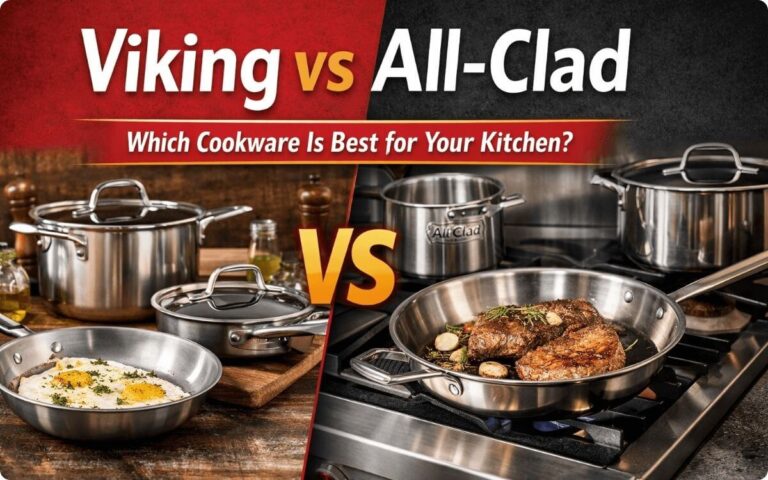
• All‑Clad D3 — A classic choice for reliable everyday cooking. It heats evenly, responds quickly to heat changes, and is light enough for frequent use in the kitchen.
• Cuisinart MultiClad Pro — Great value and performance without a heavy price tag. It’s a solid pick if you want good heat control and everyday durability.
• Tramontina Tri‑Ply — Another strong performer that balances cost and quality. It’s durable enough for regular meals and easy to handle.
5‑Ply Cookware Brands
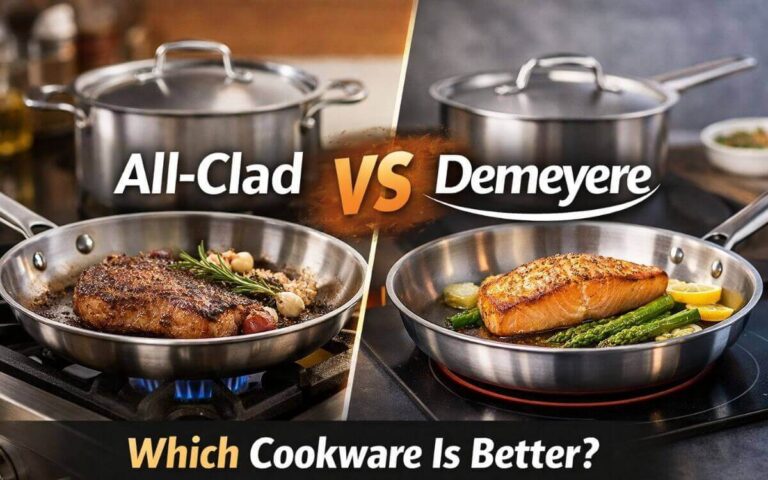
• Demeyere Industry — A premium 5‑ply brand that’s especially good on induction stoves and for even heat across the pan surface. Home cooks and pros alike appreciate its build quality.
• All‑Clad D5 — Adds extra layers for improved heat distribution and stability. It’s heavier and pricier than D3, but many cooks like how steady it feels when searing or simmering.
• Misen 5‑Ply — A newer brand gaining attention for good performance at a more approachable price. It distributes heat well and is compatible with induction cooktops.
When you choose a brand, think about how you cook most often and what matters to you — lighter weight, long life, induction use, or even heat for searing. All these picks have earned positive feedback for quality and real‑world performance, but no cookware is perfect for every style or budget.
Care, Cleaning & Maintenance Tips
Taking good care of your cookware helps it last longer and stay easier to use.
Dishwasher advice: Most stainless steel cookware can go in the dishwasher, but hand‑washing after cooking is often gentler. A soft sponge and warm, soapy water will clean food residue without risking marks or dulling the finish. Dry the pan right away so water spots don’t form.
Heat limits: Avoid very high heat unless a recipe specifically calls for it. Too much heat can cause stains or changes in color and, over time, might affect the pan’s shape. Let cookware cool a bit before washing so the metal isn’t stressed by sudden temperature changes.
Storage tips: Stacking pots and pans can cause scratches if they rub together. Place a soft cloth or pan protector between them if you must stack. If you have hooks or a hanging rack, that can keep pieces separated and easy to reach.
Frequently Asked Questions (FAQ)
Is 5-ply heavier than 3-ply?
Yes. 5-ply cookware has more layers of metal, which makes it heavier than 3-ply. The extra weight helps with even heat, but it can be tiring to lift, especially when full of food.
Does more ply mean better quality?
Not always. More ply generally means better heat distribution and durability, but the overall quality also depends on the metals used and the brand. A well-made 3-ply pan can outperform a cheap 5-ply pan.
Is 3-ply good enough for professional cooking?
Yes, 3-ply pans are used in many professional kitchens. They heat quickly and respond well to temperature changes, making them suitable for most cooking tasks. Serious high-heat searing might benefit from 5-ply, but 3-ply handles most jobs well.
Can both go in the oven?
Yes, both 3-ply and 5-ply pans are generally oven-safe. Check the handles, though—some have plastic or silicone parts that can’t handle high heat. Stainless steel handles usually work up to very high temperatures.
Which lasts longer?
5-ply pans often last longer because the extra layers resist warping and maintain even heat over time. That said, proper care can make a 3-ply pan last many years as well.
Do I need different pans for induction stoves?
Not necessarily. Both 3-ply and 5-ply pans can work on induction if the bottom has a magnetic layer. A quick magnet test can confirm compatibility.
Can I use metal utensils?
Yes, you can use metal utensils on stainless steel pans, but repeated scraping can leave minor marks. Non-stick pans inside stainless steel layers may be more sensitive.
Are 5-ply pans worth the extra cost?
They’re worth it if you often cook at high heat, sear meats, or want maximum durability. For everyday cooking, 3-ply is usually sufficient and more budget-friendly.
Final Verdict — 3-Ply or 5-Ply?
For most home cooks, a 3-ply pan is the best balance of performance, weight, and cost. It heats quickly, is easy to handle, and works well for everyday meals.
If you often cook at high heat, sear meats, or want a pan that stays steady under long cooking, a 5-ply pan can be worth the extra investment, even if it’s heavier and more expensive.
Consider your cooking habits and kitchen setup, then choose the option that fits your style. For more details and specific product recommendations, check our full cookware reviews and buying guide to find the set that’s right for you.