Is Enameled Cast Iron Safe? (Complete Safety Guide)
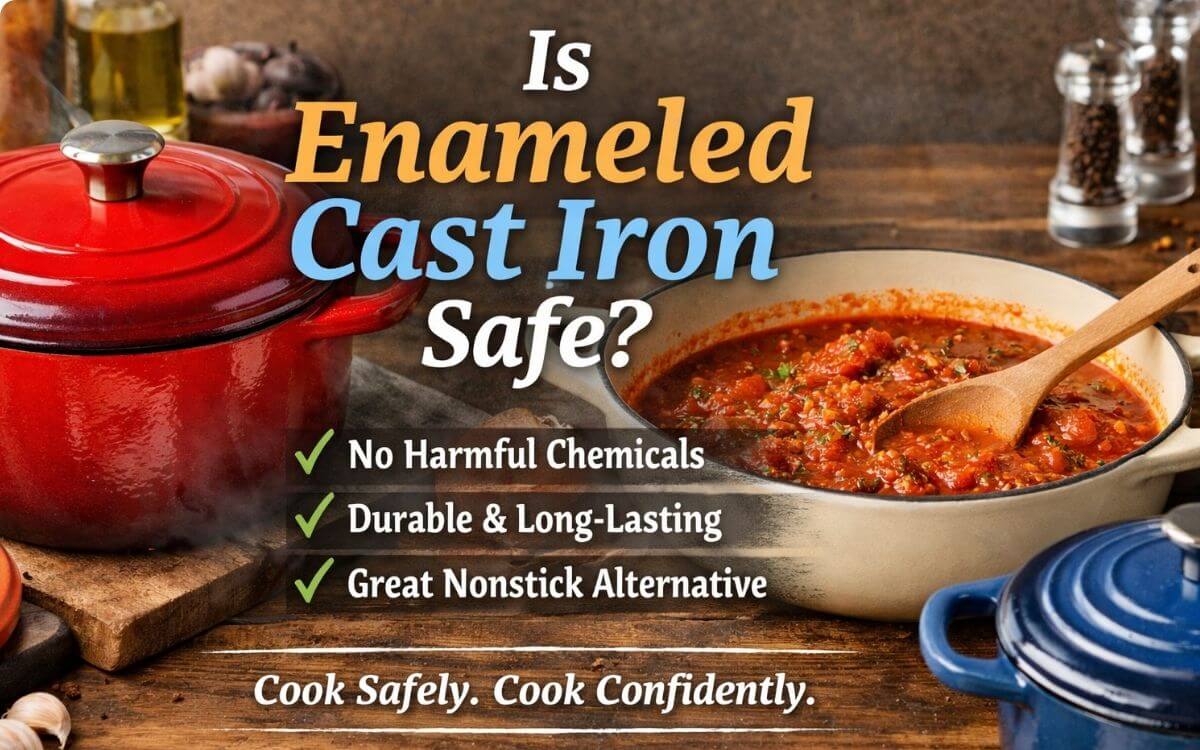
If you’ve ever wondered, “Is enameled cast iron safe?” the short answer is yes — as long as you choose a good-quality pan and take care of it. The enamel coating creates a non-reactive surface that keeps your food safe from metals and chemicals.
Many home cooks are switching from nonstick pans to enameled cast iron because it combines durability with safety. Unlike traditional nonstick cookware, it doesn’t release chemicals when heated, handles acidic foods without affecting taste, and can last for decades with proper care.
In this guide, we’ll break down how enameled cast iron works, what to watch for, and how to use it safely — so you can cook confidently without worrying about hidden risks.
What is enameled cast iron?
Enameled cast iron is regular cast iron with a thin, glass-like coating baked onto its surface. The metal body gives the pan strength and heat-holding power; the enamel makes the cooking surface smooth and non-reactive.
Core materials
The base is plain cast iron — heavy, dense metal that stores and spreads heat evenly. That’s why these pans are great for slow cooking and braises.
The coating is enamel, which is essentially a type of glass. It’s applied as a powder or liquid and becomes a hard, glossy layer after firing. That layer keeps food from touching bare iron and helps prevent rust.
How the enamel coating is made
Manufacturers apply a glassy coating to the iron and then heat the whole piece to very high temperatures. The heat melts the coating enough so it fuses to the metal, creating a sealed surface that’s bonded to the iron.
Higher-quality pieces often get multiple coats and additional firings, which produce a thicker, more even finish. Cheaper or poorly fired enamel can have thin spots or tiny pinholes, which raise the chance of chipping or rust if damaged — so look for a smooth, even finish when you buy.
Is enameled cast iron toxic or chemical-free?
In normal cooking use, enameled cast iron is generally considered safe. The enamel layer acts like a barrier between your food and the metal underneath, so nothing from the pan should mix into your food when the surface is intact.
Many people choose it because it doesn’t rely on synthetic nonstick coatings. That means you don’t have to worry about common nonstick coating chemicals when cooking at normal kitchen temperatures.
Enameled cast iron does not contain PFAS or traditional nonstick coating chemicals. That’s one reason it’s popular with people who want simple, durable cookware without special heat limits.
The surface is also non-reactive. This means acidic foods like tomato sauce, lemon juice, or vinegar won’t pull flavors or metals from the pan, and the food usually tastes exactly how it should.
Another benefit is that you don’t need seasoning oils to protect the pan. You can wash it with soap and water without worrying about stripping a protective layer, which makes daily use easier for most home cooks.
That said, it isn’t perfect. If the enamel gets deeply chipped and exposes large areas of bare iron, the exposed spot can rust if left wet. Also, enamel is tough but not indestructible — dropping the pan or hitting it hard can damage the coating.
Does enameled cast iron contain lead or cadmium?
Modern, food-grade enamel used on cookware is made to meet safety rules that limit lead and cadmium. Agencies such as the U.S. Food and Drug Administration and World Health Organization provide guidance and limits for heavy metals in food-contact materials, and reputable manufacturers design glazes to comply with those limits.
That said, the risk is not zero for all enamelware. The main concerns are older vintage pieces or very cheap imports that may not have been tested to modern standards. In those cases, poorly formulated or poorly fired glazes could contain higher amounts of lead or cadmium.
Why reputable brands are safer: quality makers invest in better raw materials, controlled kiln firing, and third-party testing. Brands with documented testing and clear food-contact certifications are far less likely to sell enamelware with unsafe levels of heavy metals. For example, well-known premium makers often publish safety and materials information for each product. Le Creuset is one example of a brand that highlights manufacturing standards and testing (look for similar statements from any brand you consider).
Practical, simple checks you can do now:
- Prefer new cookware from manufacturers that state their enamel is food-safe and tested.
- Avoid buying vintage enamelware for regular cooking unless it has been tested for lead.
- Replace pans with large chips that reveal raw metal — those could be signs of compromised glaze.
Is enameled cast iron safe for daily cooking?
Yes — when used the way most home cooks do, enameled cast iron works well for everyday meals. It’s especially useful for dishes that need steady, even heat over a long time.
Good for everyday use
- Acidic foods (tomato, lemon): Safe to cook and simmer without strange metallic tastes.
- Slow cooking: Holds heat evenly, so stews and braises come out tender.
- Baking: Comfortable in the oven for casseroles, breads, and roasts.
- High-heat stovetop cooking: Handles normal stovetop searing and frying at moderate to high heat — but with caution (see below).
When it’s not the best choice
- Extreme dry, very high heat (empty pan): Preheating an empty enamel pan on max heat can stress the coating and increase the chance of damage.
- Aggressive metal utensil scraping: Hard metal tools can nick or chip the enamel over time; avoid heavy scraping or chopping inside the pan.
Practical tips to keep it safe and long-lived: heat gradually instead of blasting it on full power, add a little fat or oil before searing to buffer the surface, and use wooden, silicone, or nylon tools. Don’t move a screaming-hot pan straight into cold water — sudden temperature change can crack the enamel.
Minor downsides to mention: these pans are heavy and can chip if dropped or banged. If a pan develops large chips exposing raw iron, it’s best to stop using it for regular cooking. Used and cared for properly, enameled cast iron is a reliable, everyday cookware choice.
When enameled cast iron may NOT be safe
Enameled cast iron is very durable, but there are a few situations where it’s better to stop using the pan or be extra careful. Most problems happen because of physical damage or poor manufacturing quality.
If the enamel develops a large chip that exposes bare iron, it’s usually time to replace the pan. Small surface marks are often just cosmetic, but deep chips can trap moisture, cause rust, and make cleaning harder. If food starts catching on a damaged area, that’s a clear warning sign.
Very cheap cookware from unknown brands can sometimes be risky. Lower-quality enamel can be thinner, uneven, or more likely to chip over time. It doesn’t mean every budget pan is unsafe, but buying from brands that clearly state food-safety testing lowers the risk.
Thermal shock misuse is another common cause of damage. This happens when a very hot pan is suddenly cooled, like putting it under cold water right after cooking. The quick temperature change can crack or weaken the enamel, even if you don’t see damage right away.
From real kitchen use, the biggest safety tip is simple: treat enamel like glass bonded to metal. It’s tough for cooking, but I don’t like sudden temperature swings or hard impacts. If you heat it gradually, avoid dropping it, and replace pans with major chips, it stays very safe for normal cooking.
Enameled cast iron vs other cookware — quick safety comparison
| Cookware type | Chemical risk | Metal leaching risk | Maintenance |
| Enameled cast iron | Very low — no PFAS/Teflon. | Very low when enamel is intact. | Washable with soap; avoid drops and thermal shock. |
| Nonstick (PTFE/Teflon) | Moderate if overheated — follow temp limits. | Low under normal use. | Gentle use; replace when coating peels or flakes. |
| Raw cast iron | None from coatings. | Iron can transfer to food (usually small, can be useful). | Season regularly; avoid long wet storage to prevent rust. |
| Stainless steel | Very low — no coating chemicals. | Very low; tiny amounts possible with acidic food in low-grade steel. | Easy care; can need scrubbing for stuck food. |
Bottom line: for everyday safety, enameled cast iron and stainless steel are low-risk choices; nonstick needs heat care; raw cast iron requires seasoning and accepts some iron transfer.
Does brand quality affect safety?
Yes, the brand and how a pan is made can make a big difference in safety and durability. High-quality brands like Le Creuset use multiple layers of enamel and careful firing processes to create a smooth, even coating that’s less likely to chip or wear over time.
These brands also follow strict quality control testing. Each pan is checked for defects, uneven enamel, or weak spots, which lowers the chance of chemicals or metals being exposed during cooking.
A well-made pan lasts for many years, maintaining both its cooking performance and safety. Cheaper or unknown brands may skip steps, use thinner enamel, or have less consistent firing, which can increase the risk of chipping or wear. Investing in a trusted brand often means safer, longer-lasting cookware.
How to use enameled cast iron safely (practical rules)
Treat it like heavy, fragile cookware: durable for cooking, but not indestructible.
Safety checklist
- Don’t drop or bang the pan. Even a small fall can chip the enamel, so lift with both hands and be careful when storing.
- Avoid sudden temperature changes. Don’t pour cold water into a very hot pan or move it from oven to fridge; rapid cooling can crack the glaze.
- Use wood, silicone, or nylon tools. These protect the enamel from scratches — avoid metal spatulas for scraping.
- Replace pans with large chips or deep cracks. Small surface marks are cosmetic, but large damaged areas can trap moisture and rust.
Quick extra tips: preheat on medium, add oil before searing, and hand-wash when practical. The trade-off is a bit more careful handling than nonstick, but you’ll get long-lasting, safe cookware if you follow these simple rules.
How long does enameled cast iron stay safe?
A good-quality enameled cast iron pan can last 10 to 20 years or more with regular use and proper care. The enamel coating is tough, so normal cooking rarely affects its safety.
You should consider replacing a pan when the enamel has large chips, cracks, or deep wear that expose the bare iron. Small scratches or minor surface marks are usually just cosmetic and don’t affect safety.
In short, a well-cared-for pan can stay safe for decades. The key is watching for damage that could let moisture or metal contact your food, rather than worrying about minor cosmetic wear.
Who should buy enameled cast iron?
Enameled cast iron is a great fit for cooks who want durable, low-maintenance cookware that won’t react with acidic foods. It’s heavier and more robust than most pans, so it suits people who value long-term performance over ultra-lightweight gear.
Best for
- Families focused on healthy cooking. It doesn’t use PTFE coatings and handles tomato-based dishes without changing flavors.
- Home cooks who want durability. If you cook stews, roasts, and braises often, the heat-holding ability pays off.
- Anyone avoiding nonstick chemicals. It gives an easy-to-clean surface without Teflon-style coatings.
Not best for
- Shoppers on a very tight budget. Good enamel costs more up front; cheaper versions can wear out faster.
- Outdoor-fire cooking fans. Campfire or open-flame use can damage the enamel and isn’t ideal.
Quick buying tip: if you want a long life and fewer worries, choose a tested, well-made brand and avoid very thin, bargain options.
Final Verdict — Is Enameled Cast Iron Safe?
Yes, high-quality enameled cast iron is safe for everyday cooking. The enamel coating keeps food from touching the raw metal, so there’s very little risk of chemicals or metals leaching into your meals.
Safety depends on choosing a reliable brand and taking care of the pan. Avoid dropping it, exposing it to sudden temperature changes, or using it if large chips appear.
When used and maintained properly, enameled cast iron is a durable, low-risk choice for cooking everything from acidic sauces to roasts and stews.