Is Granite Stone Cookware Safe?
Is granite stone cookware safe? In short — yes, most modern granite-style pans are safe when used properly. This guide explains the materials, potential risks, care tips, and how to choose a durable, PFOA-free pan for everyday cooking.
What “granite” actually means
Despite the name, granite stone cookware is not made from real chunks of granite.
In most cases, “granite” is just a marketing term. It usually means a nonstick coating that has tiny mineral particles mixed into it, applied over a metal pan. The goal is to make the surface a bit tougher than standard nonstick and give it that stone-like look.
Under the coating, the pan itself is typically made from aluminum (or die-cast aluminum). This metal heats up quickly and evenly, which is why it’s commonly used in cookware.
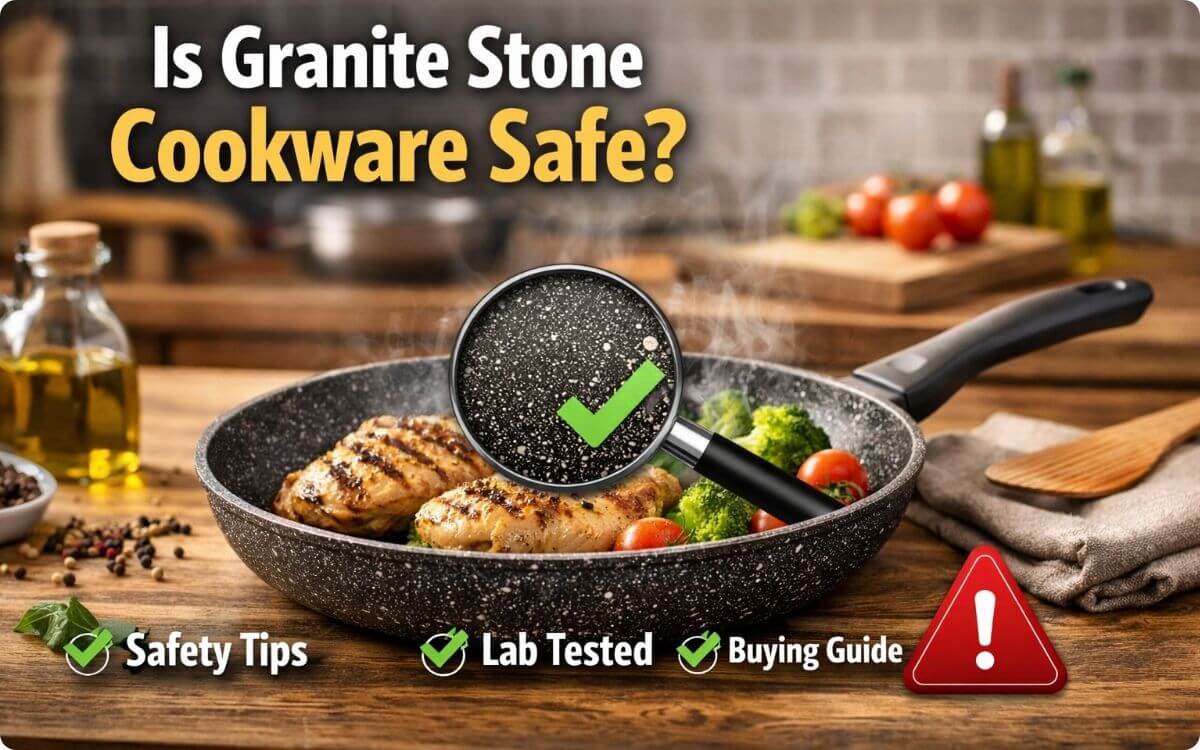
Here’s what a typical granite pan looks like inside:
- A metal base (usually aluminum)
- A primer layer that helps the coating stick
- A nonstick coating reinforced with mineral particles
So, while it may look like stone, it’s really a coated metal pan designed to be nonstick and durable.
You’ll often see two terms mentioned with this type of cookware:
- PTFE: a type of nonstick coating that helps food slide off easily
- PFOA: a chemical that was once used in making some nonstick coatings but is now largely phased out in modern cookware
This is where some confusion comes from. People hear “granite” and assume it’s completely natural stone, but in reality, it’s a modern nonstick surface with added minerals for strength.
That doesn’t automatically make it unsafe—but it does mean you should understand what you’re actually cooking on, not just the name on the box.
Is granite cookware chemically safe? The short science answer
Short answer: yes — most modern “granite” cookware is considered chemically safe for normal home cooking, as long as you don’t overheat it or use a pan with a badly damaged coating.
Manufacturers today commonly sell pans labeled PFOA-free, and regulatory testing shows that properly bonded nonstick coatings don’t leach significant chemicals into food during normal use.
The main chemical people worry about is PTFE. In its solid, intact form PTFE is largely inert — it doesn’t react in your food. The real risks come if a PTFE-style coating is heated far above normal cooking temperatures or if the surface is badly scratched or flaking; those situations can break the coating down and release fumes or particles.
What regulators say: agencies such as the FDA and the EFSA monitor PFAS/PFOA and nonstick use in food contact materials and advise that modern coatings are acceptable for regular cooking when used according to manufacturer instructions (avoid extreme heat and discard pans with damaged coatings).
In plain terms: buy pans from reputable brands that state “PFOA-free,” avoid heating empty pans on high, and replace any pan whose coating flakes or peels — doing those three things keeps chemical risks very small.
Key risks: when and why granite coatings might become unsafe
- Overheating — PTFE-style coatings start to break down at very high temps (around 260°C / 500°F).
How to prevent: cook on low–medium heat, don’t preheat an empty pan for long, and turn the burner down once oil is shimmering.
When to replace: if the pan shows discoloration, bubbling, or you notice a chemical or acrid smell during use. - Abrasion and deep scratches — metal utensils, rough scrubbing, and stacking pans without protection can wear the coating away.
How to prevent: use wooden, silicone, or plastic utensils and clean with a soft sponge; store pans with cloth or paper between them.
When to replace: when food starts sticking where it didn’t before or you can see deep grooves that expose the metal beneath. - Chipping of enamel or decorative layers — cheaper sets sometimes use a thin decorative layer that can chip if the pan is dropped or hit.
How to prevent: handle gently, avoid thermal shock (don’t plunge a hot pan into cold water), and hand-wash if the maker recommends it.
When to replace: if you see flakes or chips coming off the surface — chipped pieces can end up in food. - Coating flaking or peeling — prolonged wear, overheating, or manufacturing defects can cause the coating to delaminate.
How to prevent: follow temperature limits, don’t use harsh abrasives, and follow the brand’s care instructions.
When to replace: any visible peeling is a clear sign to stop using the pan. - Cumulative PFAS exposure — PTFE belongs to the broader PFAS family; while a single pan is unlikely to cause harm if used correctly, PFAS can come from many sources (packaging, water, etc.).
How to prevent: reduce high-heat misuse and replace damaged pans; consider variety in cookware types if you’re cutting overall PFAS exposure.
When to replace: when the coating is damaged or the pan no longer performs as nonstick.
If you use pans carefully and replace them at the first signs of serious wear (peeling, flaking, strong odors, or persistent sticking), you keep the real risks very small.
Granite vs. other popular options
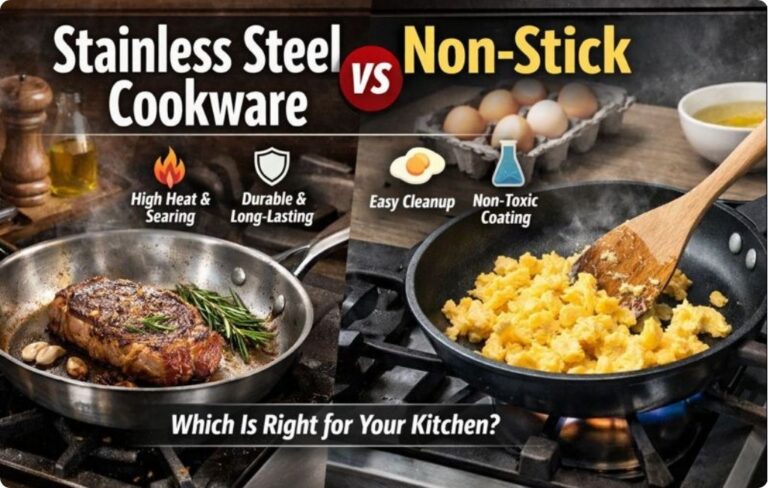
Here’s a simple side-by-side look at how granite cookware compares to other common choices:
| Feature | Granite Cookware | Ceramic Cookware | Stainless Steel |
| Safety | Generally safe if coating is intact | Very safe, usually PFAS-free | Very safe, no coating |
| Durability | متوسط (coating wears over time) | Lower (coating wears faster) | Very high (can last decades) |
| Heat tolerance | Medium (not for very high heat) | Medium (can degrade with high heat) | High (handles high heat easily) |
| Ease of cleaning | Very easy (nonstick) | Very easy (nonstick) | Moderate (needs technique) |
| Price | Budget to mid-range | Budget to mid-range | Mid to high |
Granite cookware is popular because it’s easy to use. Food doesn’t stick much, and cleanup is quick. But like most coated pans, it won’t last forever and needs a bit of care.
Ceramic cookware feels similar in daily use—also nonstick and easy—but the coating can wear out a bit faster if you cook often.
Stainless steel is very different. It doesn’t have a coating, so it takes a little practice to use. But it’s extremely durable and handles high heat without problems.
Buying checklist: How to choose a safer granite pan
Here are six simple things to check before you buy a granite-style pan. These make a real difference in safety and how long the pan will last.
- Look for “PFOA-free” on the label. That shows the maker didn’t use the older chemical used in some coatings. It’s a basic safety flag to prefer.
- Check whether the coating contains PTFE and how the brand describes it. PTFE-based coatings are common and fine when intact, but you want clear instructions on safe temperatures and care from the manufacturer.
- Choose a brand with a real warranty or replacement policy. A two-year (or longer) warranty means the company stands behind its product — and gives you recourse if the coating fails early.
- Confirm the base and compatibility you need (induction, gas, electric). If you need induction, make sure the pan explicitly says it. A proper base also improves heat distribution and reduces hot spots that can damage coatings.
- Check the oven-safe maximum temperature. A clear temperature limit tells you how hot the pan can go before the coating risks breaking down. Avoid pans with vague or missing temperature info.
- Prefer brands with third-party testing or clear lab claims. Independent tests or links to lab results are stronger evidence than marketing copy alone.
Watch out for these marketing red flags: claims like “100% natural granite” or “no chemicals ever” are usually misleading. Also avoid pans that promise a lifetime nonstick finish with no care instructions — real coatings wear with use. If a product page has lots of glowing blurbs but no technical details (no temp limits, no materials list, no warranty), that’s a sign to be cautious.
Quick tip: if you’re unsure, check the product manual or the manufacturer’s FAQ before buying — a helpful company will clearly explain materials, temperatures, and care.
Real-world care & safe-use tips
If you use granite cookware the right way, it stays safe and works better for longer. Most problems happen from small habits that are easy to fix.
Do:
- Cook on low to medium heat. You don’t need high heat for most foods, and it helps protect the coating.
- Use wooden or silicone utensils. They’re gentle and won’t scratch the surface.
- Wash by hand if the brand suggests it. Warm water, mild soap, and a soft sponge are enough.
- Replace the pan if you see chipping or peeling. Once the surface is damaged, it’s better not to keep using it.
Don’t:
- Don’t heat an empty pan on high. This is one of the fastest ways to damage the coating.
- Don’t use metal utensils. Even small scratches can build up over time.
- Don’t scrub with steel wool or rough pads. If food sticks, soak the pan instead of forcing it off.
In everyday use, these small habits make a big difference. Treat the pan gently, and it will stay nonstick and safe much longer.
Durability & lifespan: what to realistically expect
Granite cookware doesn’t last forever, and that’s normal. In real kitchens, most pans hold up well for about 2 to 5 years, depending on how often you use them and how carefully you treat them. Daily use on high heat will wear them out faster, while gentle use can stretch their life.
Over time, the nonstick surface slowly loses its performance. You might notice food starting to stick a bit more, even when you use oil. That’s usually the first sign the coating is wearing down.
Here are a few clear signs it’s time to replace the pan:
- Food sticks much more than before
- You see scratches, peeling, or rough spots
- The surface looks dull or uneven
- You notice a burnt or odd smell during normal cooking
A simple routine can help your pan last longer. Let it cool before washing, clean it with a soft sponge, and avoid stacking it directly with other pans unless you place something soft in between. Also, keep the heat moderate—this one habit alone makes a big difference.
Even with good care, though, these pans are not lifetime products. Think of them as everyday tools that work well for a few years, then need replacing.
FAQs
Is granite stone cookware PFOA-free?
Most modern granite cookware is labeled PFOA-free, which means it’s made without that older chemical. Always check the packaging or product description—if it clearly says “PFOA-free,” that’s what you want.
Can granite pans release toxic fumes?
Only if overheated—very high heat (around 260°C / 500°F or more) can start to break down the coating, which may release fumes. Normal cooking temperatures are safe.
Is granite cookware better than ceramic?
It depends on what you want. Granite usually lasts a bit longer and handles daily use better, while ceramic is often chosen by people who prefer coatings without PTFE. Both are easy to clean but have different strengths.
Can I use metal utensils?
No, it’s best not to. Metal utensils can scratch the surface, and once the coating is damaged, the pan won’t perform as well and may need replacing sooner.
Are granite cookware sets dishwashers safe?
Some are, but not all. Even if a pan is labeled dishwasher-safe, hand washing is usually better for keeping the coating in good shape. Always follow the manufacturer’s instructions.
Conclusion
Granite stone cookware can be a safe and convenient choice for everyday cooking when used properly. Most modern pans are PFOA-free and nonstick, making them easy to cook with and clean. The key is to avoid overheating, use gentle utensils, and replace the pan if the coating becomes scratched or chipped.
Compared to other options, granite pans offer good durability and easy cleanup, making them ideal for low- to medium-heat cooking, while stainless steel or ceramic may be better for high-heat or long-term use. By choosing a reputable brand, checking labels, and following simple care tips, you can enjoy the benefits of granite cookware safely and confidently in your kitchen.