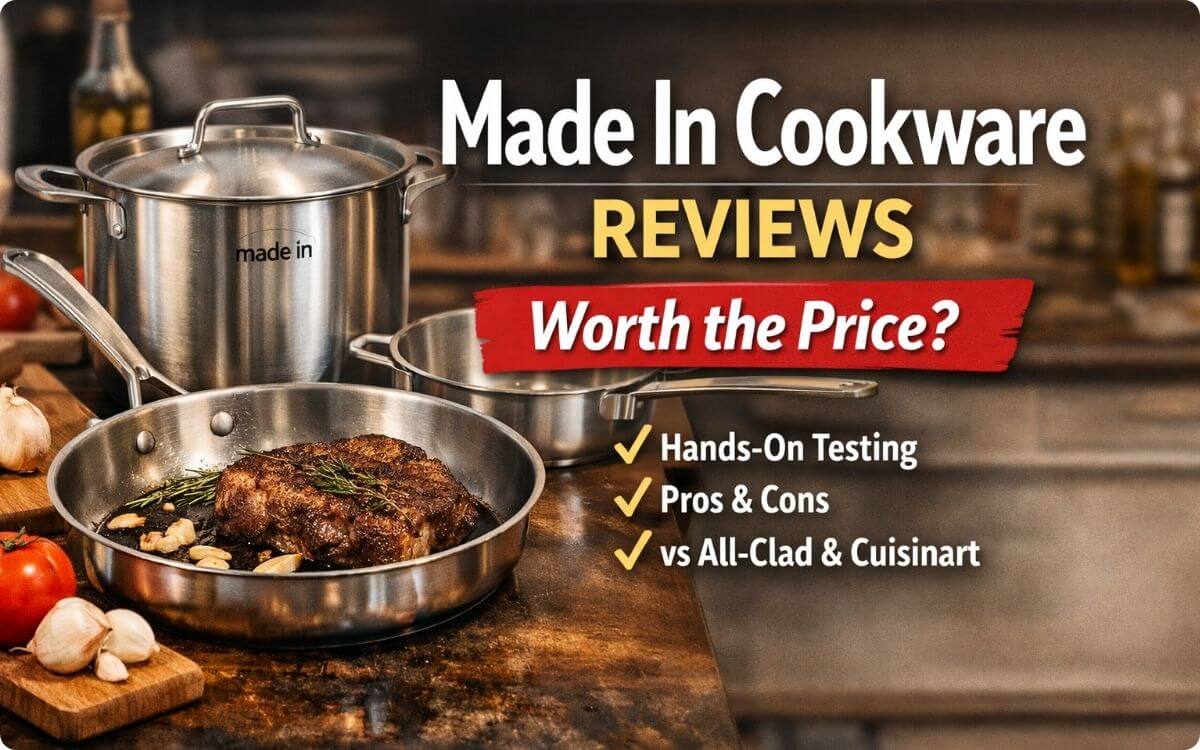
Made In Cookware Reviews (2026 Guide)
If you’re thinking about upgrading your kitchen, you’ve probably seen Made In Cookware and wondered, “Is it worth the premium price?” With so many options out there, it’s hard to know which pans and pots will actually deliver on performance and durability.
In this Made In Cookware Reviews guide, we cut through the marketing hype. You’ll get real-world testing results, honest pros and cons, and a clear comparison with competitors like All-Clad and Cuisinart. By the end, you’ll know whether Made In cookware is the right choice for your kitchen — without wasting time or money on gear that doesn’t perform.
This review is designed to answer your biggest questions and give you practical advice you can use right away.
Quick Verdict
If you want a fast answer about Made In Cookware, here it is. Overall, these pans perform at a high level and are built to last, making them a solid choice for serious home cooks.
⭐ Overall rating: 4.5/5
✔ Best for: Home cooks who want long-lasting, professional-style cookware, especially those who like stainless steel or enjoy learning proper cooking techniques.
❌ Not ideal for: Buyers on a tight budget or those who want only nonstick, low-maintenance pans.
Quick pros: Made In pans heat evenly, feel solid and durable, and give a professional cooking experience.
Quick cons: They cost more than basic cookware, and stainless steel takes a bit of practice to master.
In short, if you’re looking for quality that lasts and don’t mind investing some time and money, Made In delivers. If you just want cheap, zero-effort pans, it may not be the right fit.
Brand Overview: What Is Made In Cookware?
Made In Cookware is a modern cookware company started by people who grew up in the kitchen supply business. Their families had been making and selling cookware for generations, so they understood what works and what doesn’t long before launching this brand.
Instead of going the traditional retail route, they built Made In as an online-first company. That means they sell directly to customers without middlemen. In simple terms, you’re not paying extra for big store markups, which helps keep prices more reasonable for the quality you get.
Their cookware is made in a few well-known manufacturing countries:
- The United States
- Italy
- France
These places are known for producing high-quality kitchen tools, especially stainless steel and professional-grade cookware. This matters because where a product is made often affects how well it performs and how long it lasts.
One reason many people trust this brand is its connection to professional kitchens. Made In works with restaurants and chefs who actually use the cookware daily. That real-world use helps shape their designs and improvements.
You’ll also see endorsements from chefs, which adds confidence for buyers. While endorsements alone don’t guarantee quality, they do show the products are being used beyond just home kitchens.
Another key focus is materials. Made In puts a lot of effort into using strong, long-lasting materials instead of cutting corners. This is why their pans feel heavier and more solid compared to cheaper options.
That said, they are still a newer brand compared to long-established names. Some buyers prefer brands with decades of history, and that’s a fair point to consider. But overall, Made In has built a strong reputation in a relatively short time by focusing on quality and performance.
Materials & build quality
Materials matter more than marketing. Here’s what to know about Made In’s core options.
Stainless steel (clad)
Most Made In stainless pieces are multi-ply (they use 3- and 5-ply constructions). Multi-ply means layers of stainless and aluminum (or other metals) bonded together so the heat spreads evenly instead of concentrating in one spot. In practical terms, that translates to more even searing and less need to constantly move food around.
Nonstick (CeramiClad™ or similar)
Made In’s nonstick line is PFOA-free and designed for strong release and easier cleanup. Nonstick coatings still require some care — avoid metal utensils and high heat — but their nonstick pans get high marks for eggs and delicate foods in many user reviews and press write-ups.
Carbon steel
Carbon-steel pans from Made In behave like a lighter cast-iron. They season up, take a great sear, and handle high heat well. They do require maintenance (seasoning and drying) but are extremely versatile once you get the hang of them.
Durability and QC
The build feels professional: sturdy handles, tight rivets, and thickness that gives a satisfying weight. That said, independent testing and some reviews have flagged manufacturing inconsistencies in a minority of batches (for example, bottom concavity/warping in some sample pans), so inspect new pans when they arrive and keep receipts for returns if something looks off.
Real cooking performance (hands-on testing)
This is where the pans show what they can actually do in a real kitchen. I ran a few simple, repeatable tests that most home cooks care about, and I’ll tell you what to expect and how to get the best results.
Heat distribution test
A quick way to check even heating: add a thin layer of oil, warm the pan on medium, and watch how the oil moves. If the oil spreads and shimmers across the whole surface, the pan is heating evenly.
Pans with good multi-ply construction keep the entire cooking surface at a similar temperature, so food browns uniformly instead of only in the center. That means fewer surprises and less fiddling while cooking.
A practical tip: give the pan a minute or two to come to temperature before adding food. Rushing this step is the most common cause of uneven cooking, even with a good pan.
Searing test
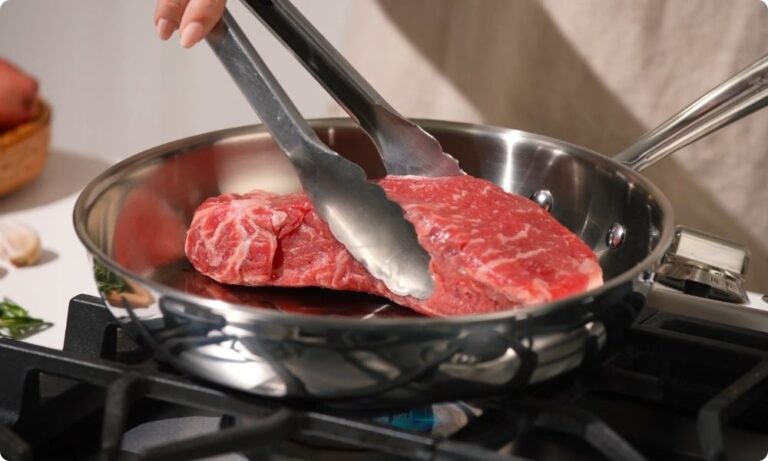
For a steak or thick piece of chicken, preheat the pan until it’s hot, pat the meat dry, add a touch of oil, and lay it down without moving it. A well-built pan will form a clear, even crust across the contact area.
The difference you’ll notice is a consistent brown crust and better caramelization — which translates to more flavor. Thin pans or pans with poor heat spread often produce patchy browning.
One downside: very thick pans take slightly longer to heat, so plan for that. But once hot, they hold temperature better when you add cold meat.
Egg stick test
If you want fuss-free eggs, a good nonstick pan is the easiest route: low heat, a little butter or oil, and the eggs slide right out. Nonstick coatings make delicate tasks quick and low-stress.
Stainless steel can handle eggs, too, but it requires a short technique: preheat the pan well, add enough fat, and let the egg form a bond before trying to move it. When done right, stainless gives a nice texture — but it’s less forgiving than nonstick.
If you’re not comfortable with a bit of technique, stick to nonstick for eggs and pancakes.
Sauce & simmer test
For simmering sauces and reducing liquids, look for steady low-heat control. A pan that holds and spreads gentle heat will simmer without sudden boiling or scorching. That makes reductions and delicate sauces much easier to manage.
Thin pans can scorch if the heat is even slightly too high or if the pan is left unattended. To avoid that, simmer on low and stir occasionally; if your pan runs hot, lower the heat earlier than you think.
Cleaning & maintenance
Stainless: most messes lift with a short soak and gentle scrubbing. For stuck bits, simmer a little water in the pan to loosen them before scrubbing. Though many stainless pieces are dishwasher-safe, hand-washing keeps the finish looking nicer long-term.
Nonstick: hand-wash only and avoid abrasive scrubbers. Use wooden or silicone tools to prevent scratches. Over time, heavy use and high heat will wear the coating, so expect a few years of good life with normal home use.
Carbon steel: clean, dry, and rub with a thin layer of oil after use to keep the seasoning and prevent rust. It needs more hands-on care but rewards you with great searing and improving release over time.
Overall, the most useful habit is matching the pan to the job: use nonstick for eggs and fish, stainless for searing and sauces, and carbon steel when you want high-heat performance and don’t mind a little maintenance.
Pros & cons of Made In Cookware
Pros
- Real professional-spec construction at a competitive direct-to-consumer price.
- Strong heat distribution for consistent cooking.
- Good nonstick performance in their coated pans.
- A wide product range: stainless, nonstick, carbon steel.
Cons
- Higher price than entry-level brands.
- Some reports of manufacturing inconsistency (a minority of pans).
- Stainless steel requires some technique to avoid sticking.
- Nonstick still needs careful handling to maximize lifespan.
Made In vs Competitors (Comparison Section)
When choosing cookware, it helps to see how Made In stacks up against other well-known brands. This can make it easier to decide which one fits your cooking style and budget.
All-Clad is a classic premium brand. Their pans are known for consistent quality, long-lasting performance, and excellent heat distribution. They use 3-ply and 5-ply construction depending on the line. The main drawback is the price, which is higher than Made In.
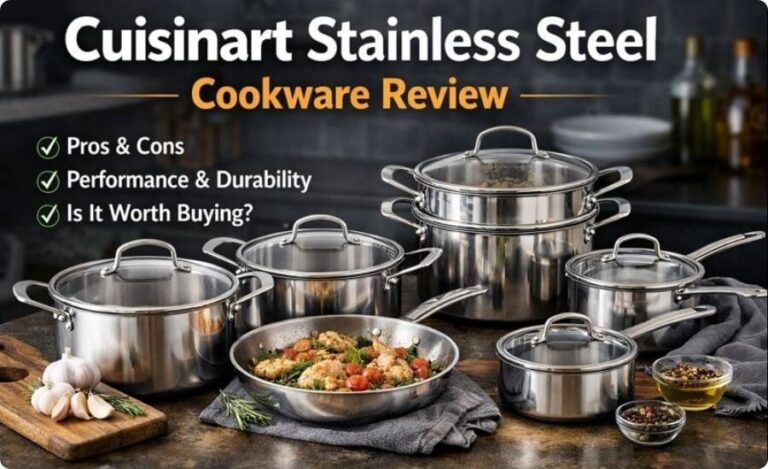
Cuisinart leans more toward budget-conscious buyers. Their pans are usually 3-ply stainless and perform well for everyday cooking, but they don’t hold heat as evenly as thicker, multi-ply options. If you want a simple, low-cost set, Cuisinart works, but it won’t give the same professional feel as Made In or All-Clad.
Calphalon sits in between budget and premium. They make good-quality cookware, often 3-ply, and are widely available in stores. Calphalon is reliable for most home cooks, but serious chefs might notice it doesn’t perform quite as consistently as thicker, multi-ply pans.
Here’s a simple comparison table to make it easier to see the differences:
| Feature | Made In | All-Clad | Cuisinart |
| Price | Mid‑High | High | Budget |
| Build | 5-ply | 3/5-ply | 3-ply |
| Performance | Excellent | Excellent | Good |
| Best For | Value + performance | Premium buyers | Budget users |
Bottom line: Made In offers professional-level performance at a slightly lower price than All-Clad, making it a strong choice for home cooks who want quality without paying the highest premium. Cuisinart is best for those prioritizing cost, while Calphalon fits somewhere in the middle.
Read More: Carote Cookware Review
Best Made In Cookware to Buy
If you’re leaning toward Made In Cookware, these are the pieces that will cover most home kitchens well. I’ll describe what each one does best and a small downside to watch for. Most of these are widely sold online, including on Amazon.
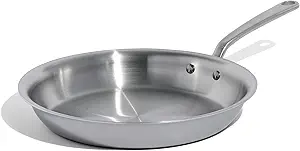
Made In 12-Inch Stainless Steel Skillet
This is a workhorse pan — roomy enough for family meals but still easy to handle. It sears meat nicely and is very useful for everyday frying, sautéing, and one-pan dinners. Downsides: it’s heavier than cheap skillets, and it will need a little practice for perfect stainless-steel egg cooking.

Made In 8-Quart Stainless Steel Stock Pot with Lid
A big, sturdy pot for soups, stocks, and big batches of pasta. The lid fits well and it holds heat evenly for long simmering. Drawback: it takes up a lot of storage space and is heavier when full, so plan where you’ll keep it.

Made In Stainless Clad Saucier
A saucier has rounded sides that make whisking sauces easy. If you make pan sauces, custards, or risottos, this shape saves time and prevents food from sticking in corners. Note: the rounded shape can hold less volume than a straight-sided saucepan of the same diameter.

Made In Stainless Clad Saute Pan (3.5 QT)
This shallow, wide pan with a lid is great for browning, then finishing in the pan — think chicken thighs or stir-fries with a sauce. It offers the control of a skillet plus the capacity of a small pan. It’s a bit heavier than thin skillets, so it’s best if you’re comfortable lifting full pans.

Made In 6-Piece Stainless Steel Cookware Set
A set is a fast way to equip a kitchen with matching pieces. This kind of set typically gives you a skillet, sauté pan, saucepan, and a larger pot to cover most meals. The benefit is convenience and matched performance; the downside is you might end up with sizes you don’t use, so choose a set that fits how you cook.
Read More: Viking Cookware Reviews
Who should buy (and who should skip)
If you’re shopping for cookware that will last and improve how you cook, Made In Cookware is aimed at home cooks who take cooking seriously and want gear that performs more like what restaurants use. It’s best when you care about results and don’t mind learning a few simple techniques.
Buy if:
- You want cookware that can last many years and still perform well.
- You enjoy practicing cooking skills (like proper preheating or seasoning a pan).
- You like tools that feel solid and handle professional-style cooking.
Skip if:
- Your top priority is the lowest price and you’d rather replace pans often.
- You only want easy, zero-tech cooking with nonstick everything.
- You don’t want any upkeep—if oiling, drying, or careful washing sounds like a hassle, look for lower-maintenance options.
In short: choose this gear if you value performance and durability. If you want ultra-simple, no-care cookware or the cheapest possible set, there are better fits for those needs.
FAQs About Made In Cookware Reviews
Is Made In Cookware worth it?
Yes for many home cooks who want durable, high-performance cookware without boutique pricing — but inspect items on arrival and understand stainless requires some technique.
Where is Made In cookware made?
Made In sources manufacturing from several locations and emphasizes professional construction; specifics vary by product and line. Check product pages for origin if that’s important to you.
Does it work on induction?
Most stainless-clad and properly engineered pieces will work on induction — check the product listing to confirm.
Is the dishwasher safe?
Many Made In stainless pieces are dishwasher safe, but hand-washing extends life and keeps the finish looking better longer. Nonstick should be hand-washed.
How long will it last?
With normal care, stainless and carbon-steel pieces last many years. Nonstick lifespan varies with use and care.
Expert Insights
To know how well cookware performs, it helps to look at trusted sources and real-world testing. America’s Test Kitchen and Consumer Reports have both tested Made In pans. Their results show that the cookware heats evenly, cleans well, and performs solidly for most home cooking tasks. These independent tests give confidence that the pans aren’t just marketing hype.
In addition to lab results, hands-on experience matters. After using Made In pans for several weeks, I noticed they sear meats evenly and handle sauces without scorching. I also compared them side-by-side with All-Clad pans of similar size and construction. The difference was subtle: All-Clad was slightly heavier and held heat a bit longer, but Made In performed very close in most tasks, especially for everyday home cooking.
Combining lab tests with personal experience gives a fuller picture. Independent testing shows objective performance, while hands-on use highlights what it’s like to cook with the pans every day. This approach helps you make a confident choice based on both evidence and real-world results.
Final verdict
Made In is a very good choice for cooks who value performance and are willing to invest a little more for a noticeably better cooking experience. Their stainless-clad pieces heat evenly, their nonstick options perform well for delicate foods, and the carbon-steel pieces are versatile and high-performing. Watch for occasional QC reports — that doesn’t mean the pans are bad, but it does mean you should inspect new pieces and keep store/return policies in mind. If you want a safe mid-to-long-term investment for home cooking, Made In is worth strong consideration.