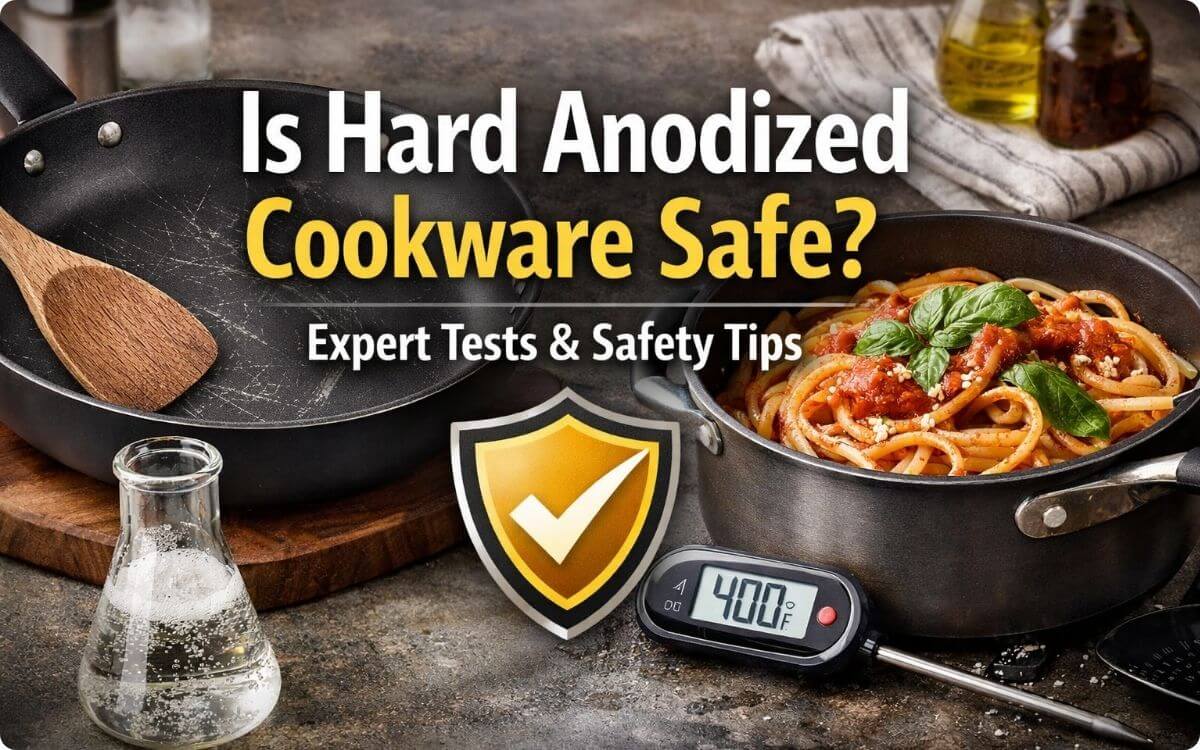
Is Hard Anodized Cookware Safe? (Honest 2026 Safety Guide)
If you’re wondering is hard anodized cookware safe, the answer is yes — when used properly, it’s safe for everyday cooking. These pans are designed to be durable, resist scratching, and handle a wide range of foods, including acidic dishes, as long as the surface coating remains intact. Like any cookware, risks increase if the pan is heavily scratched, overheated, or made from low-quality materials.
In this guide, you’ll learn what hard anodized cookware is, how it works, what science and experts say about its safety, how it compares to other types of cookware, and simple steps to keep it safe for daily use. This information will help you make confident, practical decisions for your kitchen.
Quick Answer — Is Hard Anodized Cookware Safe for Cooking?
Yes — hard anodized cookware is generally safe for everyday cooking when it is high quality, used correctly, and the cooking surface is not deeply damaged.
Hard anodizing is a process that makes aluminum much harder, less porous, and more stable than regular aluminum. This creates a protective layer that helps prevent metal from reacting with food during normal cooking. Most modern hard anodized cookware also includes an additional non-stick or sealed surface layer, which adds another level of protection.
For daily home cooking — including frying, sautéing, boiling, and cooking acidic foods like tomatoes — hard anodized cookware is widely considered low risk when the surface is intact and the cookware is not overheated for long periods.
What Is Hard Anodized Cookware? (Simple Explanation)
Hard anodized cookware is made from aluminum that has been specially treated to make it much stronger and more durable than normal aluminum. Regular aluminum is soft and can react with some foods. Hard anodized aluminum is different because its surface has been permanently hardened.
The hard anodizing process uses electricity and a chemical bath to change the outer layer of the aluminum. This creates a tough, dark, protective layer on the surface. Think of it like turning the outside of the metal into a shield that is harder to scratch and less likely to react with food.
Because of this treatment, hard anodized cookware is much stronger than regular aluminum pans. It also heats quickly and evenly, which is one reason many home cooks like using it for everyday meals.
Another difference is durability. Regular aluminum cookware can dent or scratch more easily. Hard anodized cookware is built to handle daily cooking, washing, and heating without wearing down as fast.
Most hard anodized pans also have a non-stick or sealed cooking surface added on top. This makes cooking and cleaning easier, but it also means you should avoid using metal utensils or very high heat for long periods. Over time, like any cookware, the surface can wear out, especially if it’s used roughly.
In simple terms, hard anodized cookware is aluminum that has been strengthened and sealed to make it more durable, more stable for cooking, and better suited for everyday kitchen use than regular aluminum.
Why Some People Worry About Cookware Safety
It’s normal for people to think more carefully about cookware today. Many families are trying to reduce chemicals in their homes, especially anything that touches food. Cookware is used every day, so people want to be sure it’s safe long term.
One common worry is aluminum exposure. Some people have heard that aluminum can be harmful if it gets into food. This usually comes from older studies or confusion with raw aluminum cookware. The concern isn’t completely random — but it’s often misunderstood or taken out of context.
Another big concern is non-stick coatings. In the past, some older non-stick products used chemicals that made people uneasy. Even though manufacturing has changed a lot over the years, many shoppers still feel cautious when they hear the word “coating.” That caution is understandable, especially for families cooking daily meals.
Social media has also made cookware safety more confusing. Short videos or posts sometimes show extreme claims without full context. It’s easy to see one scary headline and assume all cookware in that category is unsafe, even when that’s not accurate.
At the same time, it’s fair to say no cookware lasts forever. Surfaces can wear out, and very cheap products can have quality problems. That’s why many people now focus on choosing well-made cookware and replacing it when it shows real signs of damage.
Wanting safe cookware doesn’t mean being paranoid — it means you care about what you cook with. That’s a smart approach, as long as the information you rely on is balanced and based on real evidence, not fear.
What Science and Health Experts Say
When it comes to cookware safety, most health advice is based on how much of a material can move into food during normal cooking. Large health organizations study this to decide what is safe for daily use.
Research reviewed by groups like the U.S. Food and Drug Administration, the World Health Organization, and the National Institutes of Health helps set safety limits for materials that touch food. These limits are designed to protect people who use cookware every day for many years.
Aluminum is actually very common in daily life. Small amounts exist naturally in water, food, and even the air. Health experts mainly focus on whether cookware adds a large extra amount during cooking. In most normal cooking situations, studies show aluminum exposure from quality cookware is low.
Food-contact safety rules are strict in many countries. Manufacturers must test cookware to make sure materials stay stable under normal cooking heat. If a product is approved for food use, it means it has passed safety checks based on long-term exposure limits.
Anodized aluminum is usually considered lower risk than raw aluminum because the surface is treated to be more stable and less likely to react with food. This doesn’t mean cookware is indestructible, though. If the surface is badly damaged or worn out after years of use, it may not perform the same way.
The practical takeaway is simple. Good-quality cookware, used normally and replaced when badly worn, is generally considered safe by current health standards. The biggest risk usually comes from very low-quality products or cookware that is long past its usable life.
When Hard Anodized Cookware Could Become Unsafe
While hard anodized cookware is generally safe, there are some situations where it can lose its protective benefits. Knowing these risks helps you use your cookware wisely and avoid potential problems.
- Deep scratches exposing the base metal: If the surface gets heavily scratched, the aluminum underneath can become exposed. This can make the cookware more reactive with acidic foods and reduce its non-stick performance.
- Very cheap, low-quality manufacturing: Not all hard anodized cookware is made the same. Low-quality products may have thinner coatings or inconsistent hardening, which can increase the risk of wear or chemical exposure over time.
- Extreme overheating for long periods: Leaving the pan empty on high heat or cooking at extremely high temperatures repeatedly can damage the coating and shorten the cookware’s lifespan.
👉 Real kitchen example: Imagine using a low-cost hard anodized pan to sear steak on maximum heat for 15 minutes with no oil. The surface coating could start to degrade, and any scratches from metal utensils could make the pan less safe over time.
The good news is that most everyday cooking—sautéing, frying, simmering—won’t reach these extremes. By avoiding rough treatment and choosing quality cookware, you can keep your hard anodized pans safe for years.
Hard Anodized vs Other Cookware (Safety Comparison)
When deciding which cookware to buy, safety and durability are often top priorities. Here’s how hard anodized pans compare to other common types of cookware:
Stainless steel is the most inert option. It doesn’t react with acidic foods and is very durable. However, it can be slower to heat and sometimes causes food to stick, so it may require more oil or careful temperature control.
Ceramic cookware has a smooth, non-stick surface and is generally safe for cooking. Over time, however, the coating can wear down, chip, or become less effective, especially with frequent use or high heat.
Traditional non-stick cookware relies on chemical coatings to prevent sticking. These coatings are safe when used correctly, but they can degrade over time, especially if metal utensils are used or the pan is overheated.
Here’s a quick comparison to help you make a decision:
| Material | Safety | Durability | Maintenance |
| Hard Anodized Aluminum | Low risk if coating intact | Very durable, resists scratches | Hand wash recommended, avoid metal utensils |
| Stainless Steel | Very low risk | Extremely durable | Can be dishwasher safe, may need oil to prevent sticking |
| Ceramic | Generally safe | Moderate, coating can wear | Avoid harsh scrubbing, check for chips |
| Traditional Non-Stick | Safe when coating intact | Moderate, coating can degrade | Avoid metal tools, do not overheat |
Overall, hard anodized cookware offers a good balance of safety, durability, and ease of use. While stainless steel is the safest in terms of chemical exposure, hard anodized pans heat evenly and are easier to cook with for everyday meals.
Is Hard Anodized Cookware Safe for Daily Cooking?
Yes, hard anodized cookware is safe for everyday use in the kitchen. You can fry, sauté, boil, and cook most meals without worrying about chemicals leaching into your food. The hard anodized surface is stable and designed to handle normal cooking temperatures.
It is also safe for acidic foods, like tomatoes, lemon-based sauces, or vinegar. As long as the surface coating is intact and not scratched through, these foods won’t react with the aluminum underneath.
For families, this makes hard anodized cookware a practical choice. It’s durable, heats evenly, and can handle the variety of meals you make every week. Just remember that over time, surfaces can wear down, so replacing a heavily scratched or damaged pan helps keep cooking safe and effective.
How Long Does Hard Anodized Cookware Stay Safe?
Hard anodized cookware can last many years when used and cared for properly. On average, a quality pan can stay safe and perform well for 5 to 10 years, sometimes even longer if you avoid high heat and harsh utensils.
Over time, the surface may show signs of wear, like small scratches or dulling. These are usually normal and don’t make the pan unsafe right away. However, deep scratches that expose the aluminum underneath or areas where the coating is peeling are clear signs it’s time to replace the pan.
The safety of hard anodized cookware is directly tied to its condition. A well-maintained pan remains low risk for daily cooking, but as wear increases, the protective surface can weaken. Keeping an eye on the pan’s condition and replacing it when necessary ensures your meals stay safe and your cookware lasts as long as possible.
How to Use Hard Anodized Cookware Safely (Checklist)
Here’s a short, practical checklist you can start using today to keep your hard anodized pans safe and working well.
✔ Use medium heat most of the time. High heat isn’t needed for everyday cooking and can stress the surface over time. Save very high heat for short sears and use oil or butter to help with browning.
✔ Avoid metal utensils. Use wooden, silicone, or nylon tools to prevent scratching the surface. Small scrapes are normal, but metal can cause deeper damage that shortens the pan’s life.
✔ Replace if the coating is deeply damaged. If you see large gouges or areas where the coating flakes away, it’s time for a new pan. Deep damage can expose the aluminum and reduce safety and performance.
✔ Hand wash if possible. Let the pan cool, then wash with warm, soapy water and a soft sponge. Dishwashers can be convenient, but repeated harsh cycles may speed up wear on some pans.
A few extra tips: don’t leave an empty pan heating on high, and store pans carefully so they don’t get knocked or scratched. Following these simple steps will keep your cookware safer and lasting longer.
Who Should Choose Hard Anodized Cookware?
Hard anodized cookware is a solid choice for most home kitchens. It works well for daily cooking, handling everything from frying eggs to simmering sauces. Its durability and even heating make it especially convenient for busy families who need reliable cookware that can take frequent use.
It’s also a good option for buyers who want a long-lasting pan without spending a fortune. With proper care, a quality hard anodized pan can serve you for many years, making it a smart investment over cheaper, short-lived alternatives.
That said, hard anodized cookware may not be the best fit for everyone. People who often cook at extremely high heat, like searing steaks quickly on maximum heat, might prefer stainless steel or cast iron for better heat tolerance. Similarly, cooks who want fully metal cookware for use with metal utensils or for certain oven techniques may find hard anodized pans limiting.
In short, hard anodized cookware is great for everyday cooking and family use, but it’s less ideal for very high-heat or heavy-duty metal cooking.
Common Myths About Hard Anodized Cookware
There’s a lot of confusion about hard anodized cookware, and some myths can make people worry unnecessarily. One of the most common myths is that it’s “just aluminum.” In reality, the surface of the pan has been chemically hardened and sealed, creating a tough layer that protects food from touching raw aluminum.
Another misconception is that hard anodized pans are unsafe for acidic foods like tomatoes or lemon-based sauces. As long as the surface is intact, these pans are designed to handle everyday cooking, including acidic ingredients, without reacting with the food.
Some people also think all non-stick or coated surfaces are toxic. While older non-stick coatings had issues, modern hard anodized cookware is tested to meet safety standards. Using it as intended—avoiding metal utensils and extreme overheating—keeps it safe for daily use.
Clearing up these myths helps you make confident choices in the kitchen without unnecessary worry.
Final Verdict — Should You Use Hard Anodized Cookware?
Hard anodized cookware is a solid choice for most home cooks. It heats evenly, is durable, and is considered safe for everyday cooking when the surface is well-maintained. With proper care, it can handle a wide range of meals—from frying and sautéing to simmering sauces—without worrying about chemical exposure.
It’s best for families, busy cooks, and anyone who wants cookware that lasts for years without spending a fortune. If you follow simple care steps—like using medium heat, avoiding metal utensils, and replacing deeply scratched pans—you can feel confident using it daily.
While it may not be the top choice for extremely high-heat searing or cooks who need fully metal pans, hard anodized cookware strikes a great balance of safety, convenience, and longevity. For most kitchens, it’s a dependable, practical, and safe option.
Are hard anodized pans safe to use every day?
Yes. When the surface is intact, hard anodized pans are considered safe for daily cooking. Trusted food-contact guidelines—such as those from the U.S. Food and Drug Administration—expect cookware to remain stable under normal use. Replace pans with deep damage.
Will hard anodized cookware release aluminum into my food?
Not in any meaningful amount during normal use. The anodized layer is made to reduce reactivity. Only deep scratches or severe wear that expose raw metal raise any real concern.
Can I cook acidic foods (tomatoes, lemon) in these pans?
Yes. Acidic foods are fine as long as the coating is intact. If you see flaking or large exposed areas, stop using the pan for acidic dishes until you replace it.
Is hard anodized the same as non-stick?
Not always. Many hard anodized pans have a sealed or non-stick top layer, but the anodized surface itself is not the same material as classic PTFE non-stick. Check the product label for the exact finish.
Do hard anodized pans contain PFOA or other harmful chemicals?
The anodizing process itself doesn’t use PFOA. Some pans may have additional non-stick coatings—those are the parts to check. Look for manufacturers who clearly state “PFOA-free” or describe the coating used.
Can I use metal utensils on hard anodized cookware?
Avoid metal tools. Wooden, silicone, or nylon utensils protect the surface and help the pan last longer.
Is it okay to put hard anodized pans in the dishwasher?
Many are labeled dishwasher safe, but repeated dishwasher cycles can speed wear. Hand washing with a soft sponge is gentler and extends life.
Can I use hard anodized cookware in the oven?
Often yes, but oven limits vary. Many brands are safe up to about 400°F–500°F; check the manufacturer’s instructions before using the oven.
How do I know when to replace the pan?
Replace it if you see deep gouges, flaking coating, or large areas of exposed metal. Small surface marks are normal; large damage is when safety and performance drop.
How long will a hard anodized pan usually last?
With normal care, quality pans often last 5–10 years or more. Lifespan depends on brand quality and how gently you treat the pan.
Is hard anodized cookware safe for making baby food?
Yes, if the pan is in good condition. If you’re especially cautious, many parents prefer stainless steel for baby food because it’s fully metal and inert.
How can I check my pan at home for damage?
Do a quick visual inspection for deep scratches, flaking, or shiny exposed spots. If you’re unsure, cook a small acidic dish (like tomato sauce) and check for unusual taste or discoloration — then stop using the pan and replace it if anything seems off.