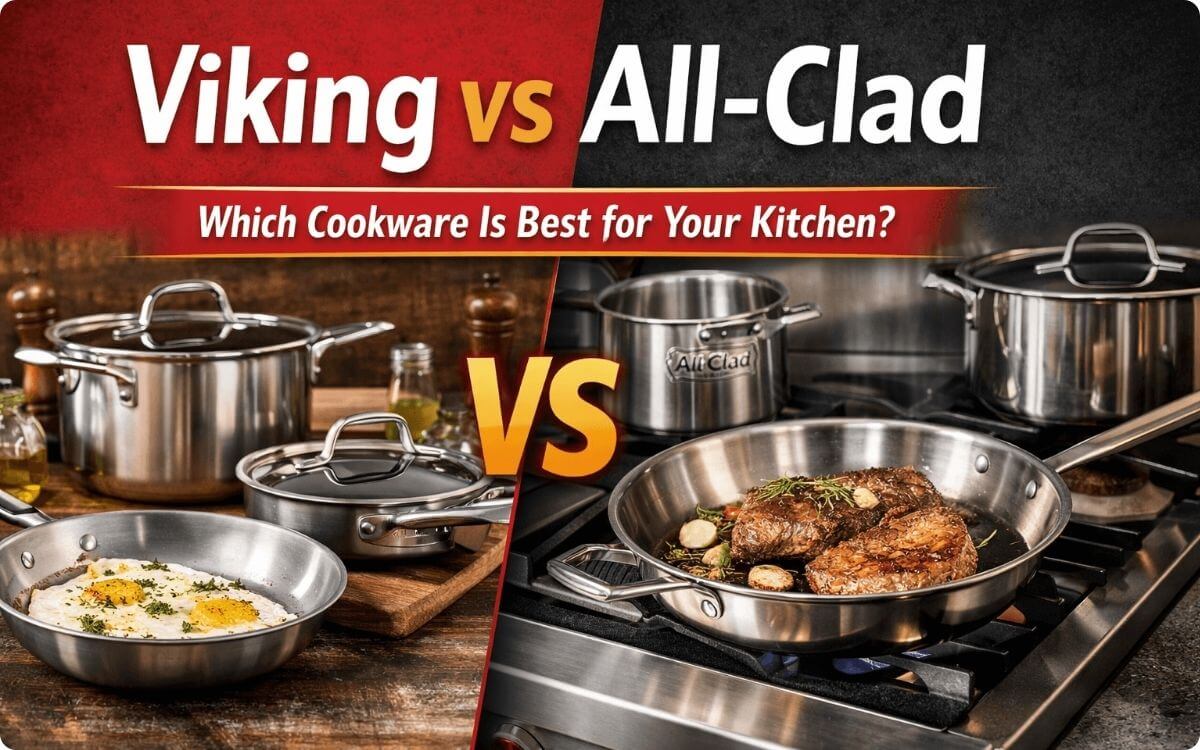
Viking vs All-Clad: Which Cookware Is Better?
Choosing the right cookware can make or break your cooking experience. For home cooks, upgrading from basic pots and pans often leads to a critical decision: Viking vs All-Clad.
Both brands offer premium cookware, but they differ significantly in materials, performance, price, and durability.
In this guide, we’ll break down everything you need to know to pick the best cookware for your kitchen.
Quick Answer (For Busy Readers)
Here’s the short version if you don’t have time to read the full guide:
- Best overall performance: All-Clad – lasts longer, heats evenly, and delivers precise results.
- Best value: Viking Range – more affordable, beginner-friendly, and easy to use.
- Best for beginners: Viking – forgiving and simple for everyday cooking.
- Best for serious cooks: All-Clad – perfect for precision cooking and professional-style results.
Bottom line: Choose All-Clad if you want long-term durability and pro-level performance. Choose Viking if you want solid performance without spending too much and prefer easy handling.
Viking vs All-Clad — Quick Comparison Table
| Feature | Viking Range | All-Clad |
| Construction | Impact-bonded bases common; some fully-clad lines | Fully clad (layered metal edge-to-edge) |
| Heat distribution | Good for everyday use; occasional hot spots | Very even heat across surface |
| Cooking performance | Reliable for home cooks | Better for precision cooking & professional results |
| Durability | Solid but varies by product line | Long-lasting; warp-resistant with heavy use |
| Weight & handling | Lighter, easier to maneuver | Heavier; feels very solid |
| Handle comfort | Rounded, ergonomic for casual use | Sturdy metal handles; some find shape less comfy |
| Cleaning & care | Forgiving; simple cleanup | Requires proper technique; sticky foods may need soaking |
| Price (typical) | Mid-range — better for budgets | Premium — higher upfront cost |
| Warranty / Origin | Mixed origin; warranty varies by line | Mostly USA-made; longer expected lifespan |
| Best for | Beginners, value-focused buyers | Frequent cooks, pros, long-term buyers |
Quick takeaway: Choose Viking for affordability and ease of use; choose All-Clad for consistent performance and long-term value.
Brand Overview
Viking Cookware Overview
Viking Range started as a brand known for pro-style kitchen equipment and has grown into a full cookware and appliance maker. They aim to give home cooks tools that look and perform a bit more like what you’d find in a professional kitchen.
Viking cookware is often praised for offering good performance without the highest price tags. In plain terms: you get solid materials and decent heat control for less than the top-tier premium brands, which makes Viking a popular choice for people upgrading from basic pans.
They balance affordability and performance by offering different product lines — some are built tougher and cost more, while others are made to be budget-friendlier. That means you can pick a set that matches how often you cook and how much you want to spend.
Be honest about the downsides: not every Viking line performs the same. Some pieces heat more evenly than others, and a few users report minor warping or sticking with heavy daily use. Also, construction and finish can vary between models, so it helps to check the specific line you’re considering.
Viking sells a wide range of kitchen gear, from individual frying pans and saucepans to full cookware sets, plus the bigger appliances like ranges and ovens. That variety makes it easy to mix and match or scale up as your cooking needs change.

Pros and Cons of Viking Cookware
Pros
- Affordable – You can get good-quality cookware without spending a fortune.
- Beginner-friendly – Easy to use and forgiving, even if you’re not experienced with stainless steel.
- Comfortable design – Handles are easy to grip and lightweight, making cooking and lifting pans simpler.
Cons
- Not always fully clad – Some lines don’t have edge-to-edge layered construction, so heat may be less even.
- Slightly less durable – With heavy, daily use, certain pans may wear faster or warp compared to higher-end brands.
Overall, Viking is a solid choice for home cooks who want performance without paying premium prices, as long as you pick the right line for your needs
All-Clad Cookware Overview
All-Clad is a well-known cookware brand that started in the United States and built its reputation on high-quality stainless steel pans. Over the years, it has become a go-to choice for people who want long-lasting, reliable cookware.
All-Clad is considered a premium brand, and most of its cookware is made in the USA. You’ll notice the difference in the price, but also in how solid and well-built the pans feel in your hand. They are designed to last for many years, even with regular use.
Many professional chefs trust All-Clad because it heats evenly and gives better control while cooking. That matters when you’re trying to get consistent results, like browning meat or making sauces without burning them.
One thing All-Clad is especially known for is its bonded stainless steel construction. In simple terms, the pans are made by layering different metals together, which helps spread heat more evenly across the entire surface—not just the bottom.
That said, it’s not perfect for everyone. The price can be a big step up, especially if you’re just starting out. Also, stainless steel has a bit of a learning curve—food can stick if you don’t use enough heat or oil. Some people also find the handles less comfortable than other brands.
Still, if you want cookware that performs consistently and can last for decades, All-Clad is often seen as a worthwhile investment.

Pros and Cons of All-Clad Cookware
Pros
- Exceptional durability – Built to last for many years, even with frequent cooking.
- Even heating – Heat spreads evenly across the pan, helping food cook consistently.
- Professional-grade performance – Ideal for precise cooking, searing, and making delicate sauces.
Cons
- Expensive – Higher upfront cost compared to most cookware brands.
- Learning curve – Food can stick if you don’t preheat the pan or use enough fat.
- Handle discomfort for some – Heavy-duty handles can feel awkward or transfer heat, requiring mitts.
All-Clad is great for serious cooks who want long-term performance, but it may take a little practice and investment to get the most out of it.
Head-to-Head Comparison
Build Quality & Materials
When you compare these two brands, the biggest difference comes down to how the pans are built.
With Viking, many pans have a thick base that spreads heat across the bottom. This works well for most everyday cooking. Some of their higher-end lines go a step further and use fully layered construction, but that’s not standard across all products.
All-Clad takes a more consistent approach. Their pans are built with layers of metal that run through the entire body, from the bottom all the way up the sides. This helps heat move more evenly, especially when cooking things like sauces or dishes that need steady temperature.
In real use, this means All-Clad gives you more control. Food cooks more evenly, and you’re less likely to deal with hot spots. Viking still performs well for general cooking, but it can be a bit less consistent depending on the pan.
There’s a trade-off, though. All-Clad’s fully layered build makes the pans heavier and more expensive. Viking feels a bit lighter and easier to handle for everyday use.
👉 Winner: All-Clad
Heat Distribution & Cooking Performance
How a pan spreads heat makes a big difference in how your food turns out.
Viking pans heat up fairly quickly and do a good job for everyday meals like frying eggs or cooking vegetables. But sometimes, the heat isn’t perfectly even, so you might notice certain spots cooking faster than others.
All-Clad performs more consistently. The heat spreads across the whole surface, so food cooks more evenly. This is especially helpful when you’re making things like sauces or trying to get an even sear on meat.
In day-to-day cooking, Viking works fine for most people. But if you care about control and consistency, All-Clad gives you a more reliable result.
One small downside is that All-Clad can take a bit longer to heat up, and it responds quickly to temperature changes, so you need to pay a bit more attention while cooking.
👉 Winner: All-Clad
Durability & Longevity
Durability is where you really see the long-term difference between these two brands.
Viking cookware is generally strong and holds up well with normal use. But the lifespan can depend on which line you buy. Some pieces last for years without issues, while others may show wear a bit sooner if used heavily.
All-Clad is built to last much longer. With proper care, it’s common for these pans to stay in good shape for decades. They also resist warping better, even with high heat and frequent cooking.
In everyday use, Viking is good enough for most home kitchens. But if you cook often and want something that won’t need replacing anytime soon, All-Clad is the safer choice.
The trade-off is cost. You pay more upfront for All-Clad, and it may feel like a bigger investment at first.
👉 Winner: All-Clad
Ease of Use & Cleaning
This is where things feel very different, especially if you’re not used to stainless steel cookware.
Viking pans are generally easier to handle for everyday cooking. You can use them without worrying too much about technique, and cleanup is usually simple if you don’t overheat the pan.
All-Clad takes a bit more practice. If the pan is too hot or not preheated properly, food can stick. Once you learn how to use it—like heating the pan first and adding enough oil—it becomes much easier to manage.
Cleaning can also take a little more effort with All-Clad, especially after cooking sticky foods. You may need to soak the pan or scrub lightly to remove residue.
For beginners, Viking feels more forgiving. All-Clad performs well, but it expects you to use the right method.
👉 Winner: Viking (for beginners)
Design & Comfort
How a pan feels in your hand matters more than you might think — it affects how easy it is to lift, stir, and move hot food without strain.
Viking Range pans tend to be lighter and shaped with rounded handles that fit the hand easily. That makes them simple to use for quick tasks and long stirring sessions. The trade-off is that lighter pieces can feel less solid when lifting heavy pots of food.
All-Clad uses sturdy metal handles that feel very secure and tightly attached. Some people like the firm, professional feel, but others find the shape or weight awkward for one-handed use. These handles can also transfer heat more readily, so you’ll often need a cloth or mitt when moving the pan.
If comfort matters most, try holding the pan before you buy: check the handle shape, how it balances when lifted, and how heavy it feels with one hand. For everyday ease, many cooks prefer the lighter, easier-to-grip feel of Viking.
Winner for design & comfort: Viking — easier to handle for most people, especially during everyday cooking.
Price & Value
Price is one of the biggest differences between Viking and All-Clad.
Viking cookware is more affordable, making it a good choice if you want premium-style pans without spending a fortune. It’s great for people just starting to upgrade their kitchen or who don’t cook every day.
All-Clad is more expensive upfront, but it’s built to last for decades. If you cook often, the long lifespan can make it a better value over time, even though the initial cost is higher.
Which one is best depends on your budget and how you plan to use the pans. If you want solid performance without breaking the bank, Viking is a smart choice. If you’re looking for cookware that can last a lifetime and don’t mind paying more now, All-Clad makes sense.
👉 Winner: Depends on budget
Real Cooking Tests (What Actually Matters)
Frying Eggs
Eggs are a simple test — they show how a pan handles delicate food.
With Viking, you may notice a little sticking sometimes, especially if the pan isn’t hot enough or you don’t use enough fat. To avoid this, warm the pan on medium, add a thin layer of butter or oil, wait until it shimmers, then add the eggs. That small extra fat and the right heat usually prevents most sticking.
All-Clad gives you tighter control once you learn the steps. Preheat the pan a bit longer, add the fat, then lower the heat before adding eggs. With practice you’ll get a clean edge and even cook, but it does expect you to pay attention — too-hot or too-cold and the results suffer.
Quick 3-step method that works for both:
- Preheat the pan on medium for 1–2 minutes.
- Add butter or oil and let it coat the surface.
- Crack eggs in, lower heat to medium-low, and cook slowly until set.
If you want no-fuss eggs every time, a nonstick pan is the easiest choice. But if you prefer stainless, following the preheat + fat + lower-heat routine will get much better results — Viking is forgiving, All-Clad rewards careful technique.
Searing Steak
Searing a steak shows how a pan handles very high heat. A good sear gives a brown, flavorful crust without overcooking the inside.
With Viking Range you can get a nice sear. These pans heat up quickly and give good contact with the meat, so you’ll form a brown crust fast. Because they don’t always hold as much heat as heavier pans, work with one or two steaks at a time so the pan stays hot. If you overload the pan, the crust will be weaker.
All-Clad shines at this job. Its heavier, layered build holds heat longer, so the pan keeps a steady, high temperature even when you add cold meat. That helps form a deeper crust and better browning on thicker steaks. The trade-off is you need to preheat a bit longer and watch the temperature so the outside doesn’t over-brown before the center cooks.
Quick, practical sear method that works for both pans:
- Pat the steak dry and season. Dry surface = better crust.
- Preheat the pan on high for 3–5 minutes until very hot. Add a small amount of high-smoke-point oil.
- Sear 1–2 minutes per side for a 1-inch steak to get a good crust; thicker steaks need longer and may finish in the oven.
- Use a meat thermometer: 125°F (52°C) rare, 130–135°F (54–57°C) medium-rare. Rest 5–10 minutes before slicing.
Final tip: after searing, deglaze the pan with a splash of wine, stock, or butter to lift the browned bits and make a quick sauce. It works well with either pan, but you’ll notice a richer fond (those brown bits) coming off more easily from the heavier, heat-retentive pan.
Making Sauces
Sauces test a pan’s ability to hold a steady, low heat and let you control how fast liquids reduce. A good sauce needs gentle, even heat so it thickens without burning or separating.
Viking Range handles sauces fine for everyday cooking. It heats quickly and is easy to use for simple pan sauces or reductions. If you’re simmering for a long time, watch for faster evaporation on thinner pieces — you may need to lower the heat sooner.
All-Clad gives tighter control when you need precision. The pan keeps temperature steady, which helps with delicate sauces (like beurre blanc or cream sauces) that can break if the heat jumps. The downside: because it holds heat well, liquids can reduce faster than you expect, so stir and lower heat as needed to avoid over-thickening or scorching.
Quick sauce tips that work with either pan:
- Start on medium, bring to a gentle simmer, then drop to low to finish.
- Stir often for cream or butter-based sauces to stop separation.
- If a sauce reduces too fast, add a splash of stock, water, or cream and lower the heat.
These small habits make sauces come out smooth and flavorful, whether you’re using a budget-friendly pan or a high-end piece.
Who Should Buy Viking?
Pick Viking if you’re cooking mostly for yourself, your family, or just making everyday meals. It’s a friendly option when you don’t want to fuss with technique or spend a lot up front.
Choose Viking if you:
- Are a beginner or casual cook who wants reliable results.
- Want good performance without paying premium prices.
- Prefer lighter pans with comfortable handles that are easy to lift and move.
A quick note: Viking is a great step up from basic pans, but if you cook professionally or want cookware that must last for decades with the highest precision, a heavier, fully clad option may be a better long-term fit.
Who Should Buy All-Clad?
All-Clad is a smart choice if you cook often and want cookware that will last for many years. It’s built to handle frequent use without losing performance.
Choose All-Clad if you:
- Cook frequently and want consistent results every time.
- Want a long-term investment in cookware that won’t need replacing soon.
- Care about precision cooking, like sauces, searing, or delicate dishes.
- Want results that feel closer to restaurant-quality, with even browning and heat control.
Keep in mind, All-Clad is more expensive and requires a bit of technique, especially with stainless steel. But for serious home cooks, the durability and performance usually make it worth the cost.
Read More: Calphalon vs All-Clad cookware: Which Is Right for You?
Key Differences You Must Know
Construction: There are two common builds you’ll see: “fully clad” means metal layers run from the pan’s bottom up the sides, and “impact-bonded” usually means a thick heat-spreading base glued to a stainless body. With Viking Range you’ll find more impact-bonded pieces (and a few fully clad lines), while All-Clad is built mostly fully clad. Practically, fully clad gives steadier, more even heating; impact-bonded can be lighter and cheaper but less uniform at the edges.
Price vs long-term value: Lower price doesn’t always mean worse value. A cheaper pan that wears out in a few years can cost more over time than an expensive pan that lasts decades. If you cook often, consider the cost per year: divide the price by how many years you realistically expect to use it. That helps you see whether the higher upfront cost is justified.
Ease vs performance trade-off: Some cookware lets you cook well with little technique; other cookware rewards careful handling. If you want simple, drop-in performance, the easier-to-use options will serve you. If you want fine control for searing, sauces, or precise heat management, expect a learning curve but get better results once you master it.
Quick choice guide:
- Pick the easier, lower-cost option if you cook now and then or want fuss-free use.
- Pick the fully-clad, higher-cost option if you cook a lot and want professional-level control and longer life.
Read More: Tramontina vs All-Clad (2026)
Expert Insight: What the Pros Say
When it comes to cookware, experts pay attention to how well a pan heats and how easy it is to cook with. Tests from Consumer Reports show that pans with fully clad construction—like most All-Clad models—spread heat evenly across the surface. This means your food cooks more consistently and is less likely to burn in spots.
America’s Test Kitchen also found that fully clad pans give better results for delicate cooking, like making sauces or searing meat. They handle temperature changes well and last a long time if cared for properly. The only drawback is that fully clad pans can be heavier and take some getting used to, especially for beginners.
Key takeaway: Fully clad cookware delivers more reliability, even cooking. It might cost more and feel a bit heavier, but the extra control and durability are worth it for most serious home cooks.
FAQs About Viking vs All-Clad
1. Is All-Clad really worth the money?
Yes, if you cook frequently and want cookware that lasts for many years. All-Clad’s fully clad construction provides even heating and precise control, making it a good long-term investment.
2. Is Viking cookware good quality?
Yes, Viking offers solid performance at a lower price. It’s beginner-friendly and durable for everyday cooking, though not all lines are fully clad, so heat may be less even on some models.
3. Which cookware lasts longer?
All-Clad generally lasts longer, often decades with proper care. Viking is durable too, but some pieces may show wear sooner with heavy use.
4. Can I use Viking or All-Clad on induction cooktops?
Many Viking and All-Clad stainless steel pans are induction-compatible, but it’s important to check the specific product to be sure.
5. Do these pans require special cleaning?
Both brands can be dishwasher-safe, but hand washing is recommended for best results and to preserve the finish. All-Clad especially benefits from careful cleaning to maintain performance.
6. Which brand is better for beginners?
Viking is more forgiving and easier to use for everyday cooking. All-Clad performs better once you learn the technique but has a slight learning curve, especially with sticking or high-heat cooking.
7. Can I use these pans in the oven?
Yes, most Viking and All-Clad pans are oven-safe. Check the specific product’s maximum temperature, especially if the pan has a handle that can heat up.
8. How do I decide which brand is right for me?
Consider how often you cook, your budget, and how much control you want over heat. Viking is great for casual cooks or those upgrading from basic pans. All-Clad is ideal for frequent cooking, precise results, and long-term investment.
Final Verdict
If you want the best performance, long-lasting durability, and professional-level cooking results, All-Clad is the clear choice. It’s ideal for frequent cooks who want precision and are willing to invest a bit more upfront.
Viking Range is a smart option if you’re looking for good cookware at a lower price. It’s easier to use, lighter, and beginner-friendly, making it perfect for everyday cooking without a steep learning curve.
👉 Best Overall: All-Clad – for long-term use and high-quality cooking.
👉 Best Value: Viking – for affordable, reliable performance that’s easy to handle.
Both brands have their strengths, so your choice depends on your cooking style, budget, and how much you value long-term durability versus immediate ease of use.