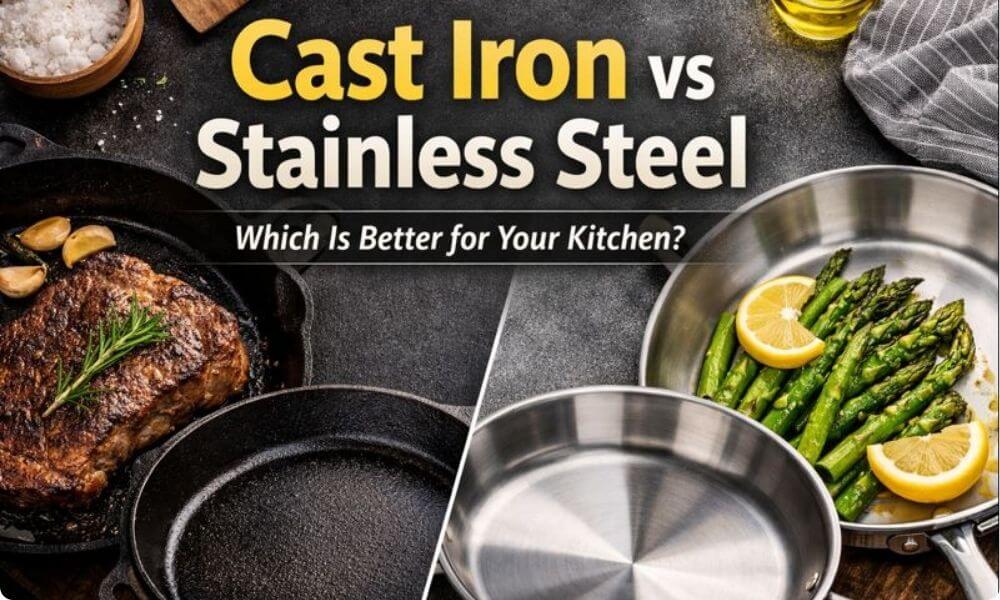
Cast Iron vs Stainless Steel
Choosing the right cookware can feel more complicated than it should be, especially when you’re stuck between two popular options: cast iron and stainless steel. Both are loved by home cooks and professionals, yet they behave very differently in the kitchen. If you’ve ever wondered why food sticks to one pan but not the other, or why some meals turn out better depending on what you use, this comparison matters more than you think. That’s exactly why so many people search for cast iron vs stainless steel when upgrading their kitchen.
The truth is, neither pan is “better” in every situation. Cast iron is known for deep heat retention and a naturally non-stick surface when seasoned properly, while stainless steel is prized for precise temperature control and easy maintenance. But which one fits your cooking style, daily routine, and the kinds of meals you actually make?
In this guide, you’ll get a clear, honest breakdown of how these two materials compare in real-world cooking—from searing steaks and frying eggs to cleaning and long-term durability—so you can confidently choose the pan that makes cooking easier, not more frustrating.
Why Choosing the Right Pan Material Actually Matters
Cookware isn’t just a tool — it changes how your food cooks. The wrong pan can mean uneven browning, food that sticks, or long cleanup times. It also affects how much control you have over temperature, how quickly a pan heats or cools, and how long it lasts. For people who cook daily, these small differences add up: easier cleanup saves time, better heat control improves results, and long-lasting pans save money. So this decision isn’t about prestige or trends — it’s about making everyday cooking less stressful and more reliable.
What Is Cast Iron Cookware?
Cast iron is literally molten iron poured into a mold. That gives it a thick, heavy body that holds a lot of heat. Because the metal is porous at a microscopic level, cooks “season” cast iron: they bake oil onto the surface until it forms a hard, bonded layer. That seasoning fills those tiny pores and creates a surface that becomes naturally non-stick over time.
People love cast iron for a few reasons. It sears beautifully, holds heat through high temperatures (great for steaks and oven-finished dishes), and can last for decades if cared for. It’s also forgiving in the sense that dings and scratches don’t ruin its performance — you can re-season an old pan and bring it back to life.
On the downside, cast iron is heavy, it takes longer to heat up, and it needs basic maintenance: you shouldn’t soak it in the sink for hours, and you’ll want to avoid abrasive soaps when the seasoning is fresh.
What Is Stainless Steel Cookware?
Stainless steel is an alloy, usually mostly iron mixed with chromium and sometimes nickel. That chromium layer prevents rust and helps the metal resist corrosion and staining. Because it doesn’t require seasoning, stainless steel is familiar and low-maintenance for many cooks.
Many home and professional kitchens use “tri-ply” or “fully-clad” stainless steel. Those terms mean the pan has layers (usually stainless-steel outer layers with an aluminum or copper core) that improve heat distribution. The result is a pan that heats quickly and responds fast when you change the burner setting.
Stainless steel won’t develop the same natural non-stick surface as cast iron, so some foods can stick if the pan or technique isn’t right. Still, it’s durable, works on most stovetops (including glass), and is dishwasher-safe in many cases — which makes it a favorite for busy households.
How Heat Works in Cast Iron vs Stainless Steel
Heat behavior is one of the biggest practical differences between these materials. Cast iron has high heat capacity and excellent heat retention. Once hot, it stays hot; it’s slower to heat up but resists temperature drops when you add cold food. That makes cast iron ideal for searing and maintaining even high heat.
Stainless steel (especially with an aluminum or copper core) heats up quickly and changes temperature quickly. That responsiveness is useful for precise cooking: you can turn the heat down and the pan reacts fast, reducing the chance of burning delicate foods. But because stainless steel doesn’t hold as much heat, it can cool down when crowded with food or when you add a cold ingredient.
In practice, that means:
- Use cast iron for long, high-heat tasks: searing, deep frying, or oven work.
- Use stainless steel for tasks requiring quick temperature control: sautéing, pan sauces, and recipes that need fast temperature changes.
Cooking Performance in Real Life
Not all foods behave the same in both pans. Here are common examples and what to expect.
Eggs
Eggs are a frequent test. Cast iron can be excellent once well-seasoned, but fresh or thinly seasoned cast iron can make eggs stick. Stainless steel is notorious for sticking with eggs if you don’t preheat correctly and use enough fat.
If eggs are a priority and you want near foolproof results, a nonstick pan is the easiest, but between cast iron and stainless steel: a properly preheated, oiled cast iron will often produce better results for fried eggs; stainless requires precise heat control and technique.
Steak
Cast iron shines here. Its heat retention creates a steady, hot surface that sears a steak beautifully and develops a deep crust. Stainless steel can also sear well, but you must give it time to get hot and avoid crowding the pan.
Fish
Delicate fish benefits from stainless steel if you want precise control and quicker response. Cast iron can work but is heavier and harder to maneuver; thin fish can stick if the seasoning isn’t perfect.
Sauces
Stainless steel is easier for pan sauces because you can deglaze the browned bits and make a sauce directly in the pan. Cast iron will also work for sauces, but acid (like tomatoes or wine) can slowly wear the seasoning over time if used excessively, and the iron can react mildly with very acidic foods.
One-pan meals
Cast iron’s heat retention and oven compatibility make it ideal for dishes that start on the stove and finish in the oven — think chicken thighs, frittatas, or skillet cornbread.
Tip: When using stainless steel for foods that tend to stick, preheat the pan properly (test by dropping a few drops of water — if they bead and dance, the pan is ready), then add oil and wait until it shimmers before adding food.
Cleaning and Maintenance
Cast iron care is simple once you get the hang of it, but it is different from stainless steel.
For cast iron:
- Clean while the pan is warm. Wipe with a paper towel or rinse quickly.
- Use a brush or coarse salt and a little water to remove stuck bits; avoid long soaks.
- Dry immediately and apply a thin coat of oil to the surface to protect seasoning.
- Re-season as needed by baking oil onto the pan in the oven.
For stainless steel:
- Most stainless pans tolerate dish soap and the dishwasher (check manufacturer instructions).
- To remove stuck-on food, soak briefly, then use a non-abrasive scrub or a paste of baking soda and water.
- For discoloration or heat stains, a vinegar or bar-keeper’s friend treatment works well.
Practical tip: If you’re busy and dislike hand-washing, stainless steel is more forgiving. If you enjoy the ritual of caring for cookware, cast iron can be satisfying and personally rewarding.
Durability and Lifespan
Both materials are durable, but in different ways.
Cast iron: If you avoid dropping it from a height and you keep it seasoned, cast iron can last generations. It won’t warp under high heat, and small damages are repairable by re-seasoning. Left neglected and exposed to moisture, cast iron can rust — but rust can be removed and the pan brought back with a little work.
Stainless steel: It resists rust and corrosion and stands up to dishwasher cycles and aggressive cleaning. Thin, poor-quality stainless pans can warp over high heat, but good fully-clad pans resist warping and maintain consistent contact with the heat source.
Bottom line: both last long; cast iron requires occasional maintenance, and stainless requires attention to build quality to avoid warping.
Health and Safety Considerations
A common concern is whether one material is “healthier.” Here’s the practical picture.
Cast iron can leach tiny amounts of iron into food, especially when cooking acidic dishes like tomato sauce. For most people, this is harmless and can even be a small dietary iron boost. However, for people on iron-restricted diets or with certain medical conditions, this could matter — in those cases, choose stainless steel.
Stainless steel is considered food-safe and chemically stable for almost all cooking. Cheap or poorly made cookware that contains low-quality alloys could raise other issues, but good-quality stainless is a safe choice.
If you’re concerned about metal taste or reaction: avoid cooking very acidic foods for long periods in cast iron, or be prepared to re-season the pan frequently.
Which One Is Better for Your Cooking Style?
Here’s a practical breakdown to help you choose.
For beginners
Choose stainless steel. It’s lower maintenance, works on most stovetops, and behaves predictably once you learn simple preheat-and-fat technique.
For busy home cooks
Stainless steel wins for convenience. Dishwasher-safe models and easier cleanup make life simpler when time is short.
For people who love searing and oven finishes
Cast iron is ideal. Its heat retention and oven-proof nature create great results for steaks, roasts, and skillet baking.
For those who hate maintenance
Stainless steel is the friendlier option. No seasoning, no nightly oiling — just normal cleaning.
For glass cooktops and delicate surfaces
Choose lighter, flat-bottomed stainless cookware designed for glass tops. Cast iron can scratch or be awkward on smooth surfaces.
Cast Iron vs Stainless Steel — Side-by-Side Comparison
| Feature | Cast Iron | Stainless Steel |
| Heat retention | Excellent | Good (depends on core) |
| Heat responsiveness | Slow to change | Fast to change |
| Non-stick (after seasoning) | Yes, over time | No (requires technique) |
| Maintenance | Requires seasoning and care | Low; dishwasher often OK |
| Weight | Heavy | Light to medium |
| Oven-safe | Excellent | Usually yes, check handle material |
| Best uses | Searing, oven dishes, deep frying | Sautéing, sauces, quick cooking |
Use this table as a quick glance — the rest of this post explains the “why” and “how.”
Common Mistakes People Make When Choosing
People often buy a pan for the wrong reasons. Common errors include:
- Choosing cast iron because it looks “authentic” without understanding maintenance. A new cast iron owner who doesn’t season or dry the pan will end up frustrated.
- Expecting stainless steel to behave like a nonstick pan. Without correct preheating and fat, food will stick.
- Buying the cheapest option available. Thin, low-quality pans warp and lead to poor cooking results; investing in a mid-range pan often pays off in performance and longevity.
Practical tip: Think about your daily cooking habits first. If you cook quick breakfasts and want easy cleanup, stainless will likely serve you better than a heavy cast iron skillet you’ll avoid using.
Which One Should You Buy?
There’s no single “best” answer. Choose based on how you cook and what you want from your cookware.
Pick cast iron if you:
- Love searing, high-heat cooking, and skillet-to-oven recipes.
- Don’t mind the weight and enjoy caring for your tools.
- Want a pan that can last generations and gets better with use.
Pick stainless steel if you:
- Want low maintenance and fast heat control.
- Cook a lot of sauces, sauté vegetables, or need dishwasher-safe cookware.
- Use a glass cooktop or need lighter pans.
For most home cooks, the best solution is to have both: a good stainless steel skillet for everyday tasks and a cast iron skillet for searing, oven meals, and heavy-duty cooking.
Can You Use Both in the Same Kitchen?
Absolutely — they complement each other. Use stainless steel for quick sautés, sauces, and weekday meals where time matters. Reach for cast iron when you want a perfect sear, to finish a dish in the oven, or to make skillet cornbread or deep-pan pizzas. Storing and caring for both types is simple once you get a routine: stainless for speed and convenience, cast iron for power and longevity.
Conclusion
Cast iron and stainless steel are both excellent choices — the “right” one depends on how you cook. Cast iron offers unmatched heat retention and a satisfying, long-lasting tool for searing and oven work. Stainless steel gives speed, precision, and easier upkeep for everyday meals. Decide by thinking about your routine: how often you cook, what you cook most, and how much time you want to spend on maintenance. If you’re still unsure, start with a quality stainless steel skillet for everyday use and add a cast iron piece later when you want to elevate searing and oven-ready dishes.
FAQs — Cast Iron vs Stainless Steel
Which is easier to use for a beginner — cast iron or stainless steel?
Stainless steel is usually easier for beginners. It needs less special care (no seasoning) and is more forgiving for everyday use. Cast iron works well once you learn basic seasoning and care, but it’s heavier and requires a little more attention.
Do cast iron pans get non-stick like stainless steel or modern nonstick pans?
Cast iron can become naturally non-stick when well seasoned and used regularly, but it won’t feel exactly like a modern T-eflon nonstick surface. Stainless steel is not naturally non-stick and needs correct preheating and enough fat to prevent sticking.
Can I put either pan in the oven?
Most cast iron is oven-safe at high temperatures. Many stainless steel pans are oven-safe too, but check the handle material and manufacturer instructions — some handles or lids have limits.
Is one safer or healthier than the other?
Both are generally safe. Cast iron can leach small amounts of iron into food (higher with acidic foods), which is harmless for most people and can even boost iron intake, but those with certain medical conditions should consult a doctor. High-quality stainless steel is inert and won’t leach significant metals into food during normal use.
Will cast iron rust? How do I remove rust?
Cast iron can rust if left wet. To remove rust, scrub with steel wool down to bare metal, wash, dry thoroughly, and then re-season (apply thin oil layer and bake). Regular drying and light oiling after use prevents rust.
Can I use a dishwasher for stainless steel or cast iron?
Stainless steel is usually dishwasher-safe (check the brand), though hand-washing extends its life and appearance. Never put cast iron in the dishwasher — it strips seasoning and causes rust.
Do metal utensils damage cast iron or stainless steel?
Metal utensils are fine on both. Cast iron’s seasoning can be scratched but that’s repairable by re-seasoning. High-quality stainless steel is hard and resists scratching.
Which one is better for searing steaks?
Cast iron is generally better for searing because it holds heat so well and produces a consistent crust. A heavy, well-heated stainless steel pan can also sear well if preheated properly.
Which one is better for delicate fish or eggs?
Delicate fish and eggs can be easier in stainless steel if you use correct heat control and enough fat. Eggs may be simpler in a well-seasoned cast iron or a nonstick pan if you want almost-foolproof results.
Will cooking acidic foods (tomato sauce, wine) damage cast iron?
Acidic foods can break down seasoning over time and may pick up a metallic taste if cooked for long periods. Occasional use is fine, but for long-simmered tomato sauces you might prefer stainless steel.
Can I use both types in one kitchen?
Yes — and many cooks do. Use stainless steel for fast, everyday tasks and sauces; keep cast iron for searing, oven finishing, and heavy-duty jobs. They complement each other well.
My stainless steel pan warped — can it be fixed?
Small warps are sometimes corrected by gentle heating/cooling, but many warped pans are not repairable. Prevent warping by avoiding sudden, extreme temperature changes and using moderate heat. Investing in mid- to high-quality fully-clad pans reduces the risk.
How long will each pan last?
Cast iron can last generations if maintained. Good stainless steel pans also last many years; the key with stainless is to buy decent thickness and construction to avoid warping and poor heat distribution.
Is one type more expensive long-term?
Upfront, a basic stainless steel skillet and a basic cast iron skillet can be inexpensive. Long-term, both are cost-effective because they last a long time. The most important cost factor is buying quality: very cheap pans often lead to frustration and replacement.
Any quick tips to stop food from sticking in stainless steel?
Heat the pan until water droplets dance (preheat test), add your oil and let it heat until shimmering, then add food. Don’t crowd the pan and give food time to form a sear before flipping.