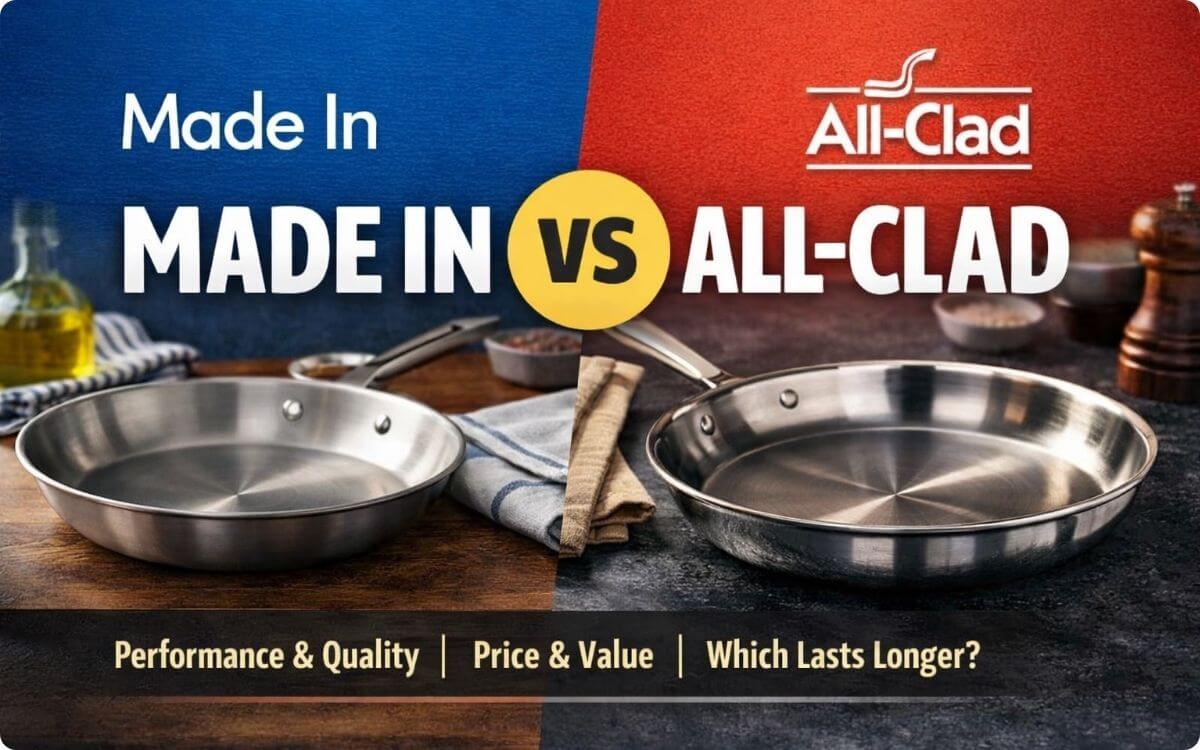
Made In vs All-Clad: Which Cookware Is Better for You?
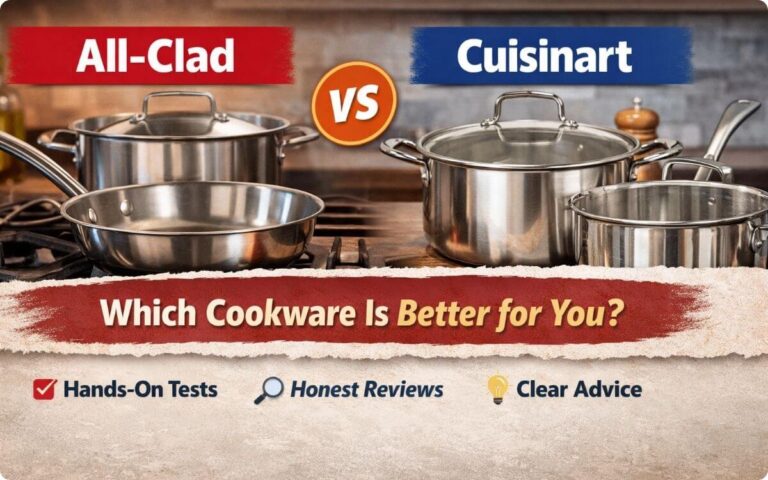
If you’ve ever shopped for quality cookware, you’ve probably run into Made In and All‑Clad more than once. These two brands show up in almost every premium cookware comparison because both promise excellent performance, long life, and professional‑level results in your kitchen.
But here’s the honest truth: premium cookware is an investment, and spending hundreds of dollars on the wrong set can feel like a mistake you live with for years. Many home cooks get stuck asking the same questions over and over — Is All‑Clad truly better? Is Made In “good enough”? What differences actually matter when you’re cooking every day?
This guide isn’t about marketing claims or tech specs alone. We’re going to talk about how these pans perform when you use them, how easy they are to live with, and which one fits your cooking style and budget best. By the end, you’ll have a clear idea of which brand makes more sense for the way you cook — whether that’s quick weeknight dinners or Sunday‑afternoon searing.
Quick Verdict
| 🏆 Choose Made In if | 🏆 Choose All-Clad if |
| You want high performance without a big price tag. (Good value, but a newer name.) | You want a brand with a long track record you can trust. (Higher cost upfront.) |
| You prefer lighter pans that are easy to move and cook with every day. | You want cookware that holds heat very steadily for heavy searing and long cooks. |
| You like modern, direct-to-consumer designs and straightforward buying. | You prefer the peace of mind that comes with decades of consistent quality. |
Quick note: if you’re still unsure, ask yourself which matters more today — saving money now, or paying more for a long-standing reputation. Either choice gives you good cooking performance; pick the one that fits how you cook and what you value most.
Side-by-Side Feature Comparison: Made In vs All-Clad
| Feature | Made In | All-Clad | Winner |
| Price (upfront) | Lower retail price for comparable pieces. | Higher, premium pricing. | Made In |
| Build quality | Very good for the price; modern manufacturing. | Very consistent, often heavier-duty construction. | All-Clad |
| Heat distribution | Excellent on most multi-ply models; depends on the ply. | Excellent, especially in heavier clad models. | Tie |
| Heat retention (searing) | Hold heat well; lighter pans can lose more when big cold items are added. | Better heat mass in many models — holds temp during searing. | All-Clad |
| Weight & handling | Generally lighter and easier to maneuver. | Often heavier and more solid feeling. | Made In |
| Handle comfort & fit | Comfortable, ergonomic; slightly lighter feel. | Very secure and stable; can run warm on long cooks. | Tie |
| Durability / longevity | Built to last with normal use; newer company track record. | Proven long-term performance over decades. | All-Clad |
| Warranty & support | Good customer service; newer warranty reputation. | Established warranty and long history of service. | All-Clad |
| Product range | Focused set of popular pieces; fewer specialty items. | Very wide range (lines, sizes, specialty cookware). | All-Clad |
| Design & aesthetics | Modern, sleek look that fits contemporary kitchens. | Classic, professional look that many trust. | Made In (subjective) |
| Value for money | Strong value — premium features at lower cost. | Premium value if you prioritize longevity and resale. | Made In |
| Resale / brand trust | Lower resale recognition (newer brand). | High resale recognition and buyer confidence. | All-Clad |
| Dishwasher reality | Dishwasher safe but hand-wash keeps shine longer. | Same — safe but hand-washing recommended for appearance. | Tie |
| Beginner friendliness | Lighter pans feel easier; slightly more forgiving for quick cooks. | Excellent performance but heavier and less forgiving initially. | Made In |
| Professional / heavy use | Good for home cooks and pros who want value. | Often preferred by pros and heavy users for consistency. | All-Clad |
Who These Brands Are Best For
Choosing between Made In and All-Clad isn’t really about which brand is “better.” It’s more about which one fits how you cook, how often you cook, and how much you want to spend upfront.

Made In Is Best For
Made In usually makes sense if you want high-quality cookware but still care about price. You get strong performance without paying top-tier legacy brand prices. For many home cooks, that balance feels practical and smart.
It’s also a good choice if you’re upgrading from basic cookware for the first time. The pans feel premium, but they’re not as intimidating to buy as higher-priced options. The downside is that Made In is a newer company, so some buyers worry about long-term brand history.
Made In also fits people who are open to trying newer premium brands. If you don’t need a brand with decades of history and you care more about how the pan performs today, this brand can feel like a good middle ground.

All-Clad Is Best For
All-Clad usually appeals to people who want to buy cookware once and keep it for many years. The brand has been around a long time, and that history gives many buyers confidence when spending more money.
It’s also a strong fit for serious home cooks who cook often and want cookware they never have to second-guess. The pans are known for being consistent and durable. The trade-off is the higher price, and some people find certain pieces heavier than expected.
All-Clad is also popular with buyers who trust established brands. If you feel safer choosing something with a long track record, All-Clad often feels like the lower-risk choice — even if it costs more upfront.
Brand Philosophy & Manufacturing
When people compare Made In and All-Clad, manufacturing is one of the first things they look at. Many buyers want to know where their cookware is made because it can feel connected to quality, craftsmanship, and brand trust.
Where Each Brand Is Made
All-Clad cookware is mainly made in the United States, especially their stainless steel lines. For many buyers, this adds a sense of reliability because the brand has been producing cookware in the same country for decades.
Made In works differently. Their cookware is made in several places, including the United States and parts of Europe like Italy and France. These countries are known for metal and cookware production, but some buyers still prefer a single manufacturing location for peace of mind.
Brand History Differences
All-Clad has been around since the 1970s. That long history makes some people feel safer spending more money because the brand has already proven it can last.
Made In is much newer. The company focuses on selling directly to customers instead of using traditional retail stores. This helps keep prices lower, but some buyers wonder how the brand will perform over the next 20–30 years.
Why Manufacturing Location Matters (And When It Doesn’t)
Manufacturing location can matter if you care about supporting certain countries or if you believe certain regions produce better metal products. For some buyers, it’s part of the emotional side of buying cookware.
But in everyday cooking, location alone doesn’t decide performance. What matters more is how the pan is built, the materials used, and quality control during production.
A small drawback to focusing too much on location is that you might miss out on good cookware from newer brands or different regions.
Does This Affect Cooking Performance or Just Brand Story?
In most cases, manufacturing location affects brand story more than cooking results. If two pans use similar materials and construction, they will usually cook very similarly.
Where location can matter is consistency and long-term reputation. Older brands often have longer track records, while newer brands may still be building that trust.
For daily cooking, most people won’t notice a difference based only on where the pan was made. The bigger difference usually comes from design, thickness, and overall build quality.
Materials & Construction — explained simply
Ply construction = layers.
When people say “3-ply” or “5-ply,” they just mean how many thin metal layers are pressed together to make the pan. A common 3-ply pan has stainless steel on the inside and outside with an aluminum layer sandwiched in the middle. A 5-ply pan adds more alternating layers for extra thickness and stability.
Why do those metals matter
Stainless steel is a safe, non-reactive cooking surface you can scrub. Aluminum (or sometimes copper) is added because it moves heat quickly across the pan. The stainless gives the pan structure and a clean cooking surface; the inner aluminum or copper moves heat so you don’t get hot spots.
Heat distribution — what you feel on the stove.
Pans with good multi-ply construction heat more evenly. That means the whole cooking surface warms at a similar rate instead of one spot getting much hotter than the rest. Even heating helps you brown foods without burning edges. Thicker multi-ply (like 5-ply) usually gives smoother, more consistent heat across the pan.
Warping resistance — how the pan holds its shape.
Thin, cheap pans are more likely to warp after repeated heating and cooling. More layers and a heavier build make warping less likely. So a sturdier 5-ply pan is usually more resistant to warping than a thin single-ply or low-gauge pan. The trade-off is extra weight.
What this means at the stove — simple, practical examples
Eggs (frying or omelets): Eggs are delicate and need steady, controlled heat. A well-built 3-ply pan gives good results if you preheat properly and use enough fat. The trick is to get the pan hot (water-drop test), add oil or butter, then lower the heat and let the egg set before moving it. That avoids sticking even without a nonstick coating. Heavier 5-ply pans will hold heat longer but can be slower to respond when you change the burner setting.
Steak (searing): Searing wants two things: a hot surface and steady heat that doesn’t crash when the cold steak hits the pan. Pans with a thick bonded core and good heat retention give the best crust because they stay hot when you add meat. That’s why many cooks reach for heavier multi-ply or clad pans for steaks. The downside: heavy pans can be harder to maneuver.
Sauces (simmering and reduction): Delicate sauces need even low heat so they don’t scorch. A pan that spreads heat evenly across the bottom and up the sides makes it easier to simmer sauces without hot spots. Thicker multi-ply pans reduce the chance of uneven cooking during long, slow reductions.
Real Cooking Performance
This is where most people actually decide. Specs don’t matter much if the pan doesn’t feel good when you cook every day. What matters is how fast it heats, how well it holds heat, how sticky it feels, and how heavy it feels after standing at the stove for a while.
Heat Speed — Who Heats Faster?
In real kitchens, both Made In and All-Clad heat quickly because they use similar metal layers. You usually won’t notice a huge difference during normal cooking.
Sometimes Made In can feel slightly faster to heat, depending on the exact pan and thickness. In daily cooking, this mainly means you might wait a few seconds less before adding oil or food.
The small drawback of faster heating is that you need to pay attention. If you use high heat right away, food can burn faster than expected.
Heat Retention — Who Holds Heat Better for Searing?
All-Clad often has a small edge in holding heat, especially in heavier models. When you drop a cold steak into the pan, the temperature stays more stable. This helps create a better crust.
Made In still holds heat well for normal home cooking. Most people will get strong searing results if they preheat the pan properly and don’t overcrowd it.
The trade-off with stronger heat retention is slower cooling. If food starts to cook too fast, the pan takes longer to calm down after you lower the heat.
Stick Resistance (With Proper Technique)
Neither brand is non-stick. But when you preheat correctly and use oil or butter, both can release food well.
For beginners, the learning curve is real. Eggs and fish can stick if the pan isn’t hot enough before adding fat, or if you try to flip food too early.
Once you learn the timing, both feel reliable. The honest downside is stainless steel takes practice, no matter which brand you buy.
Weight & Handling — Daily Cooking Comfort
This is where people often notice the biggest real-life difference.
Made In pans are often a bit lighter. That can feel better if you cook often, have smaller hands, or don’t like heavy cookware.
Some All-Clad pans feel heavier and more solid. Many people like that stability, but others feel tired holding or tilting the pan after longer cooking sessions.
Which Feels Better After Cooking for 30 Minutes?
If you cook quick meals or move pans around a lot, lighter cookware usually feels easier on your wrist and shoulder.
If you cook longer meals or do a lot of searing, heavier cookware can feel more stable and controlled on the stove.
There’s no universal “better” here. The best choice is the one that matches how long you usually cook and how comfortable you feel holding the pan.
Cleaning & Maintenance
Cleaning is something most buyers don’t think about until they cook their first big meal. After a few weeks of real use, this part matters a lot more than expected. Good cookware should cook well, but it should also be realistic to clean on a busy day.
Staining Risk
Both Made In and All-Clad are stainless steel, so some staining is normal. You might see rainbow marks, water spots, or brown spots after high heat cooking. This doesn’t mean the pan is damaged.
Most stains come off with simple cleaning methods. Warm water, dish soap, and a soft scrub usually work. For tougher marks, a stainless cleaner or baking soda paste usually fixes it.
The small downside is that stainless steel rarely stays mirror-perfect if you cook a lot. If you like cookware that always looks brand new, this can be slightly frustrating.
Dishwasher Safety — The Real Truth
Technically, many stainless steel pans are labeled dishwasher safe. But in real life, hand washing keeps them looking better for longer.
Dishwashers can cause water spots or dull the shine over time. They usually won’t ruin the pan, but they can change the appearance.
For busy families, occasional dishwasher use is usually fine. Just don’t rely on it every day if you want the pans to stay looking new.
Effort Needed After Heavy Searing
After cooking steak or chicken on high heat, you will usually have stuck-on bits. This is normal and happens with all stainless steel cookware.
The easiest method is simple: add warm water to the pan while it’s still slightly warm and let it sit for a few minutes. Most residue loosens and wipes away.
The honest downside is stainless steel does take more effort than non-stick after messy cooking. But it’s usually manageable once you learn a simple routine.
Which Is Easier for Busy Families?
For most busy households, both brands are similar in cleaning effort. Neither one is “high maintenance,” but neither is zero-effort like non-stick.
If you cook fast meals and wash right after cooking, cleaning is usually quick. If food sits overnight, any stainless pan becomes harder to clean.
For daily life, the biggest factor isn’t the brand — it’s your cleaning habits. A quick rinse and wash right after cooking makes both brands feel easy to live with.
Durability & Lifespan
When you buy premium stainless steel cookware, you’re usually thinking long term. Most people don’t want to replace these pans every few years. The real question is how well they hold up after years of daily cooking, washing, and heating.
Warping Risk
Warping means the bottom of the pan bends slightly and stops sitting flat on the stove. With good stainless steel cookware, this is rare if you use normal cooking habits.
Both Made In and All-Clad are built thick enough to resist warping in everyday use. Problems usually happen if a very hot pan is placed under cold water right away.
In real life, if you let the pan cool for a few minutes before washing, warping is usually not something most home cooks deal with.
Handle Durability
Handles matter more than people think. They go through heat, water, and daily movement for years.
Both brands use strong metal handles that are designed to stay tight over time. They don’t usually loosen unless the pan is dropped hard or used roughly for many years.
The small downside is metal handles can get warm during long cooking sessions. It’s not dangerous, but you may need a towel or mitt sometimes.
Long-Term Ownership Expectations
With normal home use, stainless steel pans from either brand can last many years. Some people keep them for decades if they avoid extreme heat abuse and clean them properly.
Over time, the surface might lose some shine or show cooking marks. This is normal and doesn’t affect performance.
The honest reality is that cookware rarely “fails” suddenly. Most wear happens slowly, and performance usually stays strong for a long time.
Will This Still Perform Well in 10+ Years?
For most home cooks, yes — if you use and clean the pan normally. These pans are built for long-term cooking, not short-term use.
The biggest factor isn’t usually the brand. It’s how the pan is used day to day. Avoid overheating empty pans, avoid shocking hot pans with cold water, and clean them regularly.
If you follow those basic habits, there’s a good chance the pan will still cook just as well many years from now.
Price vs Long-Term Value
When it comes to premium cookware, the upfront price can feel high, but the real question is how much value you get over the years. Thinking about cost per year helps you decide if a pan is worth it.
Upfront Price
Made In pans usually cost less than All-Clad for similar sizes and construction. That makes them attractive if you want premium performance without paying a top-tier price.
All-Clad is more expensive, reflecting its long history and strong brand reputation. Some buyers feel the higher cost is justified for peace of mind, while others prefer to get similar performance at a lower price with Made In.
Cost Per Year
If you plan to use the pan daily for 10 or 20 years, the higher upfront cost can actually be reasonable. Dividing the price by the years of use often shows that All-Clad’s expensive pans can end up costing only a few cents per day.
Made In, being cheaper, lowers that daily cost even further, which can be appealing if you want premium performance without a large upfront investment.
Resale & Brand Reputation
All-Clad has strong resale value because it’s a trusted brand. If you ever sell or upgrade your pans, buyers recognize the name and are willing to pay for it.
Made In is newer, so resale value is lower. That’s not a deal breaker for most home cooks, but it’s worth noting if you plan to sell or pass pans on later.
Which Actually Saves Money Long Term?
For most people, either brand can save money if you use the pan for many years. Made In is cheaper upfront, so the initial investment is smaller. All-Clad may cost more initially, but its long-term durability and resale value can justify the price.
The real takeaway: if you cook often and care about longevity, both brands are worth it. Your choice depends on whether you prefer to spend less now or invest a little more for long-term peace of mind.
Honest Pros & Cons: Made In vs All-Clad
Here’s a straightforward look at what each brand does well and where they have drawbacks. This isn’t about hype — it’s based on real-world use.
Pros and Cons of Made In
Pros:
- Lower price for premium build: You get a solid, multi-ply pan without paying top-tier brand prices.
- Modern design: The pans look sleek and updated, which many home cooks appreciate in their kitchens.
- Strong performance: Heating, searing, and everyday cooking work very well for most recipes.
Cons:
- Newer brand history: Because the company is relatively young, it doesn’t have decades of track record like All-Clad.
- Fewer product options: There are fewer sizes, shapes, and specialty pans available compared to All-Clad.
Pros and Cons of All-Clad
Pros:
- Proven reputation: The brand has been trusted by chefs and home cooks for decades.
- Extremely consistent quality: Each pan is built to very high standards, which makes performance predictable.
- Strong resale confidence: If you ever want to sell or pass along the pans, buyers recognize the name.
Cons:
- Higher price: You pay a premium for the brand and long-term durability.
- Heavier feel: Some models are noticeably heavier, which can be tiring for long cooking sessions.
Made In vs All-Clad — Which Should You Buy?
If you want a short answer: pick the brand that fits how you cook and how you feel about spending money today. Below are clear, practical cues to help you choose.
Choose Made In if
you want near-premium performance without the legacy brand price.
Made In sells directly to customers and generally prices its stainless pieces well below many All-Clad models, so you can get high-quality multi-ply cookware for less upfront.
Made In often heats quickly and feels lighter to handle, which many home cooks love for everyday use. If you’re buying your first serious set or you don’t want a big upfront hit to your wallet, Made In is a sensible, practical pick. The only real trade-off is that it’s a newer company, so it doesn’t have the long track record some buyers prefer.
Choose All-Clad if
you want maximum long-term confidence and you don’t mind paying more.
All-Clad has decades of brand history and a well-established reputation for consistent build quality — many people buy it for peace of mind and proven performance.
All-Clad’s heavier, solid feel helps it hold temperature during heavy searing, and it tends to keep value over time if you ever resell pieces. The trade-off is the higher price and, for some cooks, extra weight during long cooking sessions.
Read More: HexClad vs All Clad (Complete Comparison Guide)
Final Verdict: The Simple Truth
When it comes to performance, both Made In and All-Clad deliver excellent results. Heat distribution, searing, and everyday cooking all work very well on either brand. In most home kitchens, the differences are subtle enough that performance is essentially a tie. The real choice comes down to other factors.
For value, Made In has the edge. You get premium multi-ply construction, modern design, and strong cooking performance at a lower price than All-Clad. If budget matters or you want high-quality cookware without the highest price tag, Made In makes the most sense.
When it comes to longevity and confidence, All-Clad stands out. Its decades-long reputation, proven durability, and resale value give peace of mind for long-term ownership. If you want cookware you can buy once and reliably use for 20+ years, All-Clad is the safer bet.
In short, Made In wins on value, All-Clad wins on long-term trust, and both tie on everyday cooking performance. Your choice depends on what matters most to you: saving money now or investing in a brand with a long, proven track record.
FAQ: Made In vs All-Clad
Is Made In High Quality?
Yes. Made In cookware is built with multi-ply construction and premium materials, giving strong heat distribution and reliable cooking performance. While it’s a newer brand, real-world testing shows it performs very well for everyday home cooking. The main trade-off is less long-term brand history compared to All-Clad.
Why is All-Clad so expensive?
All-Clad commands a higher price because of decades of proven quality, consistent construction, and a strong brand reputation. The thicker, heavier construction and long-term durability also contribute to the premium cost. You’re paying not just for performance, but for peace of mind and resale value.
Do chefs use Made In or All-Clad?
Many professional chefs and serious home cooks trust All-Clad because of its consistent results and durability. Made In is gaining popularity among home cooks and some chefs who appreciate high-quality cookware at a lower price point. Both brands perform well in real kitchens.
Which lasts longer?
All-Clad has a longer track record for long-term durability, often lasting decades when properly cared for. Made In is built to last as well, but since it’s a newer brand, it doesn’t yet have the same decades-long usage record. With proper care, both can last many years in a home kitchen.